
Last updated November 17, 2026
 Shaker
 Modern flat-panel
 Two-tone cabinets
 KraftMaid
 Cambria quartz
 Butcher block
 Open shelving
Free design consultation - KraftMaid and Wellborn cabinet lines, Cambria and Silestone surfaces, and every tier from refacing to full custom laid out side by side
Kitchen Remodeling Troubleshooting in Enterprise: Common Problems and How to Fix Them
A cabinet door that swings open on its own isn’t a hinge problem. It’s almost always a carcass that wasn’t plumbed level during installation, and no amount of hinge adjustment will fix an unlevel box. The same pattern runs through most of the complaints we hear about kitchens in Enterprise: a grout line that cracks at six months, a quartz seam that starts to lift, a drawer front that rubs after a year. The material usually isn’t the villain. The install is. This guide walks through the failures worth diagnosing, the difference between a manufacturer defect and an installation error, and a timeline you can use to catch problems while your contractor’s warranty is still active.
Quick Answer
Most post-installation kitchen problems in Enterprise trace back to installation method rather than material defect: cabinet boxes that weren’t shimmed plumb, quartz seams bonded over an uneven or dirty substrate, and grout cracked by subfloor movement. Diagnose the root cause before calling a warranty claim, because the fix path – and who pays for it – depends entirely on which one you’re dealing with.
Styles & brands we work with
- Shaker
- Modern flat-panel
- Two-tone cabinets
- KraftMaid
- Cambria quartz
- Butcher block
- Open shelving
Table of Contents
- Material Defect or Installation Error? How to Tell the Difference
- Why Cabinet Doors Misalign After Installation
- Quartz Seams That Lift or Discolor: Causes and Documentation
- What Grout Cracking at 30 Days vs. 6 Months Tells You
- Drawer and Hardware Failures Worth Diagnosing
- The 30-Day, 90-Day, and 1-Year Inspection Checklist
- Enterprise-Specific Factors That Affect Kitchen Performance
Material Defect or Installation Error? How to Tell the Difference
The first question in any troubleshooting call is who owns the problem. A material defect is covered by the manufacturer’s warranty. An installation error falls to whoever installed it. Getting that classification wrong wastes time and can void coverage.
Here’s how the split usually looks in practice:
- Quartz countertops: A crack radiating from a seam or an unsupported overhang is almost always installation. A color inconsistency or a pinhole in the slab surface points toward material. Cambria, Silestone, and Caesarstone all publish warranty terms that hinge on proper substrate support and installation by qualified fabricators.
- Cabinet boxes: A door that won’t sit flush across the full height suggests a box out of square. A drawer box whose dovetails separate is a construction issue and belongs to the manufacturer – KraftMaid and Wellborn both back their drawer construction.
- Tile and grout: Grout cracking in a consistent line across a field is usually movement. Cracking concentrated at the perimeter against a wall or cabinet suggests the installer skipped or undercut a movement joint.
The practical test: note the pattern, photograph it, and read the warranty document before anyone touches it. If a technician adjusts or repairs without documentation, you may lose the claim. When we quote kitchen remodeling work, warranty alignment is part of the conversation from the start, because knowing the terms up front changes how the job gets finished.
Why Cabinet Doors Misalign After Installation
Cabinet door misalignment falls into three distinct categories, and each has a different fix. Treating all three as “adjust the hinge” is how a small problem becomes cabinet repositioning.
- Hinge adjustment. Doors that sit slightly proud or uneven at one corner, with a level cabinet box, usually need a screwdriver. European concealed hinges on KraftMaid and Wellborn cabinetry have adjustment cams for height, depth, and side-to-side. This is a five-minute fix.
- Shimming or refacing needed. If the doors are aligned but the box leans away from the wall at the top, the issue is the gap between cabinet back and wall. That’s a shim problem, and it may mean pulling the cabinet to re-shim rather than adjusting hardware.
- Floor-level problem. When a run of cabinets sits low on one end, doors hang unevenly no matter how much you adjust the hinges. The floor wasn’t level at install, and the installer should have shimmed the cabinet bases to compensate. Fixing it means repositioning the cabinet run.
We hear this complaint often in Enterprise, where slab floors in newer builds can carry a gradient from the kitchen into the adjacent room. The installer’s job is to plumb each box regardless of what the floor does underneath it. A cabinet carcass out of level by even a small amount will telegraph through doors, drawers, and the countertop above it.
Before you call anyone, run a 4-foot level along the cabinet face and check it corner to corner. The reading tells you which category you’re in, and that tells you who should be on the phone.
Quartz Seams That Lift or Discolor: Causes and Documentation
A lifting quartz seam is almost never a defect in the slab. It’s an adhesive or substrate problem. The seam is where two pieces meet, and the bond is only as good as the surface prep underneath. If the substrate wasn’t flat, if dust sat on the mating edge, or if the color-matched adhesive was applied at the wrong temperature, the seam opens over time.
Discoloration at a seam is a different symptom and often points to trapped moisture or a reaction between the adhesive and something that shouldn’t be there. Neither is a Cambria, Silestone, or Caesarstone manufacturing issue. All three brands specify substrate requirements and installation conditions in their warranty documents, and a seam failure that traces to installation typically isn’t covered.
How to document a seam problem for a warranty conversation:
- Photograph the seam at a shallow angle with raking light so the lift is visible.
- Note the date of installation and the date you first noticed the issue.
- Get a straightedge across the seam and photograph the gap with a measuring reference in frame.
- Keep the original invoice and the fabricator’s name. The warranty follows the installation.
What to expect from a proper install: seams are placed away from the sink and cooktop where splashing happens, are as tight and even as the fabrication method allows, and are bonded to a substrate that’s flat within manufacturer tolerance. If you’re planning a replacement or a new install and want the seam specs explained before fabrication, call (833) 522-7502. Estimates are free, and we’ll go through the warranty terms on the surface you’re considering.
What Grout Cracking at 30 Days vs. 6 Months Tells You
The timing of a grout crack is diagnostic. A crack at 30 days tells a different story than a crack at six months, and knowing the difference narrows down whether the subfloor, the grout type, or the installer’s work is the cause.
Cracking at 30 days. This is usually a cure problem or a mix problem. Grout that dried too fast from heat, or that was mixed too wet, shrinks as it cures and pulls away from the tile edge. In an Enterprise kitchen, dry interior air combined with a heated floor can accelerate that cure. The fix is often a re-grout of the affected line with the correct mix ratio and a slower cure, not a tear-out.
Cracking at six months. This usually means movement. The subfloor flexed under foot traffic, or the tile was set on a substrate that wasn’t stable. A crack that follows a straight line across the field, or that reappears after re-grouting, is a strong signal that the subfloor is the culprit. Re-grouting alone won’t hold if the floor is still moving.
Cracking at the perimeter. A crack that runs only along the wall or cabinet edge suggests the installer skipped a movement joint. Tile and grout need room to expand and contract, and omitting that joint concentrates all the stress in one line.
Check the grout type before anything else. Cementitious grout, epoxy grout, and urethane grout all behave differently, and the correct troubleshooting depends on knowing which one is on your floor. If you can’t find the record, a closer look at a broken edge will tell an experienced eye.
Drawer and Hardware Failures Worth Diagnosing
Drawer failures and hardware problems are the easiest to misread. A drawer that sticks or a handle that works loose usually points at installation adjustment, not a failed component.
- Drawer box construction: Dovetail joints that come apart suggest box construction rather than installation. KraftMaid’s dovetail drawer boxes and Wellborn’s comparable construction are designed to hold under standard use, and a failure there is a warranty conversation.
- Drawer slides: Undermount slides that bind usually mean the drawer box is slightly out of square or the slide wasn’t shimmed level in the cabinet. The slides themselves are rarely the problem.
- Cabinet pulls and knobs: A pull that loosens repeatedly usually means the screw is working against a thin or damaged cabinet face. Kohler and Moen hardware, like their fixtures, is built to spec – the mounting surface is where the issue lives.
- Faucet handles and spouts: A drip or a loose handle on a Kohler or Moen faucet is almost always a cartridge or O-ring, and both brands back their fixtures with multi-year consumer warranties. That’s a warranty item, not a remodel.
If a drawer is running rough, check the cabinet face with a level. If the face is off, the drawer is doing what an unlevel cabinet forces it to do. Adjusting the drawer slide without correcting the cabinet won’t hold.
The 30-Day, 90-Day, and 1-Year Inspection Checklist
Kitchen issues show up on a schedule. Walking through a short checklist at three points in the first year catches installation problems while the contractor’s workmanship warranty is still active. Here’s the list we’d hand a homeowner.
At 30 days:
- Open every cabinet and drawer. Note any that stick, bind, or don’t close flush.
- Check the countertop seams with a straightedge. Look for any lift or visible gap.
- Look at the backsplash grout, especially near the sink and cooktop, for hairline cracks.
- Run the faucet and check under the sink for any moisture at the supply connections.
- Confirm every cabinet door is still aligned after settling.
At 90 days:
- Re-check seams and grout in the same spots you checked at 30 days. New cracks matter more than old ones.
- Test every drawer under a load – pots and pans, not empty.
- Look at the caulk line where countertop meets backsplash. Caulk that has pulled away is an easy fix but a signal.
- Check cabinet doors for any new gapping at the top or bottom corners.
At 1 year:
- Walk the full kitchen with a notepad and photograph anything that concerns you.
- Review your contractor’s warranty document and note the exact expiration dates on workmanship and materials.
- Check the manufacturer warranty status for cabinets, countertops, and fixtures if any component has already been repaired.
- Call for anything that isn’t resolving on its own.
When we handle cabinet installation, we tell every homeowner the same thing: the first year is when you’re learning how your kitchen behaves. Any issue that appears in that window deserves a conversation, even if it’s small.
Enterprise-Specific Factors That Affect Kitchen Performance
Kitchens in Enterprise sit in a particular environment. The dry desert air and the temperature swing between summer afternoons and cooler nights put steady seasonal stress on materials that don’t flex well. That’s not a reason to avoid certain products. It’s a reason to install carefully and to know what to expect.
What that means in practice:
- Wood cabinets need stable interior humidity. Cabinets from KraftMaid and Wellborn are built to perform within a range of indoor conditions, but a kitchen that swings between very dry and humid will move wood. Keep the interior humidity in a reasonable band and you’ll see less seasonal gapping.
- Quartz is among the more stable surface options in a desert climate. Cambria, Silestone, and Caesarstone are engineered surfaces, and their stability under temperature swing is one reason they’re a good fit here. That stability only holds if the substrate is flat and the seams are bonded correctly.
- Grout and caulk move with the seasons. A hairline at a corner isn’t cause for alarm if it shows up in mid-summer and closes in winter. It’s a sign the material is doing what it should.
- Slab floors and newer construction. Enterprise has a lot of newer homes and slab-on-grade construction. Slab floors rarely sit perfectly level, and cabinets need to be shimmed and plumbed to compensate. That’s the first thing to check when alignment issues appear.
If you’re also looking at kitchens in the surrounding area, our Winchester page covers the same material questions from a local angle. The product behavior doesn’t change. The install standards don’t either.
Common Mistakes to Avoid
We’ve seen these come up again and again, in Enterprise and elsewhere. Each one turns a fixable problem into a bigger one.
- Adjusting hinges before checking the cabinet box. If the carcass is out of plumb, hinge adjustment is a temporary patch. Check the box with a level first, then decide.
- Re-grouting without diagnosing the cause. Grout that was mixed too wet will behave differently from grout over a moving subfloor. Re-grouting a movement crack without addressing the floor will simply produce another crack in a few months.
- Calling a quartz seam lift a “defect” without documentation. Manufacturers want photos, dates, and the fabricator’s invoice before they’ll evaluate a claim. Get that together before the fabricator touches the seam.
- Ignoring small issues inside the warranty window. A gap that shows up at 60 days is a warranty conversation. The same gap at 18 months may no longer be covered. Note what you see and call early.
- Skipping the level check on new cabinets before accepting the install. Walk the kitchen at handover with a 4-foot level and a flashlight under the cabinet edges. Anything that isn’t plumb deserves a question before you sign off.
- Assuming a faucet drip means a replacement. Kohler and Moen fixtures carry multi-year consumer warranties and their cartridges are serviceable. Diagnose the cause before pricing a new faucet.
- Blaming the material for what’s actually a substrate problem. A quartz countertop over an uneven substrate will fail at the seams. The slab isn’t the culprit. The substrate is.
See the difference
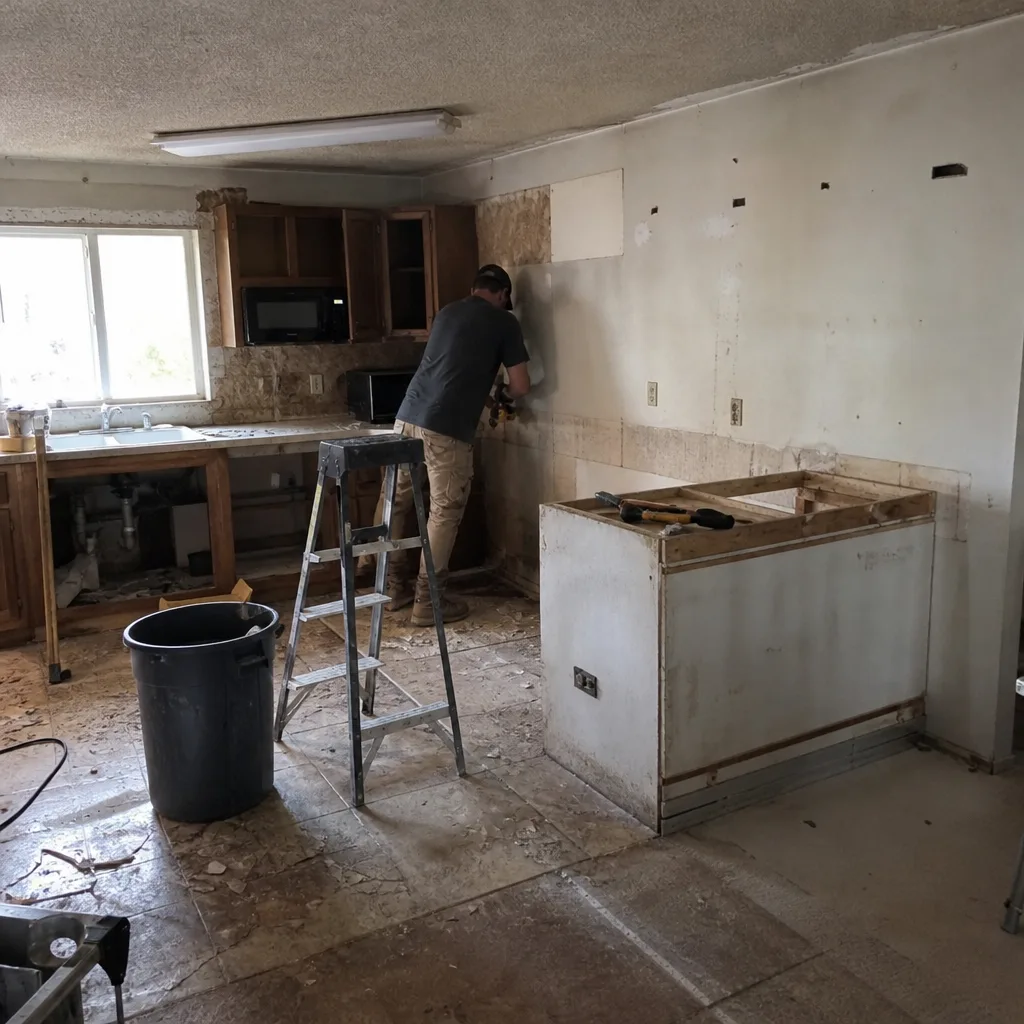 Before
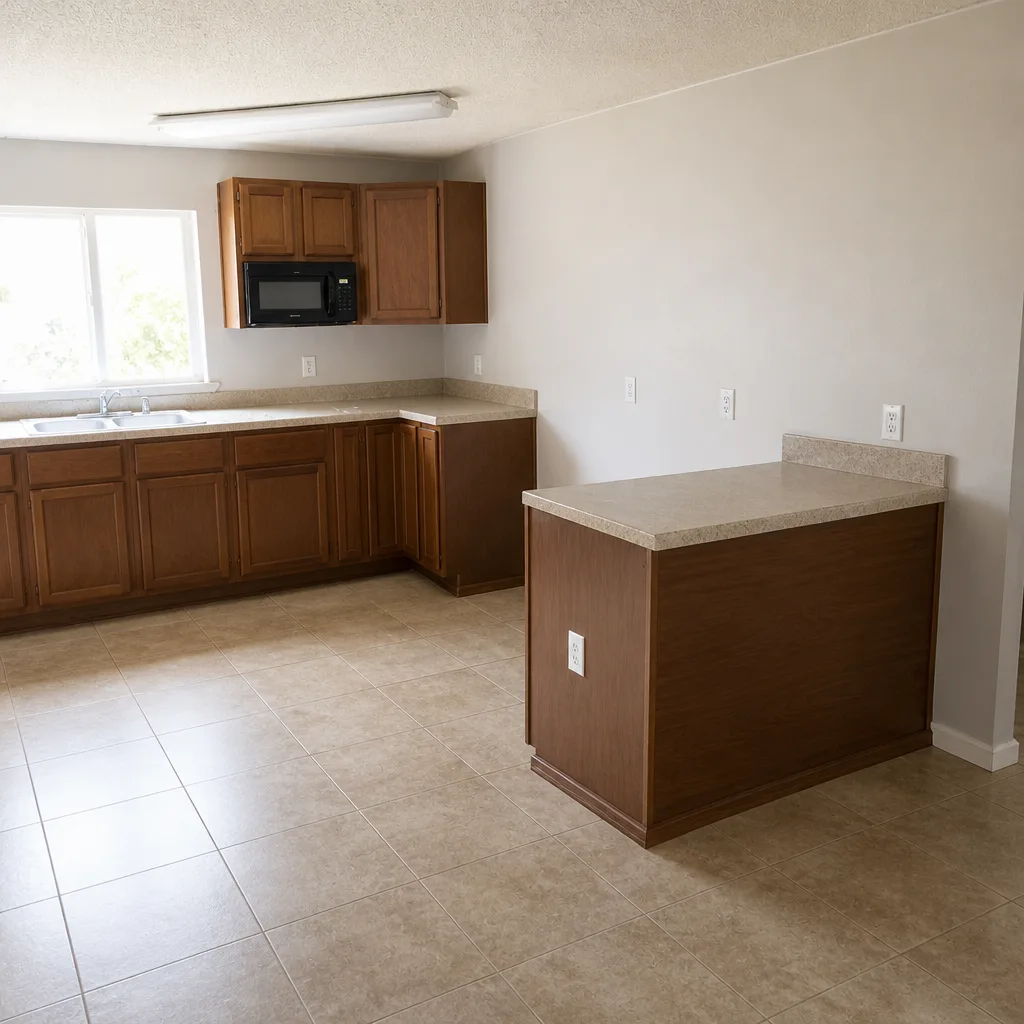 After
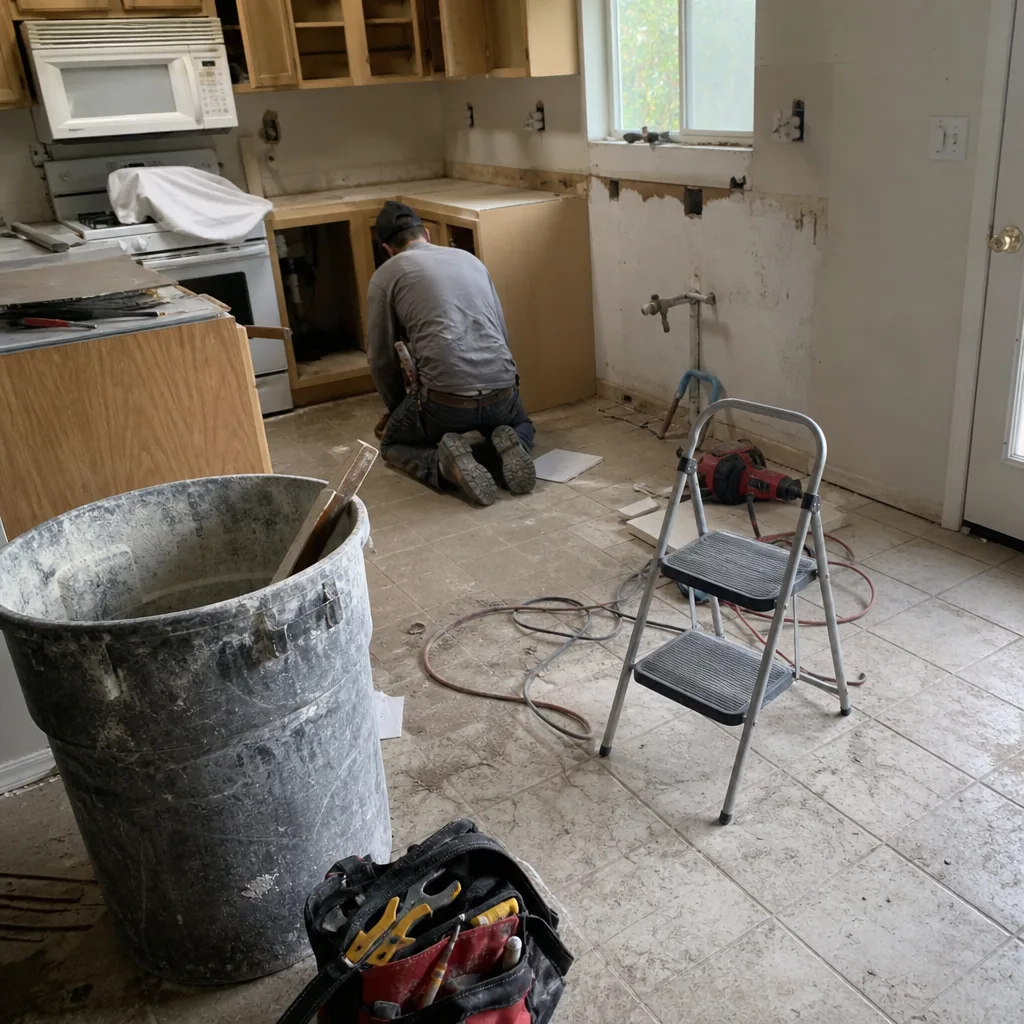 Before
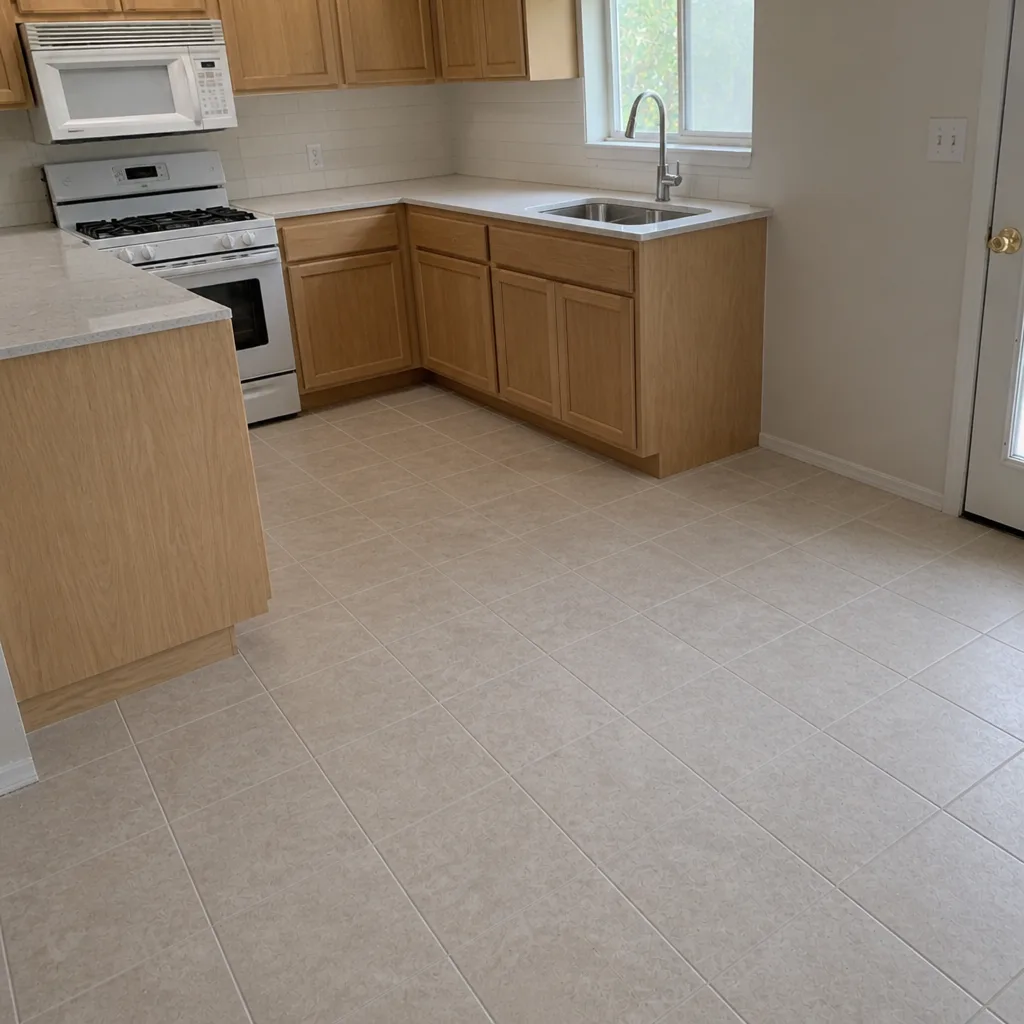 After
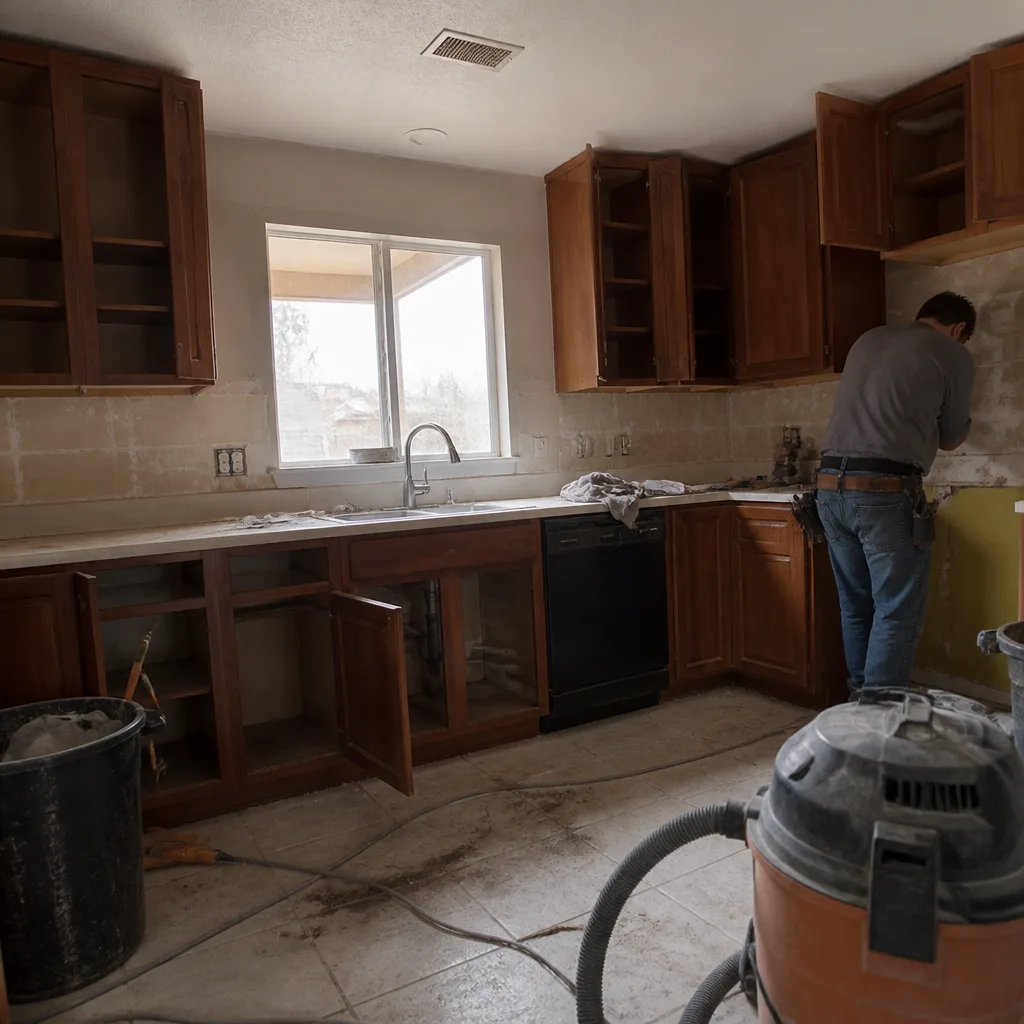 Before
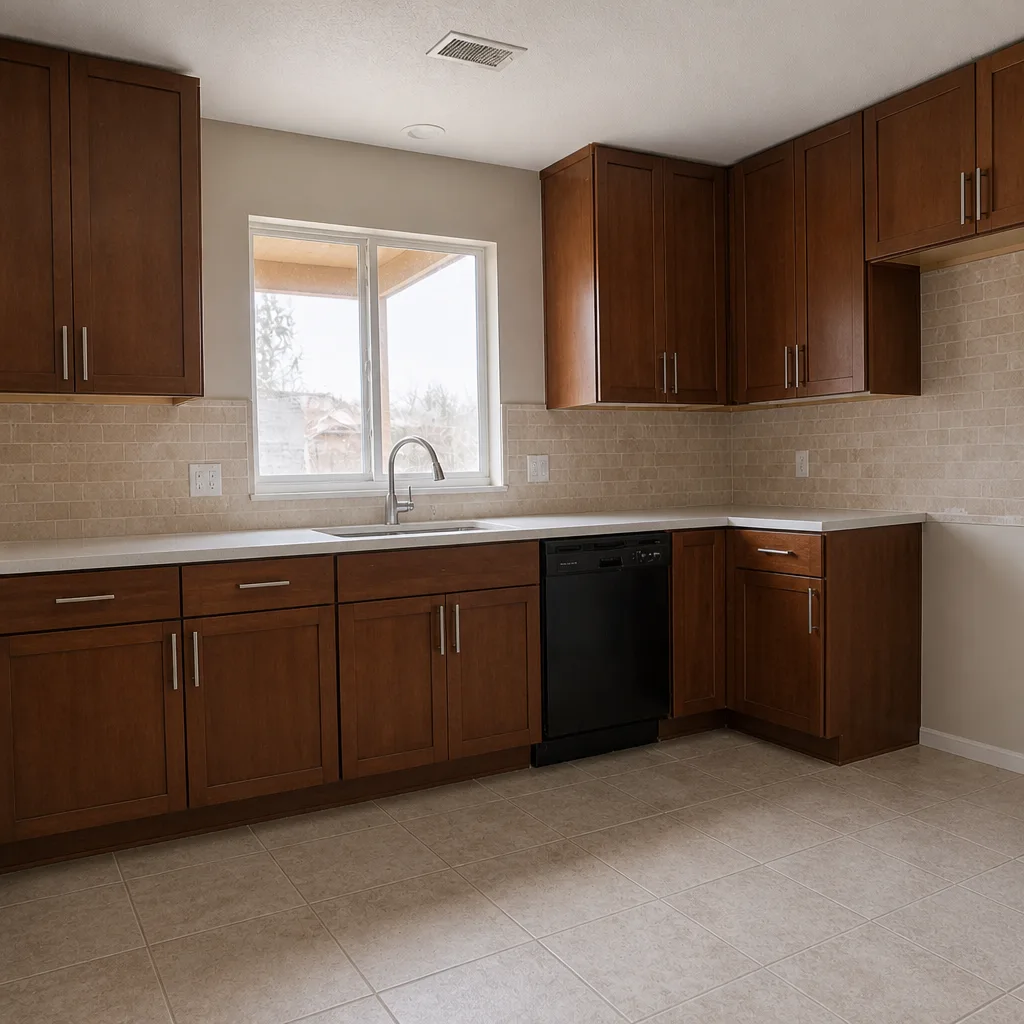 After
When to Call a Professional
Some troubleshooting you can do yourself with a level and a camera. Others need a trained eye. Call a professional when a cabinet run needs repositioning or re-shimming, when a quartz seam has visibly lifted or discolored, when grout cracks reappear after a re-grout, or when a drawer failure traces back to a cabinet box that was never plumbed correct. We can also help you sort out the warranty question before anything gets touched, because touching the wrong thing can complicate a claim. Kitchen Remodeling Enterprise offers free estimates in Enterprise – call (833) 522-7502. We answer 24/7. Our technicians have up to 10 years of experience, and they’ve seen every one of these failures enough times to know which fix actually holds.
If you’re planning ahead and want to review options for cabinets, countertops, or fixtures, the main Kitchen Remodeling Enterprise page walks through the full scope. Same brand roster, same standard of installation.
Frequently Asked Questions
That’s usually a sign the cabinet box wasn’t plumbed level at install, not a failed hinge. Check the cabinet face with a 4-foot level. If it leans, the box needs shimming or repositioning, and hinge adjustment alone won’t fix it.
Not typically, if the cause traces to substrate prep or adhesive application. A seam that lifts usually means the substrate wasn’t flat or the bond failed, which is an installation question. If the slab itself has a color issue or a pinhole, that’s a different story and belongs with the manufacturer.
Cracking at 30 days is usually a cure or mix problem and can often be re-grouted. Cracking at six months or a crack that reappears after re-grouting points to subfloor movement. The second case is the one that needs a professional look before re-grouting again.
Read the warranty document and get photographs first. Then determine whether the cause points to a material defect or an installation error. A manufacturer claim without documentation is likely to be denied, and a contractor repair without documentation can complicate the manufacturer warranty. Call (833) 522-7502 for a free estimate if you want a professional read before the warranty window closes.
At 30 days, 90 days, and one year. Use the checklist in this guide at each point. The first year is when installation problems surface, and catching them inside that window gives you the most options for a warranty repair.
Yes, within a reasonable indoor humidity range. Both brands build cabinetry designed for typical interior conditions. If humidity swings widely between seasons, you’ll see some seasonal movement in wood, which is normal. Keeping interior humidity stable minimizes it.
The Bottom Line
Nearly every kitchen problem that shows up after installation has a root cause you can trace. An unlevel cabinet box telegraphs through doors, drawers, and the countertop. A quartz seam that lifts is usually a substrate or adhesive issue, not a failed slab. Grout cracking on a schedule tells you whether you’re dealing with a cure problem or a moving floor. Diagnose before you repair, document before you touch anything, and check your kitchen at 30 days, 90 days, and one year while warranties are still active. If you need a trained eye on a specific issue, call (833) 522-7502 to schedule a free estimate in Enterprise.
Written by the team at Kitchen Remodeling Enterprise.