
Last updated November 17, 2026
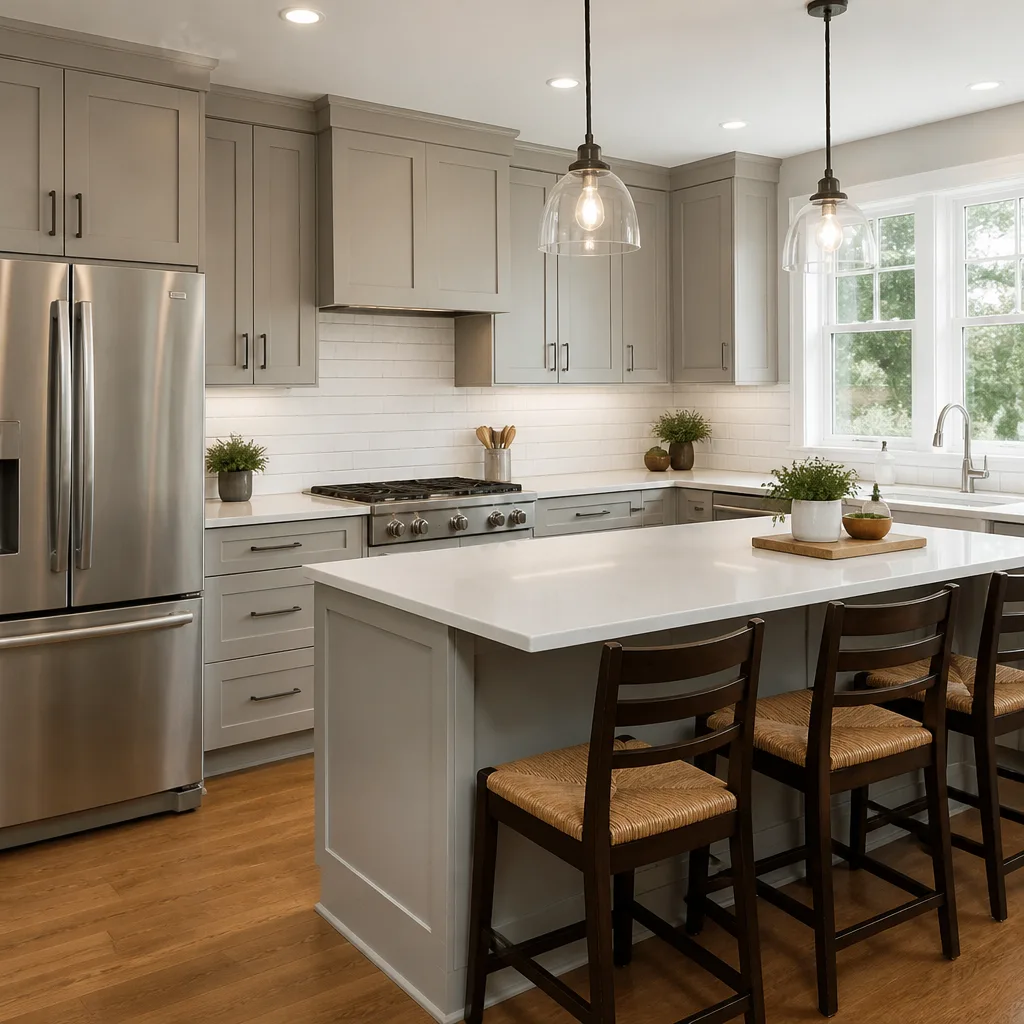 Shaker
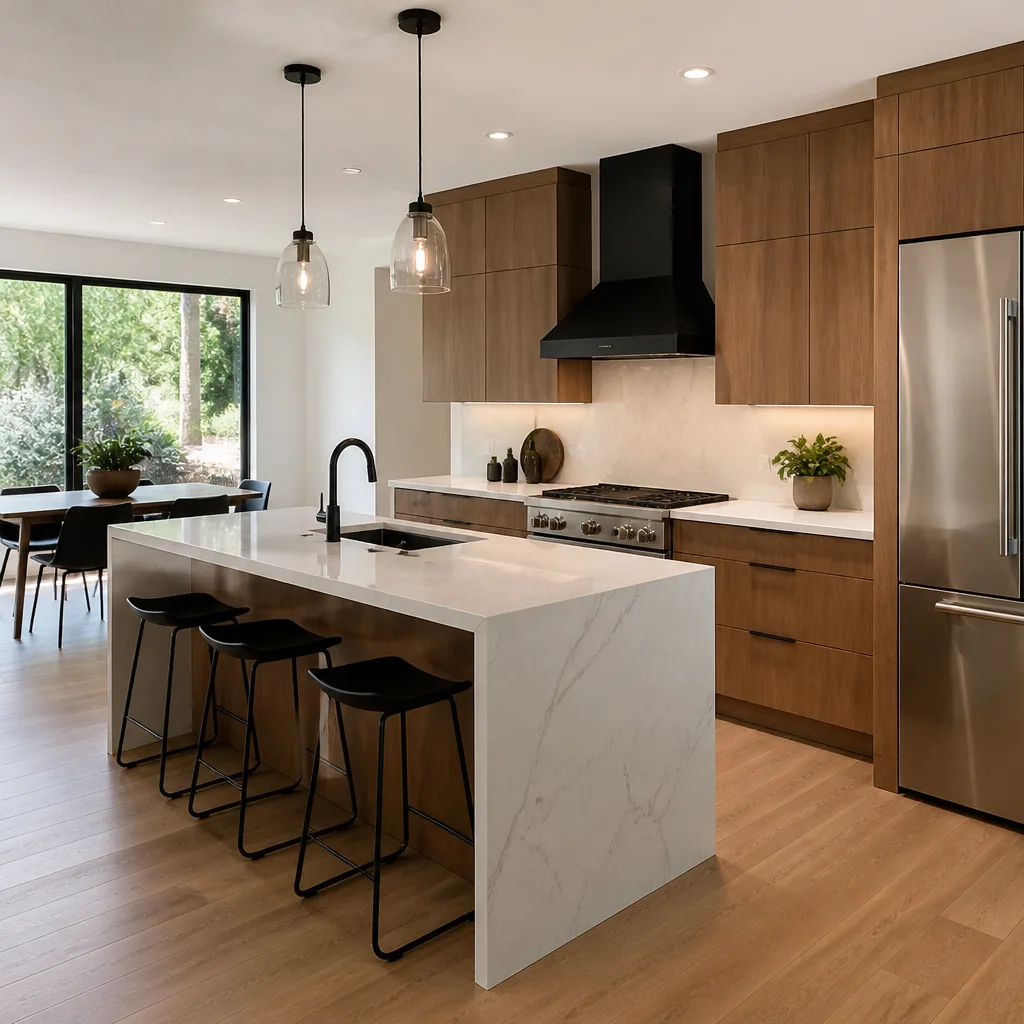 Modern flat-panel
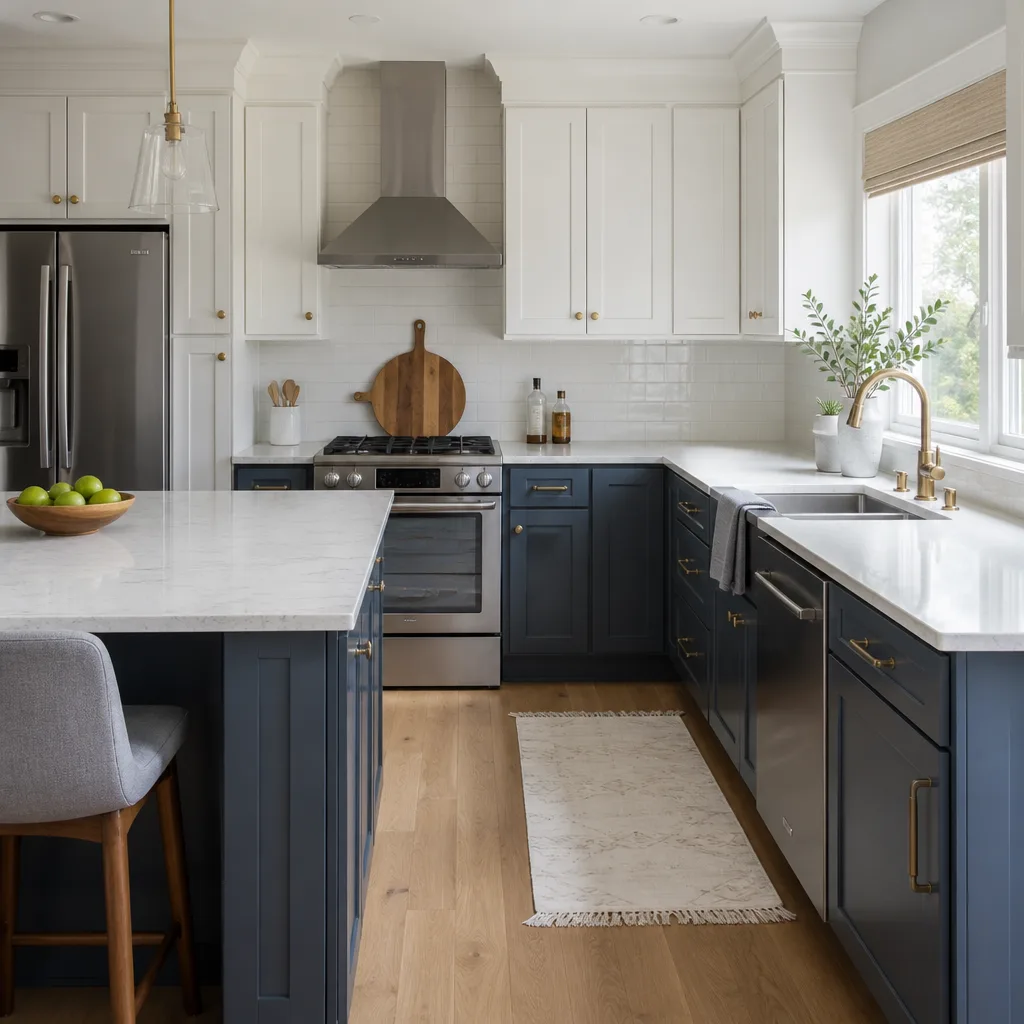 Two-tone cabinets
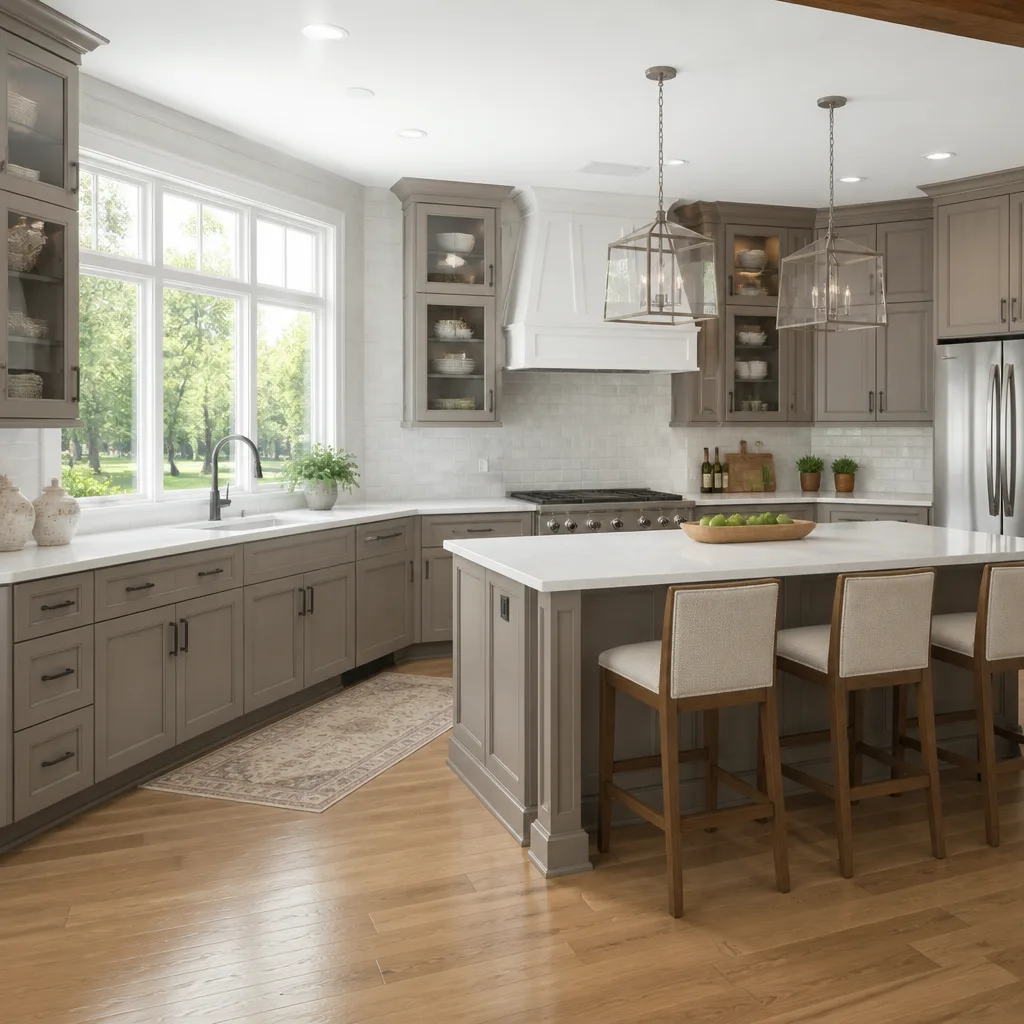 KraftMaid
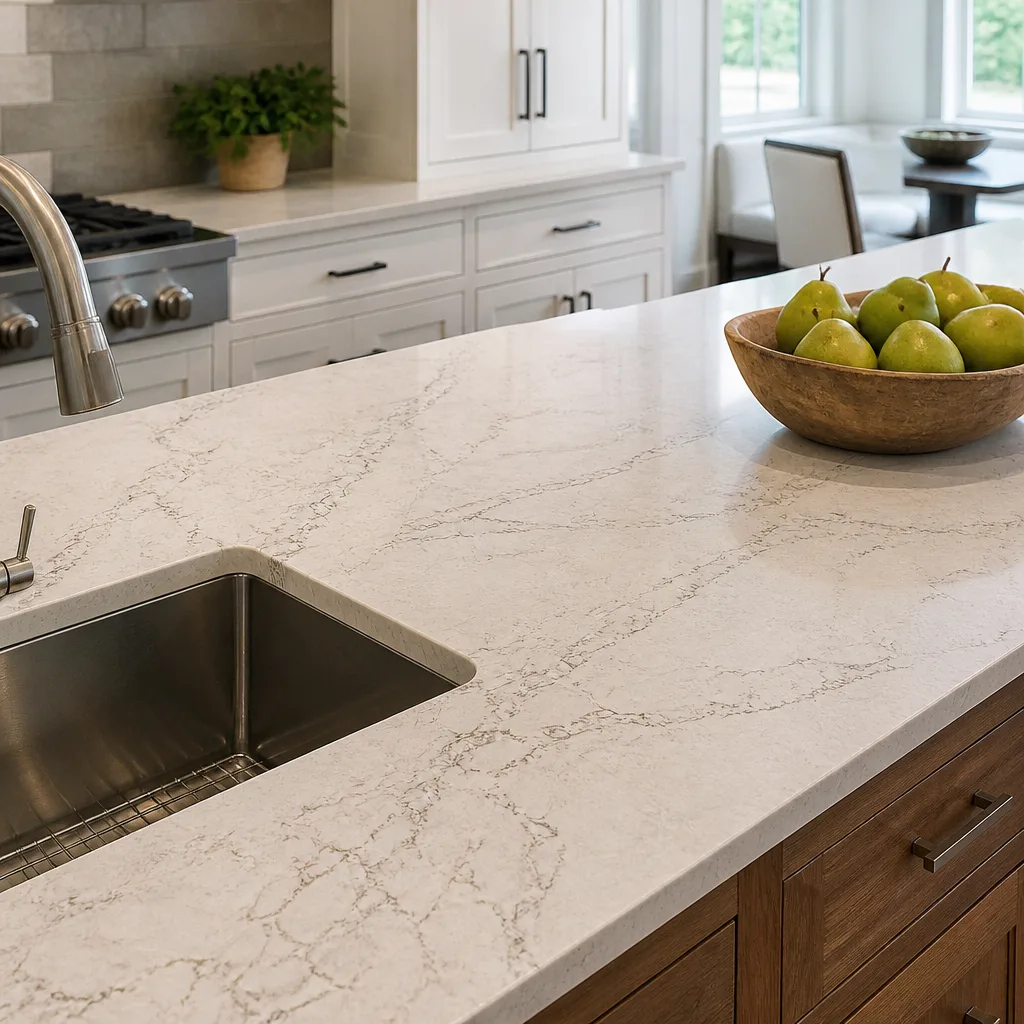 Cambria quartz
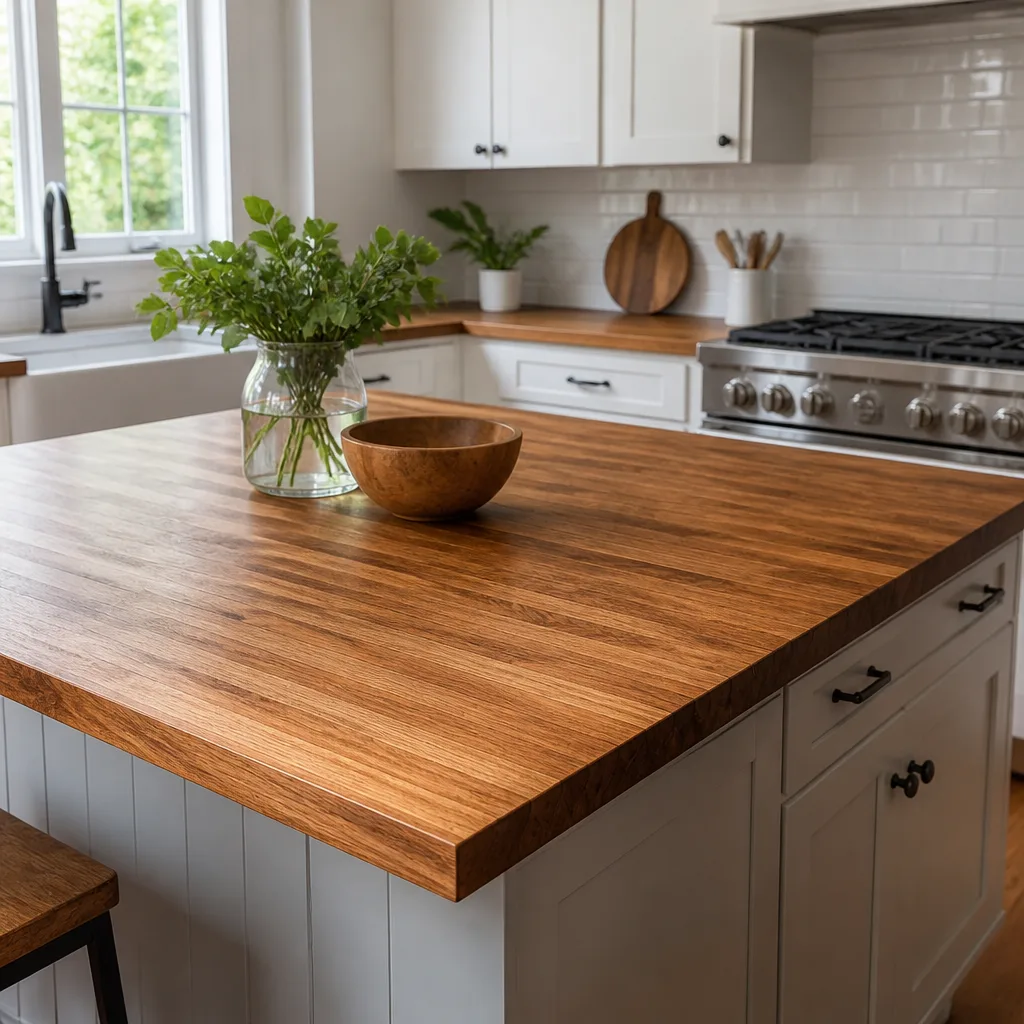 Butcher block
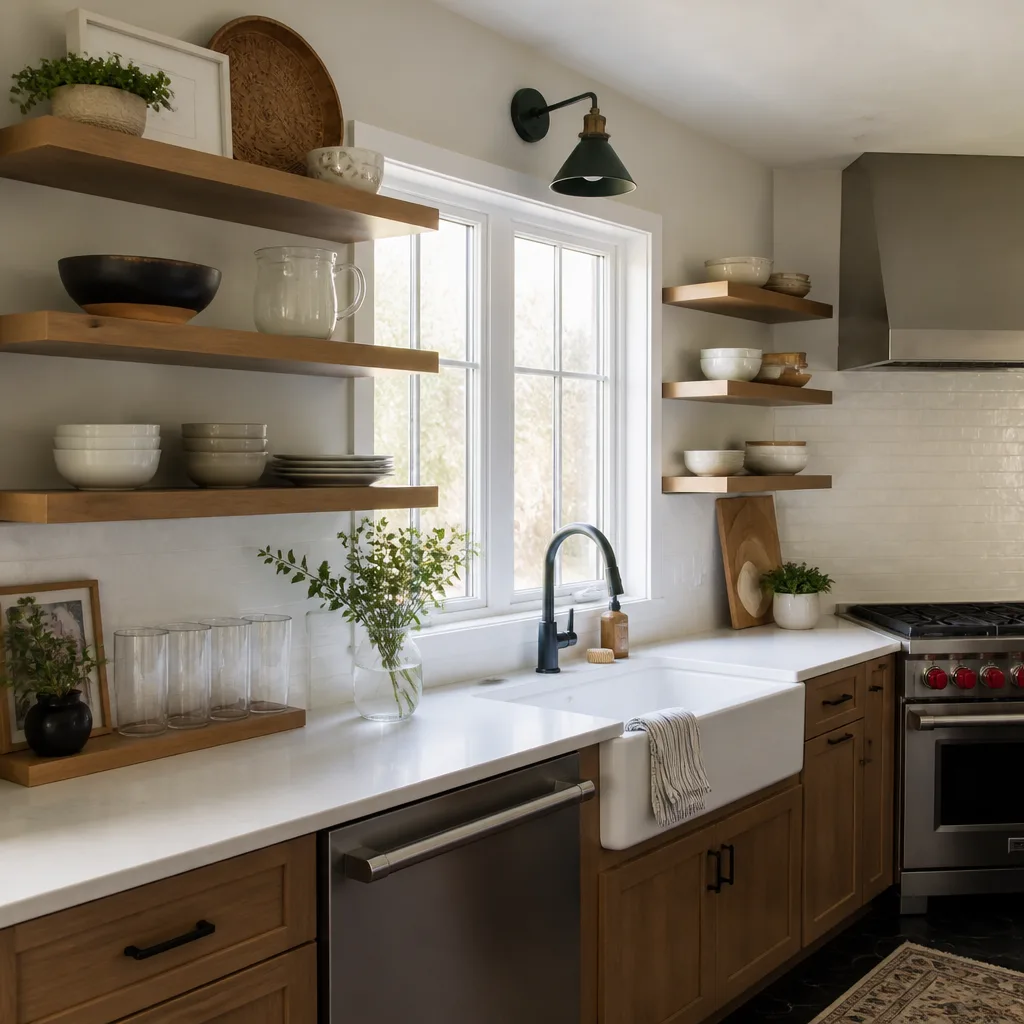 Open shelving
Free design consultation - KraftMaid and Wellborn cabinet lines, Cambria and Silestone surfaces, and every tier from refacing to full custom laid out side by side
Kitchen Remodeling Cost Breakdown: The Enterprise Homeowner’s Reference for 2026
The difference between a $35,000 and a $65,000 kitchen remodel in Enterprise is rarely the countertop or the appliances. It’s almost entirely in the cabinet specification, and most homeowners don’t realize this until they’re already committed to a price. Two bids that look identical on the summary page can hide a stock cabinet box behind one door and a semi-custom, dovetail-jointed frame behind another. This guide breaks down where the money actually goes at the material level: cabinet tiers by construction method, countertop cost per linear foot in the Las Vegas supply market, Clark County labor, and the allowances that quietly sink budgets. You’ll also learn to read a bid line by line, so the number you sign is the number you pay.
Quick Answer
A typical full kitchen remodel in Enterprise runs roughly $28,000 to $80,000 in 2026, with most homeowners settling between $40,000 and $55,000. Cabinetry is the single biggest cost driver at 25-35% of the total, followed by countertops at 10-15%, labor at 20-30%, and permits, appliances, and finish work filling the rest. The exact figure depends far more on cabinet line and countertop material than on the size of the room.
Styles & brands we work with
- Shaker
- Modern flat-panel
- Two-tone cabinets
- KraftMaid
- Cambria quartz
- Butcher block
- Open shelving
Table of Contents
- What Actually Drives Kitchen Remodeling Cost in Enterprise?
- Cabinet Cost Tiers Explained by Construction Method
- Countertop Cost Per Linear Foot in the Las Vegas Market
- Labor Cost Ranges for Enterprise Contractors in 2026
- The Hidden Cost Categories Most Estimates Bury
- How to Read a Contractor Bid: Allowances vs. Specifications
- How Long Does a Kitchen Remodel Take in Enterprise?
- Common Mistakes to Avoid
- When to Call a Professional
- Frequently Asked Questions
What Actually Drives Kitchen Remodeling Cost in Enterprise?
Contractors in Enterprise don’t disagree much on hourly rates. What makes two bids diverge by tens of thousands of dollars is the material specification behind each number, and cabinets are where that gap lives. A 10×12 kitchen with the same layout, same appliances, and same footprint can cost $38,000 or $62,000 depending on whether the cabinet package is a stock line from a big-box store or a semi-custom KraftMaid or Wellborn set built to the room’s exact dimensions.
Here’s the rough allocation on a mid-range full remodel in Enterprise:
- Cabinetry: 25-35% of total. The widest swing of any category.
- Countertops: 10-15%. Quartz, quartzite, and granite land in different bands.
- Labor: 20-30%, split across demo, rough-in, install, and finish.
- Appliances: 8-15%, entirely up to the homeowner’s choice.
- Permits, disposal, and contingency: 5-10%.
Notice that appliances, the thing most homeowners fixate on first, are rarely what tips a budget. The cabinet specification is. When we put together an estimate for a kitchen in the Winchester area, we walk through cabinet construction first for exactly this reason: it’s the decision that sets the ceiling on everything else.
One more Enterprise-specific factor: many neighborhoods here were built with standard 30-inch wall cabinets and a fixed peninsula layout. When you want to move a wall or extend a run, the cost isn’t in the labor, it’s in the custom cabinet modification and the electrical or plumbing relocation behind it. Those changes are invisible on a bid summary and visible on the final invoice.
Cabinet Cost Tiers Explained by Construction Method
Cabinet price is driven by three things: how the box is built, how many finish options you have, and what the manufacturer warrants. That’s the whole story. Understanding stock, semi-custom, and fully custom in those terms tells you exactly what your money buys.
Stock cabinets: roughly $80 to $150 per linear foot
Stock cabinets come in fixed sizes you pick from a catalog and assemble on site. The boxes are typically particleboard with a thin veneer, drawers usually ride on side-mount slides, and finish choices are limited to whatever the line offers in that color. Warranty is often short or nonexistent on the box itself. They work for a rental or a tight budget, but they rarely fit a real kitchen without filler strips, and the finish doesn’t hold up to daily cooking over a decade.
Semi-custom cabinets: roughly $150 to $350 per linear foot
This is the tier where most Enterprise homeowners land, and it’s where the value argument gets clear. Semi-custom lines like KraftMaid and Wellborn offer standard sizes with modification options: different depth, different height, custom drawer configurations, and a broad finish palette. Box construction improves to plywood or high-density particleboard with dovetail drawer boxes and full-extension, soft-close hardware. Warranty terms are meaningful and manufacturer-backed.
The reason we work with KraftMaid and Wellborn specifically is that their tolerances are documented and their warranty requirements are clear. When we install to the manufacturer’s standard, the homeowner keeps the full warranty. A generalist guessing at clearances can void it without knowing.
Full custom: roughly $350 to $700+ per linear foot
Fully custom means the cabinet maker designs every box to the room, so an odd corner, an inset range, or an angled wall becomes a feature instead of a compromise. Frame construction, furniture-grade joinery, and finish options limited only by your imagination. It’s the right call for historic homes, unusual layouts, and homeowners who plan to stay in the house for decades. It’s also the tier where an underestimated bid turns into a change order, because custom lead times run longer and there’s no standard size to fall back on.
If you want to see how cabinet specification translates into a real install, look at our cabinet installation page. The short version: cabinet tier is the single decision that shapes your whole remodel budget, so make it before you talk countertops.
Countertop Cost Per Linear Foot in the Las Vegas Market
Countertop cost in Enterprise depends on material, edge profile, and cutout complexity. Quartz is the most predictable line at roughly $60 to $110 per linear foot installed, quartzite runs $80 to $140, and granite sits between $50 and $110 depending on the slab. Those are fabrication-included figures for a standard edge. Where the price moves is in the details, not the material name.
Material differences that matter
- Quartz: Engineered surfaces like Cambria, Silestone, and Caesarstone. Non-porous, consistent color, and typically backed by a manufacturer warranty. Cambria is American-made with a lifetime residential warranty on the surface. Silestone has bacteriostatic properties built into its mineral-quartz composition. Caesarstone was one of the original engineered quartz producers and offers a broad palette.
- Quartzite: Natural stone with quartz-like hardness but visible movement and color variation. Quartzite slabs cost more and need sealing, but each slab is unique. The material is beautiful and unforgiving of a bad fabrication shop.
- Granite: The lowest entry point of the three, with wide slab-to-slab variation and a broad price range. Sealing is required and edges are the main fabrication cost.
Where fabrication pricing moves
The template fee is often the line item that surprises people. A countertop fabricator has to send someone to measure the actual cabinets after they’re installed, and that measurement is what the slab is cut to. Standard edge profiles (eased, bullnose) are usually included. A waterfall edge, a mitered corner, or an undermount sink cutout with a polished reveal all add to the per-linear-foot number. Cutouts for a cooktop or a drop-in sink are simpler than a farmhouse apron front, which changes the cabinet front and the fabrication both.
The key point: choose the surface that fits your kitchen and your life, but understand that the slab price is roughly half the installed cost. The fabrication labor and the template fee make up the rest.
Labor Cost Ranges for Enterprise Contractors in 2026
Labor is the least mysterious part of a kitchen remodel, once you break it out by phase. In Enterprise, licensed contractors book roughly $60 to $130 per hour, but residential kitchen work is quoted per project, not per hour. Here’s how the labor splits across a full remodel and what each phase covers.
1. Demolition and disposal: 5-10% of labor
Removal of cabinets, counters, flooring, and old appliances, plus dumpster rental and haul-away. Straightforward, but the phase where hidden conditions surface, which is why any honest bid carries a contingency line.
2. Rough-in: 20-30% of labor
Electrical, plumbing, and any new venting work. Moving a sink or a range means relocating a supply line or a 240-volt circuit. In Enterprise, many homes were built with gas ranges and overhead venting that didn’t meet current make-up air requirements, so a kitchen upgrade sometimes triggers a venting update you didn’t plan for. Ask about it at estimate time, not during install.
3. Cabinet installation: 25-35% of labor
Setting the boxes level and square, scribing to the walls, hanging uppers, and installing crown and hardware. On a semi-custom KraftMaid or Wellborn install, this is also where the cabinet height and filler strategy gets handled, and where a sloppy installer turns a $12,000 cabinet purchase into a visible problem.
4. Countertop installation: 10-15% of labor
Template, fabrication, and final set by the stone fabricator. Fabrication is usually built into the per-linear-foot price, but the install itself and the seam placement are part of the on-site labor.
5. Finish work: 20-25% of labor
Backsplash, trim, caulking, paint touch-ups, and punch-list items. This phase is where the final 10% of a budget disappears on a bad estimate. A skilled crew builds it in.
Our technicians have up to 10 years of experience across all five phases, and that matters most in phases 2 and 3, where a small miscalculation costs a lot of rework. For a full picture of how labor tracks across a project, see our kitchen remodeling page.
The Hidden Cost Categories Most Estimates Bury
The line items on a bid are only half the story. The other half is what a bid deliberately leaves vague, and that’s where budgets quietly exceed the estimate. Here’s what to watch for.
Permits and inspections
Any structural change, electrical relocation, or plumbing move in Enterprise requires a permit, and the permit fee is often either excluded or listed as “TBD.” A typical kitchen permit runs a few hundred dollars depending on scope, plus the contractor’s time handling inspection scheduling. Ask whether the permit fee is included and who pulls it. On any bid, the permit should be a line item, not a footnote.
Appliance delivery and haul-away
The appliance price on the showroom tag rarely includes delivery, installation, or haul-away of the old unit. Those three charges add up, and a bid that omits them puts the cost on the homeowner later. Ask for explicit line items or ask who handles it.
Countertop template fees
Fabricators sometimes tack on a separate template fee that isn’t in the per-linear-foot quote. It’s a real charge for real work: someone has to measure the installed cabinets before cutting. Include it in the estimate so the final invoice doesn’t surprise you.
Sub-floor and plumbing surprises
The Las Vegas Valley’s expansive soils mean homes here can settle, and a sub-floor around the sink or dishwasher sometimes shows water damage once the old cabinets come out. A reasonable contingency of 10-15% of the total project cost covers these discoveries. A bid with no contingency line is often a bid that will change order later.
We’ve watched homeowners in Enterprise take a $45,000 estimate and sign it without noticing a missing contingency line, then eat a $4,000 surprise because a sub-floor section had to be rebuilt. Read the bid for what’s missing, not just what’s there.
How to Read a Contractor Bid: Allowances vs. Specifications
This is the single most important skill in the whole guide. A bid with a low total and lots of allowances is a bid designed to look cheap and end up expensive. Here’s how to spot the difference.
What an allowance hides
An allowance is a placeholder number a contractor puts on a line item, on the understanding that the actual product will be selected later. Two problems come with it. First, allowances are often set below real market price, so nearly every allowance comes in over budget. Second, an allowance lets a contractor post a low number on the summary page without committing to a specific material. A $25,000 cabinet allowance line on a $60,000 bid may not cover the cabinets the homeowner actually wants.
What a specification guarantees
A specified line item names the brand and product line. It commits the contractor to installing that product at that price. Here’s what a good bid looks like on a line by line basis:
- Cabinet line named with brand and product tier (for example, KraftMaid semi-custom, specified).
- Countertop material and edge profile named with per-linear-foot price.
- Permit fee as a dollar amount, with pull-and-inspect responsibility named.
- Demolition and disposal priced as a line item.
- Contingency of 10-15% specified as a separate, tracked line.
- Change-order policy written in plain language.
If a bid has five allowances and no specifications, ask for it again with product names. A professional contractor can specify. A generalist can’t.
How Long Does a Kitchen Remodel Take in Enterprise?
A full kitchen remodel in Enterprise takes 6 to 12 weeks for a standard scope, with larger or custom cabinet projects stretching to 16 weeks. The cabinet lead time is usually the longest single phase at 4 to 8 weeks for semi-custom, longer for full custom.
Here’s the typical sequence:
- Design and specification: 1-2 weeks.
- Permitting: 2-4 weeks, depending on scope.
- Demo and rough-in: 1-2 weeks.
- Cabinet lead time: 4-8 weeks (this can overlap with rough-in).
- Cabinet installation: 3-5 days.
- Countertop template and fabrication: 1-2 weeks.
- Finish work and punch list: 1-2 weeks.
The homeowner-available time on site is short; the wait for materials is long. Any contractor who quotes a two-week full kitchen remodel is either using stock cabinets in stock sizes or isn’t being straight with you.
Common Mistakes to Avoid
- Choosing cabinets before choosing the layout. Cabinet specification should follow the layout, not lead it. A gorgeous semi-custom cabinet in an inefficient layout is a waste of money, no matter how good the finish.
- Ignoring the template fee. A countertop bid that omits the template fee will tack it on later. Ask for it on the estimate, not on the invoice.
- Using allowances on cabinet and countertop line items. The two largest material categories are exactly where allowances hurt most. Specify both brands before signing.
- Forgetting that Enterprise homes settle. The Las Vegas Valley’s expansive soils mean an old sub-floor is a real risk on any kitchen that had a leak. A contingency line of 10-15% is not pessimism.
- Assuming appliances are the cost driver. They aren’t. The cabinet specification is, and that’s where negotiating effort should go.
- Skipping the written change-order policy. A contractor who won’t put the change-order policy in writing is a contractor who can add costs after work starts.
- Not asking about the manufacturer warranty requirements. Install a KraftMaid or Wellborn cabinet outside the manufacturer’s tolerance and the warranty can void. Ask your contractor how they protect the warranty.
When to Call a Professional
Some kitchen work is straightforward enough for a homeowner to take on: painting, swapping a faucet, hanging a new light fixture. The moment the project involves cabinet specification, countertop fabrication, electrical rough-in, or plumbing relocation, the math changes. A miscalculated cabinet run voids the manufacturer’s warranty. A countertop templated wrong is a replacement slab, not a fix. A permit pulled by the wrong party fails inspection and gets torn back out. Our technicians have up to 10 years of experience across every phase of a kitchen remodel, and we know these products by name because we install them every day.
kitchen remodeling Enterprise offers free estimates in Enterprise. Call (833) 522-7502. We answer 24/7. Fast dispatch from 7am to 7pm, Sunday through Friday. One team from cabinet frames to countertop edges, with a written line-item quote that names every material and every line.
Frequently Asked Questions
A typical full kitchen remodel in Enterprise costs $28,000 to $80,000 in 2026, with most homeowners landing between $40,000 and $55,000. The cabinet specification is the biggest driver of where you land in that range. Call (833) 522-7502 for an exact quote; estimates are free.
Refacing is cheaper than replacement, roughly a third of the cost of new semi-custom cabinets, but you keep the original box construction and drawer hardware. If the boxes are solid and the layout works, refacing makes sense. If the boxes are particleboard stock cabinets or the layout needs changes, replacement is the better long-term value. Call (833) 522-7502 and we’ll walk through both options with you.
Most Enterprise kitchen remodels require a permit for structural, electrical, plumbing, or mechanical work. Cosmetic updates like paint and refacing typically don’t. Confirm the exact scope with the city’s building department, and ask whether the permit is included on your contractor’s bid. Call (833) 522-7502 for a free estimate that specifies the permit line.
Quartz countertops in Enterprise run roughly $60 to $110 per linear foot installed, depending on brand, edge profile, and cutout complexity. Cambria, Silestone, and Caesarstone all fall in this band with different warranty and aesthetic tradeoffs. Call (833) 522-7502 for a per-linear-foot quote on your kitchen.
Both are semi-custom lines with strong construction and manufacturer-backed warranties. KraftMaid is known for its extensive finish and door-style palette and dovetail drawer boxes. Wellborn’s semi-custom lines are strong on storage options. Both are a step above big-box stock lines in tolerances and warranty terms. Call (833) 522-7502 to talk through which line fits your kitchen.
The price shouldn’t change for specified line items. Change orders are for changes the homeowner requests or for uncovered conditions like sub-floor damage, and they should be approved in writing before the work continues. A bid with a proper contingency line absorbs most of these surprises. Call (833) 522-7502 for a free estimate with a written change-order policy.
The Bottom Line
Kitchen remodeling cost in Enterprise isn’t set by labor rates or the size of the room. It’s set by cabinet specification first, countertop material second, and how honestly the bid is written third. The homeowners who land closest to their budget are the ones who specify their materials before signing, insist on a contingency line, and ask about the template fee and permit before work starts. If you want a written line-item estimate that names every material on your project, call (833) 522-7502. We answer 24/7, with fast dispatch from 7am to 7pm, Sunday through Friday. Estimates are free.
Written by the team at Kitchen Remodeling Enterprise.
For the full scope of what we do, visit Kitchen Remodeling Enterprise. If you’re in the Winchester area, our kitchen remodeling page covers the local details.
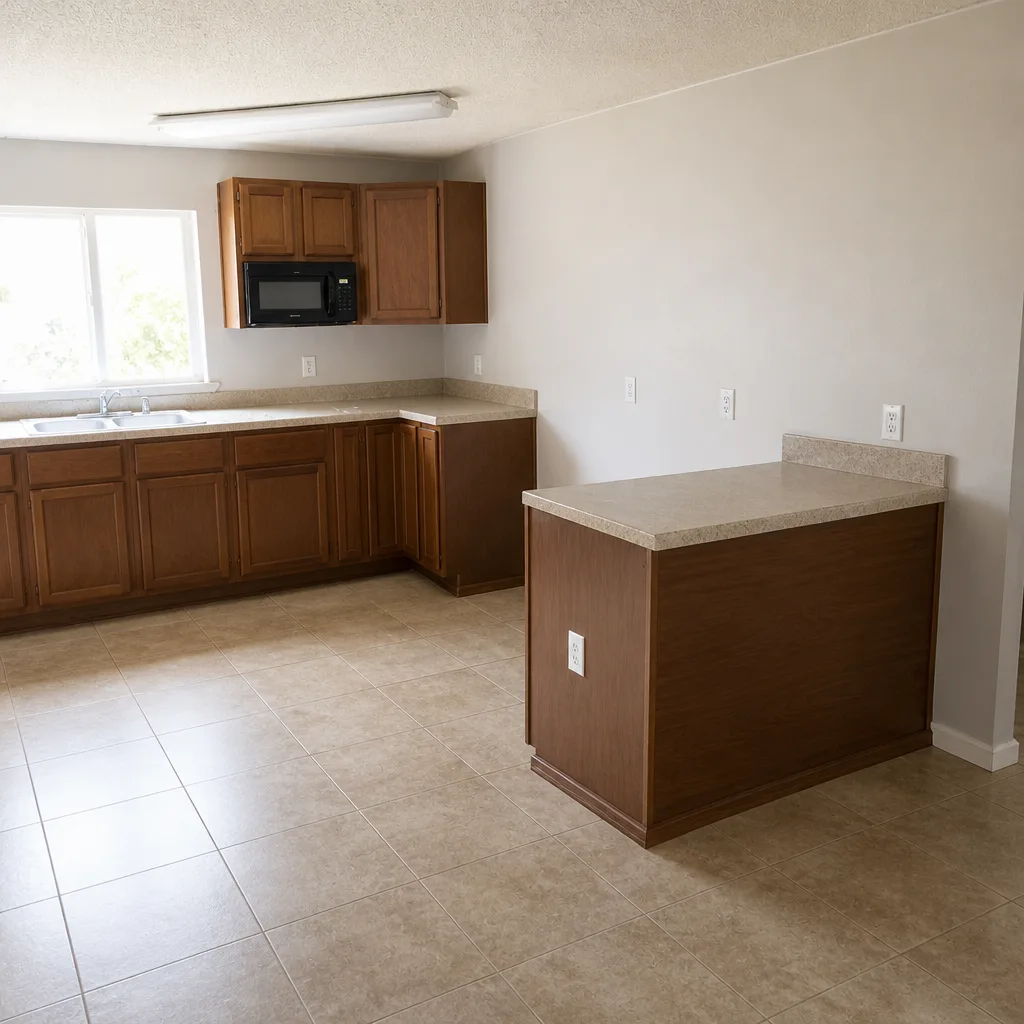
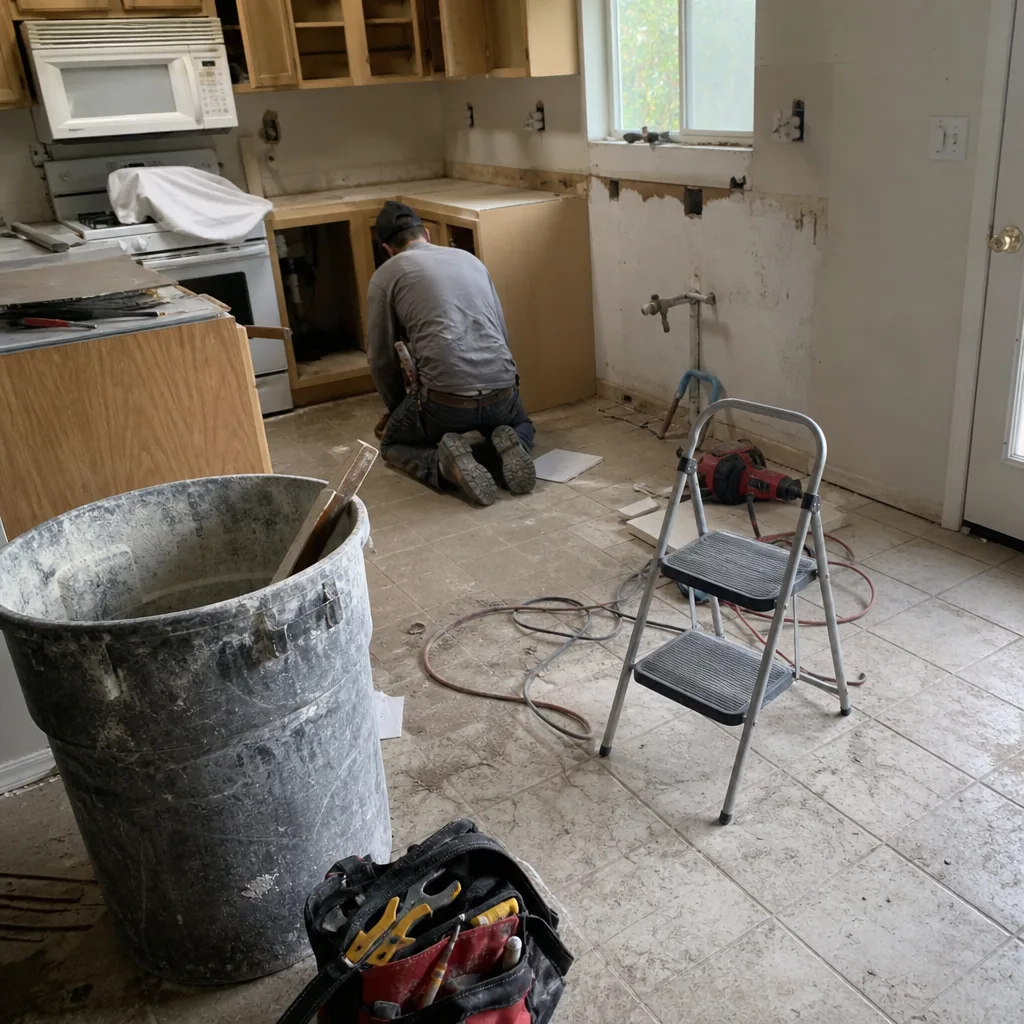
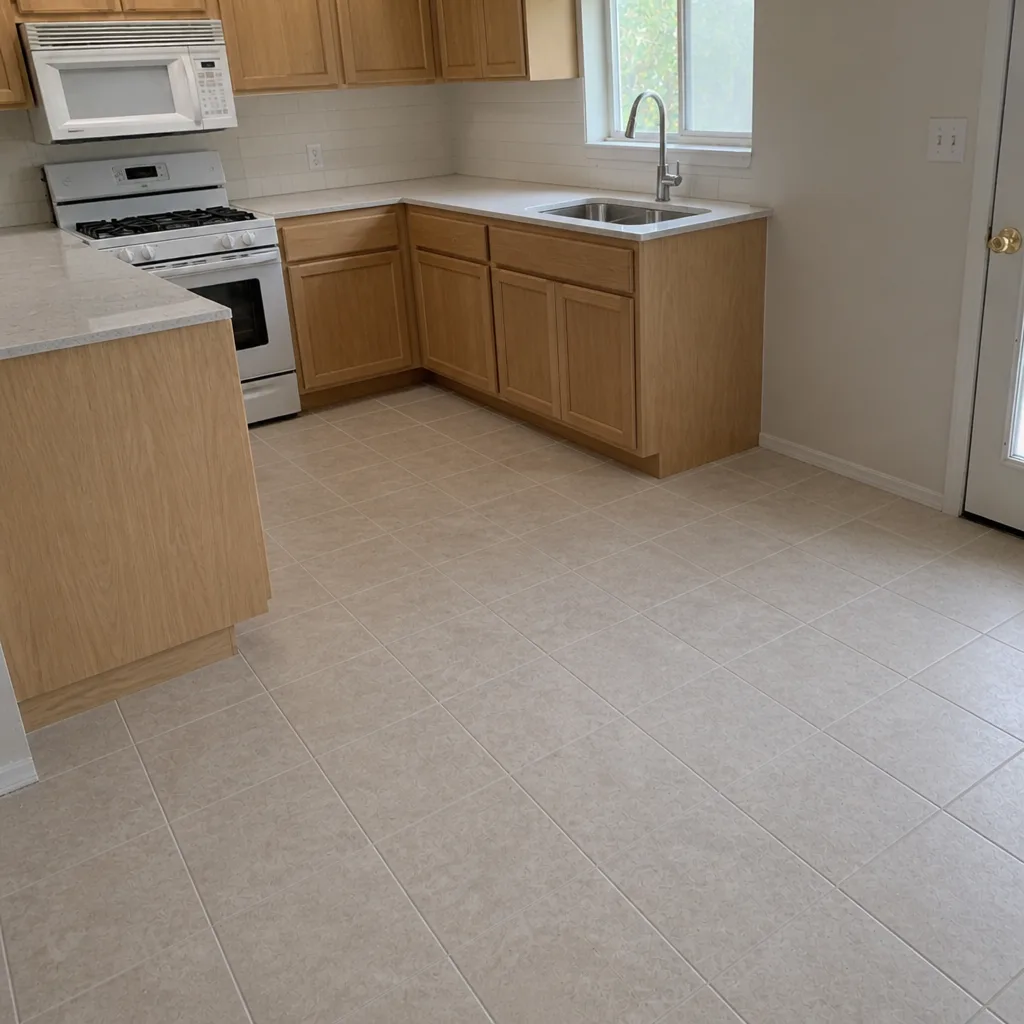
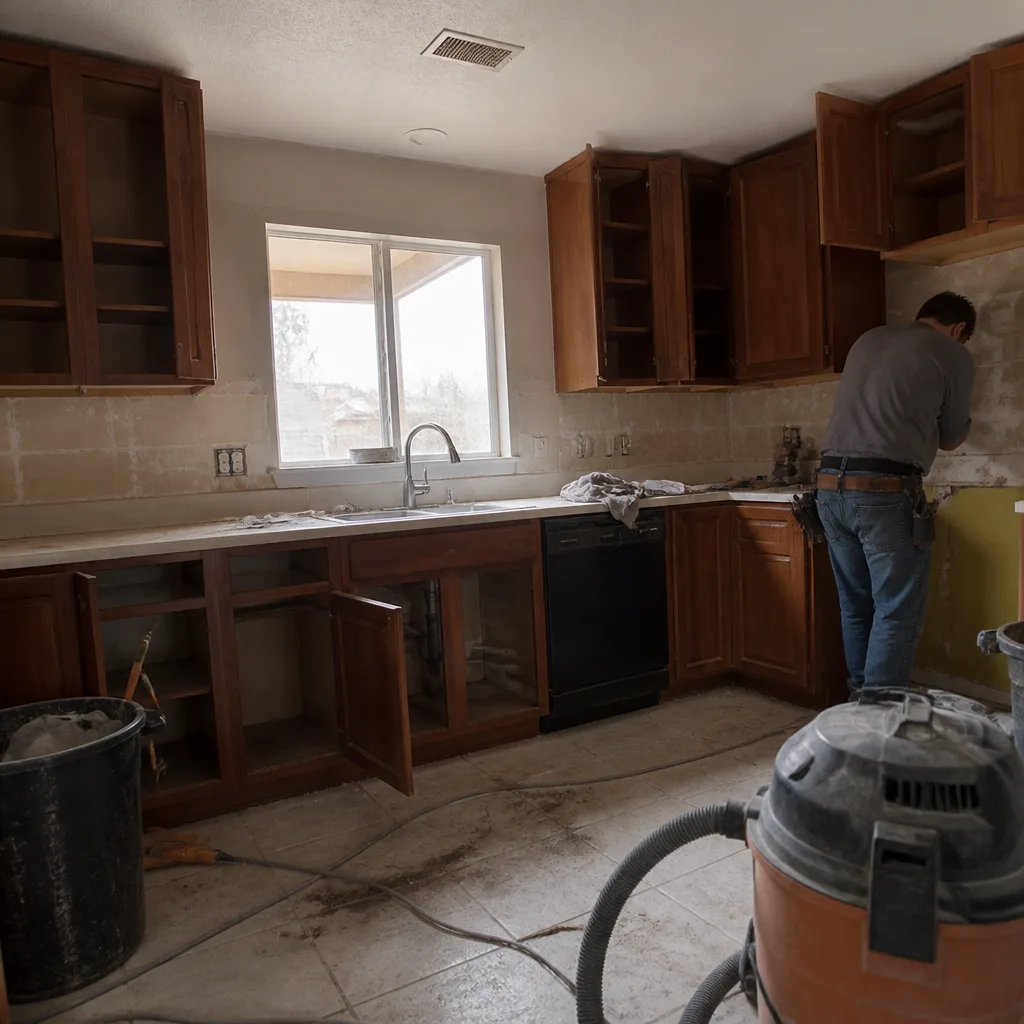
See the difference
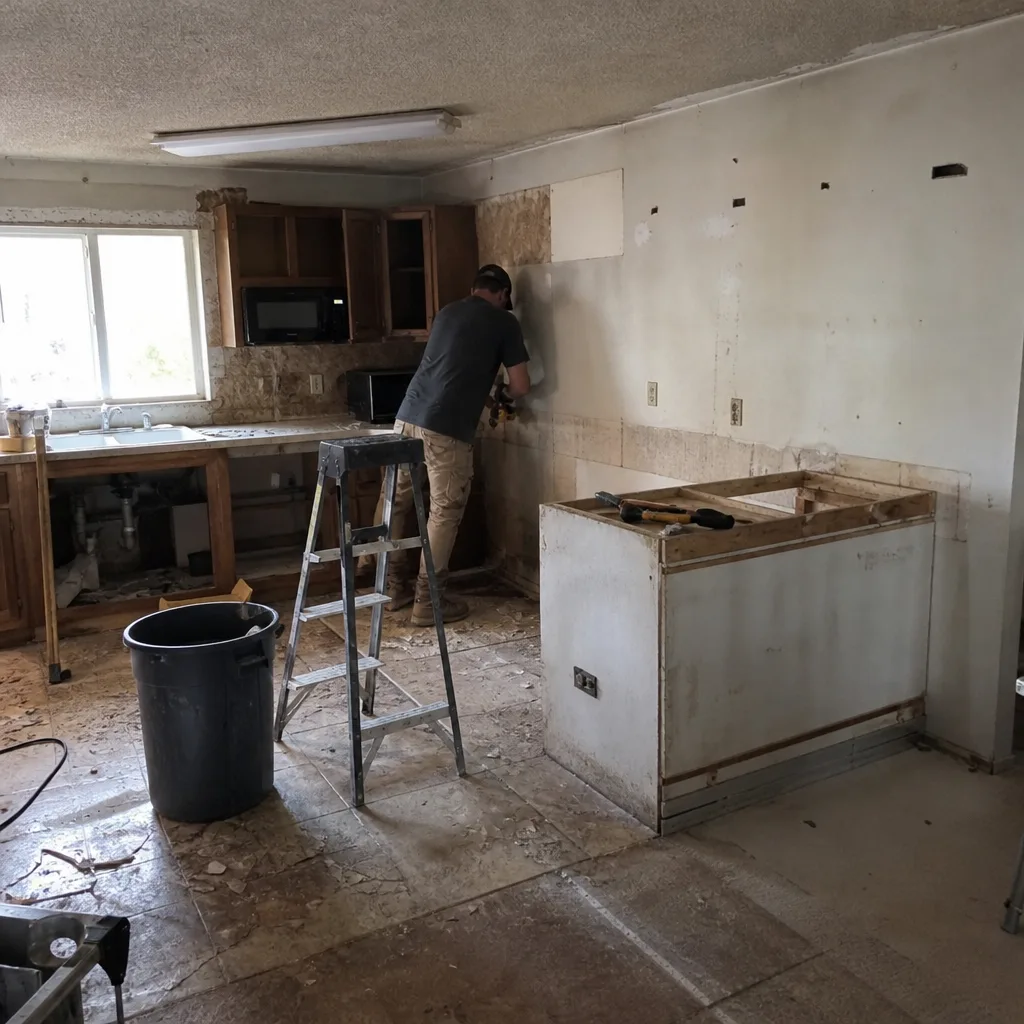 Before
 After
 Before
 After
 Before
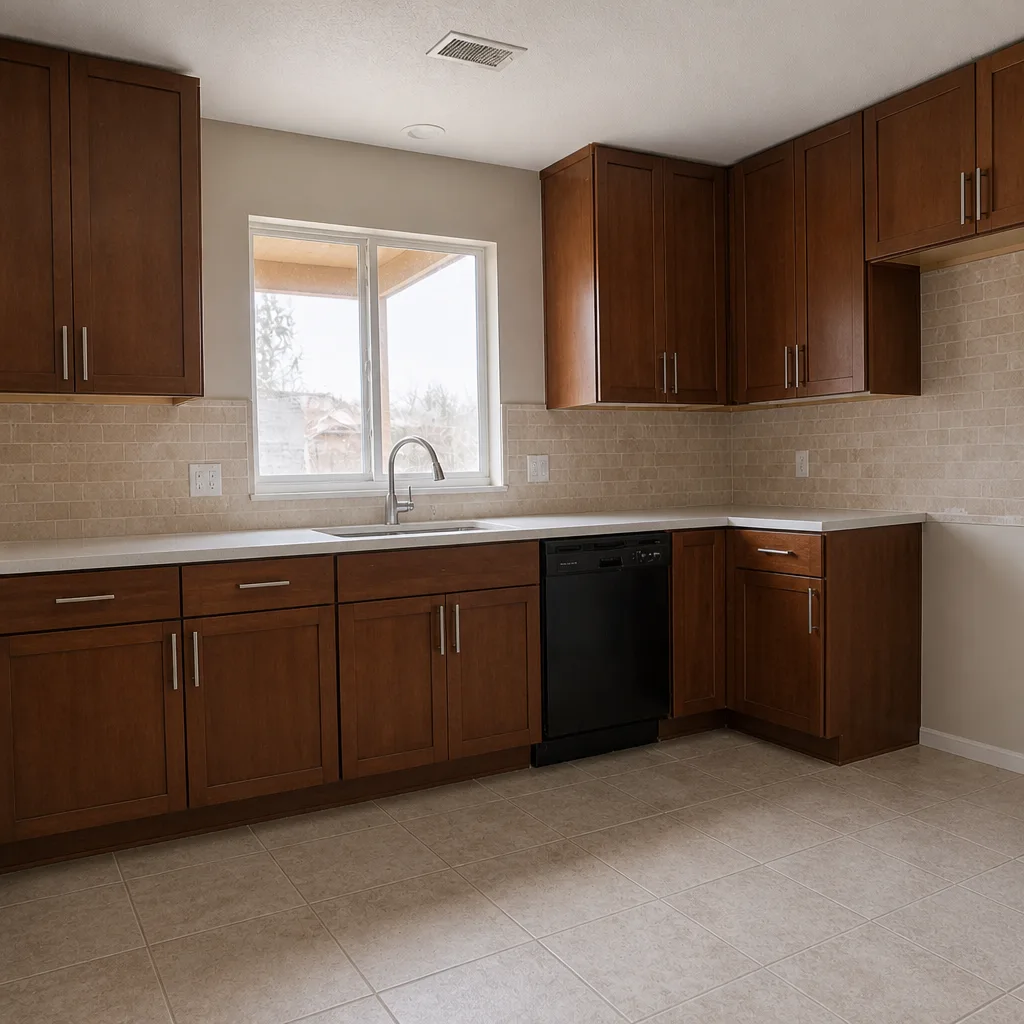 After