
Last updated November 17, 2026
 Shaker
 Modern flat-panel
 Two-tone cabinets
 KraftMaid
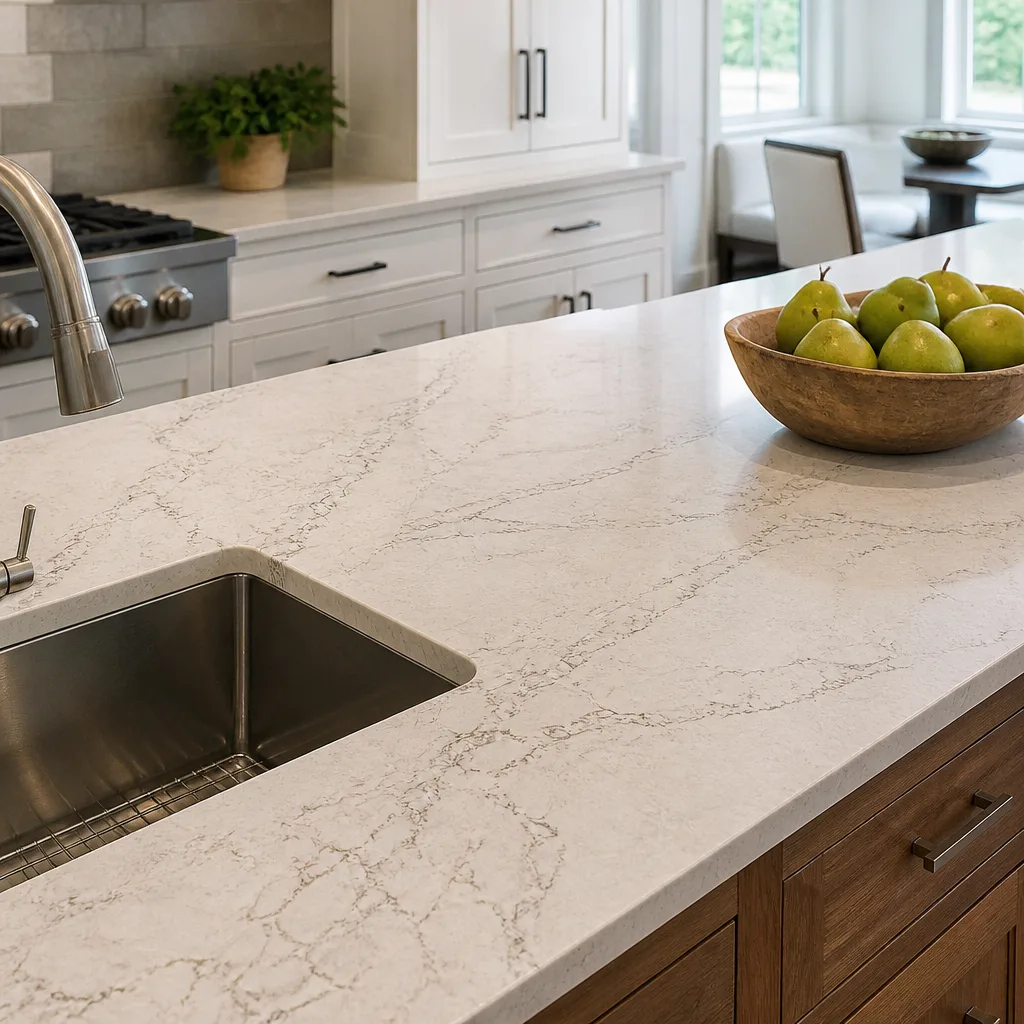 Cambria quartz
 Butcher block
 Open shelving
Free design consultation - KraftMaid and Wellborn cabinet lines, Cambria and Silestone surfaces, and every tier from refacing to full custom laid out side by side
Seasonal Kitchen Remodeling Care for Enterprise: Year-Round Homeowner’s Guide
Cabinet finish cracking in Enterprise kitchens is rarely a product defect. It’s almost always caused by an HVAC vent blowing directly on cabinet doors through the summer months, something that takes 30 seconds to redirect and years to cause visible damage. Enterprise doesn’t run on four seasons the way the rest of the country does. It runs on two thermal extremes, and kitchen materials feel both of them. This guide walks through what a kitchen actually needs in Enterprise through a full year: which checks belong in summer heat, which belong in the dry winter, and how low desert humidity quietly works on solid-wood drawer boxes and grout lines. You’ll finish knowing what to inspect yourself, what to fix on the spot, and when a symptom crosses the line into a call.
Quick Answer
Seasonal kitchen care in Enterprise should follow the materials, not the calendar. The two events that matter most are summer heat pushing interior temperatures high enough to stress cabinet finishes and caulk at the countertop-to-backsplash seam, and winter dryness contracting wood components enough to open gaps and stick drawers. A simple twice-a-year routine plus a few monthly checks covers nearly everything: redirect HVAC vents away from cabinet runs, inspect seam caulk before the humid summer months, re-torque hinges and slides after the heat cycle, and watch under-sink plumbing where exterior walls get cold.
Styles & brands we work with
- Shaker
- Modern flat-panel
- Two-tone cabinets
- KraftMaid
- Cambria quartz
- Butcher block
- Open shelving
Table of Contents
- Why Kitchen Care in Enterprise Follows Materials, Not Months
- Summer: Vent Positioning and Seam Caulk Before the Humid Months
- Fall: Re-Torquing Hardware and Clearing the Range Hood
- Winter: Under-Sink Drafts and Grout After Thermal Contraction
- Low Desert Humidity and What It Does to Wood Drawer Boxes
- DIY Fix vs. Professional Call: Symptom Thresholds That Decide It
- A Year-Round Kitchen Care Calendar for Enterprise Homes
- Common Mistakes to Avoid
Why Kitchen Care in Enterprise Follows Materials, Not Months
Most seasonal home care guides were written for climates with a wet spring and a freezing winter. Enterprise isn’t that. What we have is a long stretch of intense summer heat followed by a dry, cool winter, and the kitchen materials in your home respond to those two extremes far more than they respond to any date on a calendar. A cabinet door doesn’t know it’s September. It knows the air around it swung from 105 degrees to 60 degrees over a few weeks.
That’s why we build kitchen care around materials. Three groups do most of the moving:
- Wood components such as cabinet frames, doors, and solid-wood drawer boxes, which expand in heat and humidity and contract in dry cold. Semi-custom lines like KraftMaid use dovetail drawer boxes specifically because that joinery tolerates seasonal movement better than stapled or nailed construction.
- Sealants and caulk, especially at the countertop-to-backsplash seam, which flex with temperature swings and eventually crack if the joint moves more than the caulk can stretch.
- Grout and tile, which hairline-crack when the substrate and the tile expand and contract at different rates.
Quartz surfaces from Cambria, Silestone, and Caesarstone are far more dimensionally stable than wood, which is one reason they’re popular here. But even quartz sits on a cabinet base that moves, and the seam between the two is where you’ll see the first signs of seasonal stress. When we plan a kitchen remodeling project in the area, we spec materials with this thermal cycle in mind, because a kitchen that’s built for one season and installed in another will tell you about it within a year.
One more thing worth saying up front: this guide is about caring for a kitchen you already have. If your kitchen is at the point where the cabinets are failing at the joints rather than just moving with the seasons, care becomes replacement, and that’s a different conversation.
Summer: Vent Positioning and Seam Caulk Before the Humid Months
The single most overlooked cause of cabinet finish damage in Enterprise is an HVAC register or return blowing directly across a run of cabinet doors. In summer, that vent pushes cold, dry air against a door face that’s warmed on the other side, and the finish on the door sees a temperature gradient it wasn’t designed for. Over a few seasons, that shows up as fine cracking along the stiles and rails, or as a dulled, checked finish near the vent. It is almost never a manufacturing defect. It’s airflow.
The fix takes about 30 seconds. Walk your kitchen and look at where every vent points. If a register is aimed at cabinet faces, close the louvers or deflect the airflow along the floor or into the room instead of at the cabinetry. If a return is pulling air across a cabinet run, a simple deflector is often enough. Do this in late spring, before the first real heat, and again in midsummer when the system is running hardest.
The second summer task is the countertop-to-backsplash seam. This joint is caulk, not grout, and it’s the joint that moves most. Before the humid months arrive, run a finger along the seam and look for:
- Any visible gap between the caulk bead and the countertop or the backsplash
- Caulk that has pulled away at inside corners or at the ends of the run
- Discoloration or a soft spot that suggests moisture has already gotten behind the bead
- Cracking where two countertop sections meet at a seam
If the caulk is intact, leave it alone. If it’s failing, it needs to be cut out and replaced with a kitchen-rated silicone, not painter’s caulk. This is one job most homeowners can handle with a scraper and a tube of silicone, but if the gap is wide or the countertop itself is moving, that’s a sign the base cabinet has shifted, and it’s worth having someone look at it.
Fall: Re-Torquing Hardware and Clearing the Range Hood
By the time fall arrives, your cabinets have been through a full summer thermal expansion cycle. Wood swells in heat and higher humidity, and every hinge screw, drawer slide screw, and cabinet pull has been through thousands of small load changes. Fall is when you tighten everything back up, and it’s genuinely one of the highest-value hours you’ll spend on your kitchen all year.
Here’s the order we’d work in:
- Check every hinge. Open and close each door and feel for sag or rub. Then tighten the hinge plate screws at the cabinet frame and the door-side screws. If a screw spins without biting, the screw hole has stripped, and it needs a longer screw or a small wooden plug glued in and re-drilled.
- Check every drawer slide. Pull each drawer fully out and push it back in. Listen for a scrape, and look at whether the drawer front sits square to the cabinet face. Tighten the slide mounting screws. A drawer that runs rough after tightening usually has a slide that’s worn out, not a screw problem.
- Check the pulls and knobs. Give each one a twist by hand. Loose hardware is the most common source of a rattling kitchen, and it’s the easiest fix on this list.
- Check door alignment. A door that’s dropped at one corner can often be brought back with a quarter turn on the hinge adjustment screw. Most modern European-style hinges have this built in.
Then clean the range hood grease filters before the holiday cooking season. Grease-saturated filters cut airflow, and reduced airflow means the hood can’t pull moisture and cooking fumes out of the kitchen. On most hoods the filters come out without tools and go in the dishwasher or a sink of hot soapy water. If your hood vents to the outside, this is also the time to confirm the exterior damper opens freely.
Fall is also when we field the most questions about whether a kitchen’s hardware is worn out or just out of adjustment. If you’re at that fork, the guide on cabinet installation covers what a properly installed cabinet should feel like and where the tolerances sit.
Winter: Under-Sink Drafts and Grout After Thermal Contraction
Winter in Enterprise is dry and cool, and that’s when wood components contract. Cabinet doors that fit snugly in August can develop visible gaps at the corners in January. Drawers can start to stick. And grout lines that looked fine in summer can open hairline cracks as the tile and the substrate contract at different rates. None of these are emergencies. They’re the expected result of a material cycle, and knowing that keeps you from overreacting to normal movement.
The winter task that actually protects your investment is the under-sink cabinet. On an exterior wall, the sink cabinet is where cold air gets in through the wall penetration around the supply lines and the drain. That cold air doesn’t just make the cabinet uncomfortable. It stresses the cabinet box, and on very cold nights it can put the supply lines at risk if the cabinet isn’t heated by the room.
What to check:
- Open the doors under the sink on a cold morning and feel for a draft coming in around the pipes where they enter the wall.
- Look for daylight or gaps at the wall penetration. Expanding foam or a proper escutcheon plate closes most of them.
- Confirm the cabinet isn’t sitting against an unheated exterior wall with no air gap, especially on a corner sink.
- Check the shutoff valves under the sink for corrosion or a slow weep. A valve that weeps in winter is a valve that needs to be replaced.
Grout is the other winter item. Walk the floor and the backsplash and look for hairline cracks, especially at the perimeter where tile meets wall or cabinet. Cracks at the perimeter are usually movement joints that should have been caulked instead of grouted in the first place. Cracks running through the field of the tile suggest a substrate issue and are worth a professional look. If you have a Blanco sink set into the countertop, winter is also a good time to check the sink-to-countertop seal, since that joint sees the same thermal cycling as the backsplash seam.
Low Desert Humidity and What It Does to Wood Drawer Boxes
Enterprise humidity often sits below 20 percent, and in the driest stretches of the year it can be lower than that indoors once the heat is running. Wood is hygroscopic, meaning it takes on and gives off moisture from the air around it. A solid-wood drawer box built at, say, 8 percent moisture content will shrink slightly when the air dries out over the winter. That’s not a defect. It’s wood doing what wood does, and it’s the reason cabinet makers build drawer boxes with joinery that can move.
What you’ll actually notice:
- Sticking drawers in winter. As the wood shrinks, the drawer box can rack slightly, and a drawer that ran smooth in summer may drag. Pull it out, check that the slides are still square to the cabinet, and see whether the drag is at the slide or between the drawer box and the opening.
- New gaps at drawer box corners. A small gap at a dovetail joint in dry weather is normal movement. A gap that doesn’t close when humidity returns is a joint that has failed.
- Doors that no longer line up. Shrinking frames can shift door reveals by a sixteenth of an inch or so. Usually the hinges can be adjusted to compensate.
- Faint rattles. A drawer box that’s shrunk slightly may rattle against its slides. Often a quarter turn on the slide adjustment settles it.
The practical move in a low-humidity climate is to keep indoor humidity reasonably stable through the year. A whole-house humidifier set to a moderate level in winter helps. So does running the bath fan only as long as needed and not letting the kitchen get bone dry. The goal isn’t to hold a specific number. It’s to avoid the swing between desert-dry winter air and the more humid summer months, because the swing is what moves the wood. This is exactly the kind of detail we plan for when we specify cabinets for a Kitchen Remodeling Enterprise project, since KraftMaid and Wellborn both build with this kind of movement in mind.
DIY Fix vs. Professional Call: Symptom Thresholds That Decide It
Most seasonal kitchen observations are things a homeowner should handle. A few are things you should not touch. The line between them is mostly about whether the symptom is surface-level movement or evidence that something structural has shifted. Here’s where we draw it, based on what we see across Enterprise kitchens.
Handle it yourself:
- Loose hinge or slide screws. Tighten them.
- Caulk at the countertop seam that has pulled away cleanly. Cut it out, replace it with kitchen silicone.
- Dust or grease on the range hood filter. Clean it.
- HVAC register aimed at cabinet doors. Redirect it.
- Minor door misalignment that responds to a hinge adjustment.
Call a professional:
- A cabinet door that has delaminated or whose finish is cracking along a glue line, not just showing a scratch.
- A drawer box whose dovetail joint has visibly opened and stays open after humidity returns.
- Countertop seams that have moved, or a seam where one side sits higher than the other.
- Grout cracks running through the field of the tile rather than at the perimeter.
- Water staining or soft wood inside a sink cabinet, which points to a leak that’s been running for a while.
- A cabinet run that has pulled away from the wall at the top or bottom.
The general rule: if the symptom stays put after a season change, it’s a repair. If it moves with the seasons and settles back, it’s normal material behavior. A quick inspection in the spring and fall will tell you which is which. For anything on the call list, a light-touch professional look early is far less expensive than waiting until the cabinet has to come out.
A Year-Round Kitchen Care Calendar for Enterprise Homes
Here’s the schedule we’d hand a homeowner in Enterprise if they asked us to lay it out on one page. It’s built around the two thermal extremes, not the four seasons, but it maps cleanly onto a calendar year.
- Late spring (before the heat). Redirect HVAC vents away from cabinet faces. Inspect the countertop-to-backsplash caulk and replace any failing bead. Check the range hood filter and clean it. Look at the sink cabinet for winter damage to the seal.
- Early summer. Re-check vent positioning once the system is running hard. Feel the cabinet faces near any vent for cold-spot condensation. Look at the caulk seam again after the first hot stretch.
- Late summer. Look for finish checking or dulling near vents. Check drawer operation as wood swells. Some doors will rub in late summer; note which ones so you can adjust in fall.
- Fall. Re-torque hinges, slides, and pulls. Adjust door alignment. Clean the range hood grease filter before the cooking season. Inspect under-sink plumbing and the cabinet floor for moisture.
- Early winter. Check for drafts at under-sink plumbing penetrations. Look at door reveals and drawer gaps that appeared as wood contracted. Note any sticking drawers.
- Late winter. Inspect grout for hairline cracks at the perimeter and in the field. Check the sink-to-countertop seal. Confirm indoor humidity isn’t in the single digits for weeks at a time.
- Anytime. Wipe quartz surfaces with a pH-neutral cleaner, not an abrasive. Cambria, Silestone, and Caesarstone all publish care guidance specific to their surfaces, and it’s worth following the manufacturer’s recommendation rather than a generic kitchen cleaner.
Fixtures are the last piece of the calendar. Kohler and Moen faucets both have replaceable cartridges, and a faucet that drips after a dry winter is usually a cartridge that’s dried out rather than a faucet at the end of its life. A filter change or cartridge replacement is a maintenance task, not a remodel. And if the kitchen has reached the point where maintenance is turning into a list of repairs, that’s when we sit down with a homeowner to talk about the difference between care and replacement. You can see how we think about a full project at Winchester if you’re weighing the two.
Common Mistakes to Avoid
- Leaving the HVAC register aimed at cabinet doors. In Enterprise this is the most common cause of finish cracking we see. It takes half a minute to redirect and prevents years of damage.
- Caulking the countertop seam with painter’s caulk. That seam needs a kitchen-rated silicone that can flex with the cabinet base. Painter’s caulk will crack within one season and leave you re-doing the job.
- Grouting a movement joint. The seam where tile meets a cabinet or a wall should be caulk, not grout. Grout there will crack, and cracking is just the grout telling you it was the wrong material for the joint.
- Ignoring a sticking drawer in winter. A drawer that sticks in the dry months and runs fine in summer is telling you the box is moving. Look at the slides before assuming the drawer is worn out.
- Cleaning quartz with abrasive pads or acidic cleaners. Cambria, Silestone, and Caesarstone all have factory finishes that a green scouring pad will dull. Use a pH-neutral cleaner and a soft cloth.
- Over-tightening hardware after the fall re-torque. A hinge screw needs to be snug, not torqued down. Over-tightening strips the screw hole and forces you into a repair that a quarter-turn would have avoided.
- Treating every seasonal gap as a defect. Wood moves. A sixteenth-inch gap in January that closes by June is normal. A gap that grows every year is not, and that’s the one to walk a professional through.
See the difference
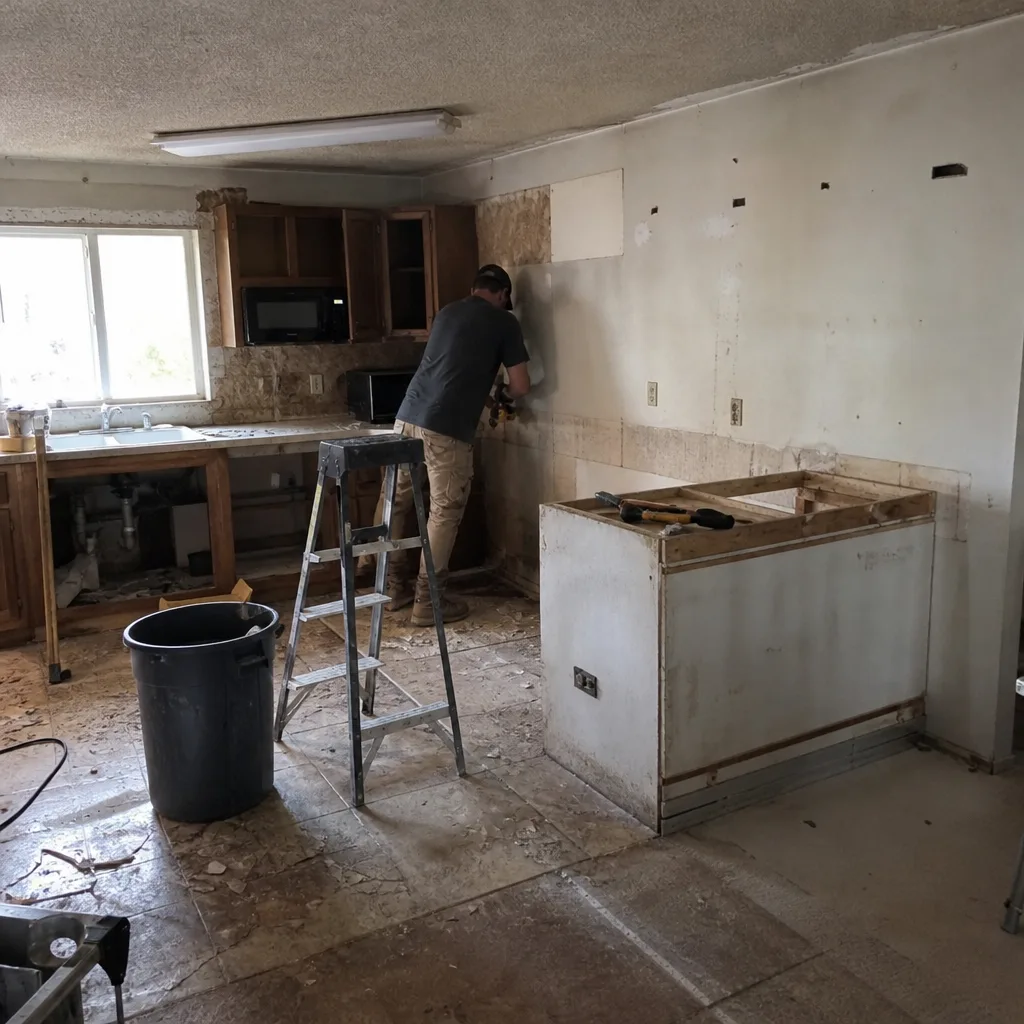 Before
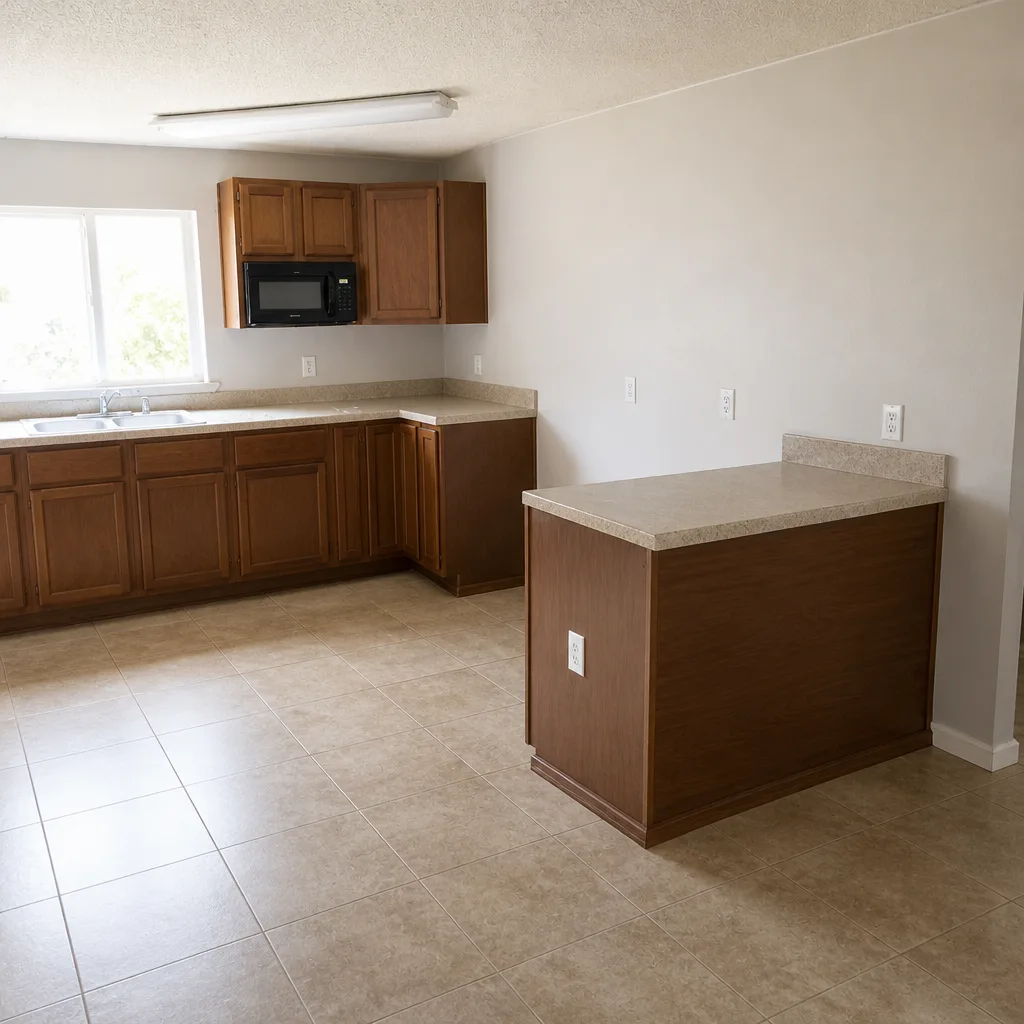 After
 Before
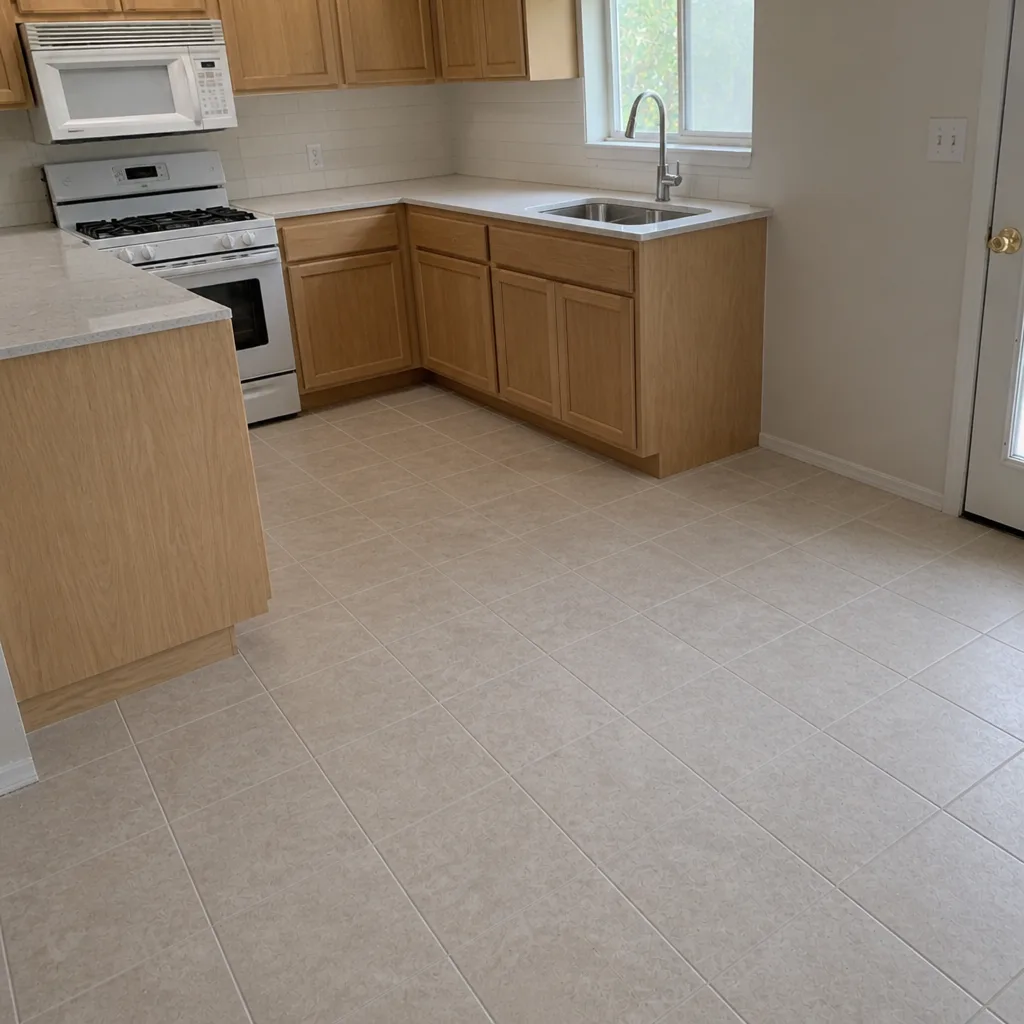 After
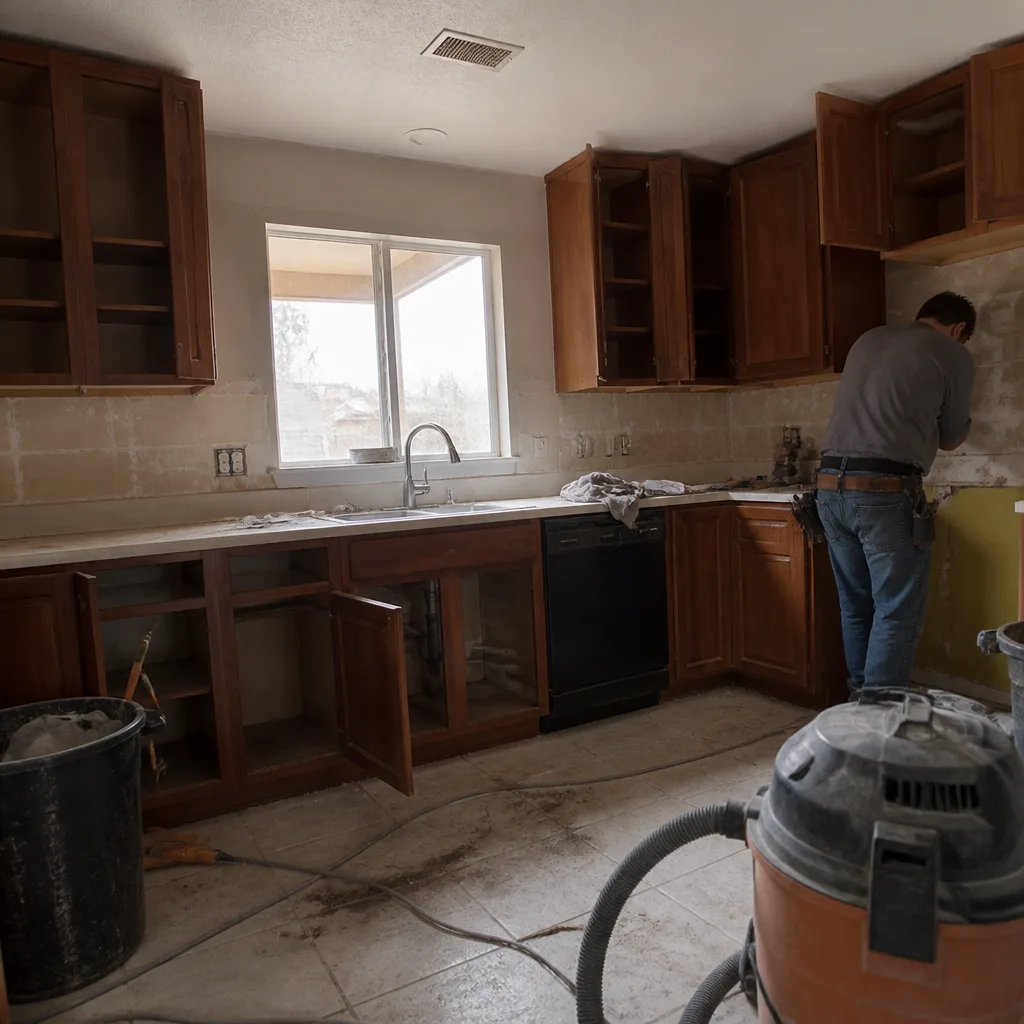 Before
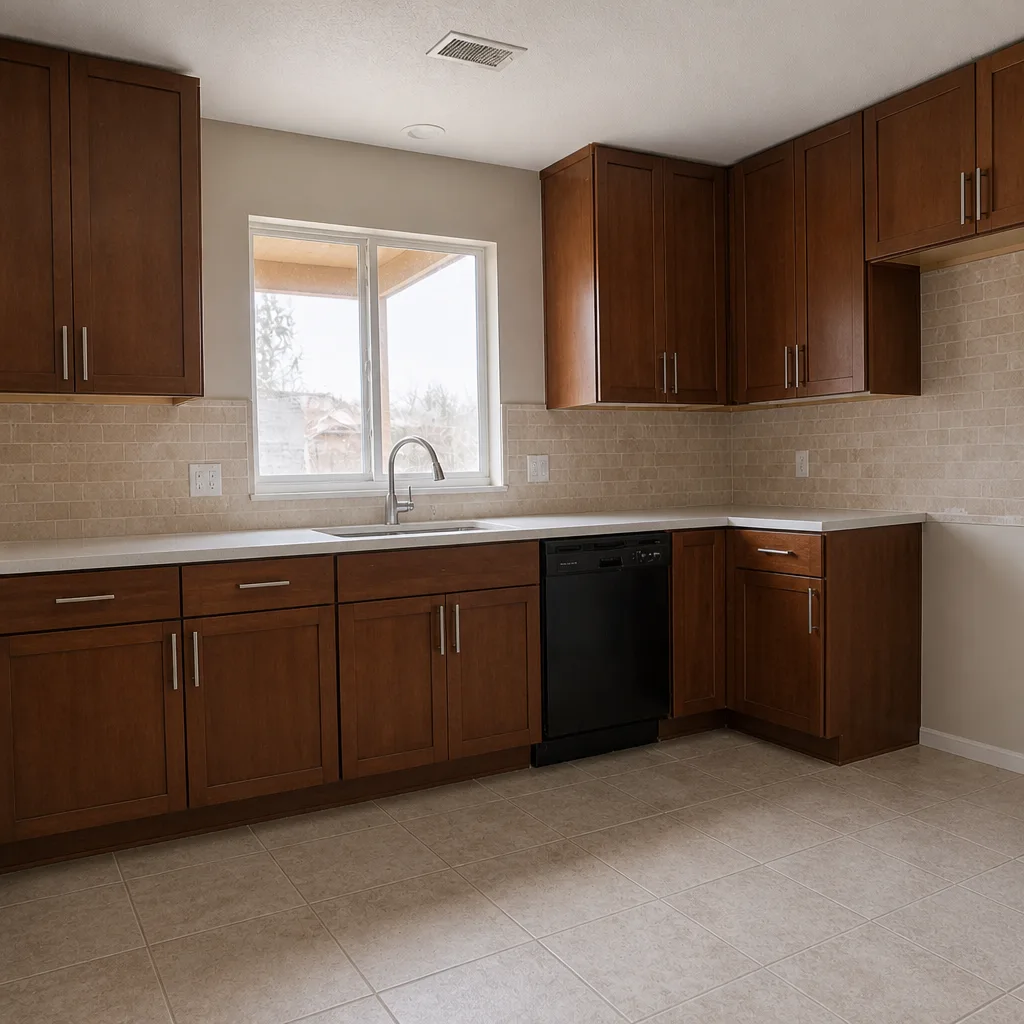 After
When to Call a Professional
Call a professional when a symptom doesn’t settle back after a season change, when the cabinet frame itself has moved, when a countertop seam has shifted, or when water staining shows up inside a sink cabinet. Those are the signs that a seasonal observation has crossed into a repair, and a repair caught early is usually a hardware swap rather than a cabinet replacement. If you’re not sure which side of the line you’re on, have someone look. Our technicians have up to 10 years of experience with the cabinet and countertop lines we install, and we know what normal material movement looks like and what doesn’t. Kitchen Remodeling Enterprise offers free estimates in Enterprise to look at a kitchen and tell you honestly whether it needs care or work. Call (833) 522-7502 to schedule a visit. We answer 24/7. Fast dispatch from 7am to 7pm, Sunday through Friday.
Frequently Asked Questions
Twice a year is enough for most Enterprise kitchens: once in late spring before the summer heat, and once in fall after the thermal expansion cycle is over. A quick monthly glance at the countertop seam and the under-sink cabinet catches most problems early. The seasonal checks are the ones that matter because they follow the material cycle rather than the calendar. If you want a second set of eyes, call (833) 522-7502 for a free estimate.
Cabinet doors in Enterprise usually crack along the finish, not the wood, and the cause is almost always an HVAC vent blowing directly on the door face during summer. The fix is redirecting the vent. If the cracking is along a glue line or the door has delaminated, that’s a manufacturing issue rather than an airflow issue, and it should be looked at. Call (833) 522-7502 and we’ll tell you which it is – estimates are free.
Low humidity isn’t bad for wood cabinets as long as it’s stable. Wood moves with changes in humidity, and it’s the swing between desert-dry winter air and the more humid summer months that stresses drawer boxes and joints. Keeping indoor humidity reasonably steady through the winter is the practical fix. If you’re seeing gaps that don’t close back up, call (833) 522-7502 for an assessment.
No. Kitchen-rated silicone at the countertop-to-backsplash seam should last several years if it’s installed correctly and the cabinet base isn’t moving. Replace it when it pulls away, cracks, or softens, not on a calendar. If you’re re-caulking every year, the cabinet or countertop is moving more than the caulk can handle, and that’s worth a professional look. Call (833) 522-7502 for a free estimate.
Quartz surfaces from Cambria, Silestone, and Caesarstone don’t need seasonal sealing, since they’re engineered rather than natural stone. What they do need is the same seasonal attention to the seams and the cabinet base underneath. A quartz top is only as stable as the cabinetry it sits on, and that’s where seasonal movement shows up. Call (833) 522-7502 if a seam has moved.
Most seasonal cabinet issues are repairs, not replacements. Loose hardware, worn slides, a stripped hinge screw, or a delaminated door can often be fixed without pulling the cabinetry. Replacement is the right answer when the frame itself has moved or the finish has failed across a whole run. We’re happy to look at what you have and tell you which it is. Call (833) 522-7502 – estimates are free, and the written estimate sets the price.
The Bottom Line
Kitchen care in Enterprise is a material story, not a seasonal one. The summer heat and the dry winter are the two events that actually move your cabinets, caulk, grout, and drawer boxes, and a maintenance routine built around those extremes will protect your investment better than any generic spring-cleaning checklist. Redirect the vents, keep the seam caulk intact, re-torque the hardware in fall, watch the under-sink cabinet in winter, and keep indoor humidity steady. Most of what you’ll find is normal movement. The rest is a repair worth catching early. When you’re ready to have someone look, we’re here.
Call (833) 522-7502 to schedule your free estimate with Kitchen Remodeling Enterprise. We answer 24/7. Fast dispatch from 7am to 7pm, Sunday through Friday. The estimate is free, the quote is written line by line, and the price is set by that written estimate before any work starts.
Written by the team at Kitchen Remodeling Enterprise.