
Last updated November 17, 2026
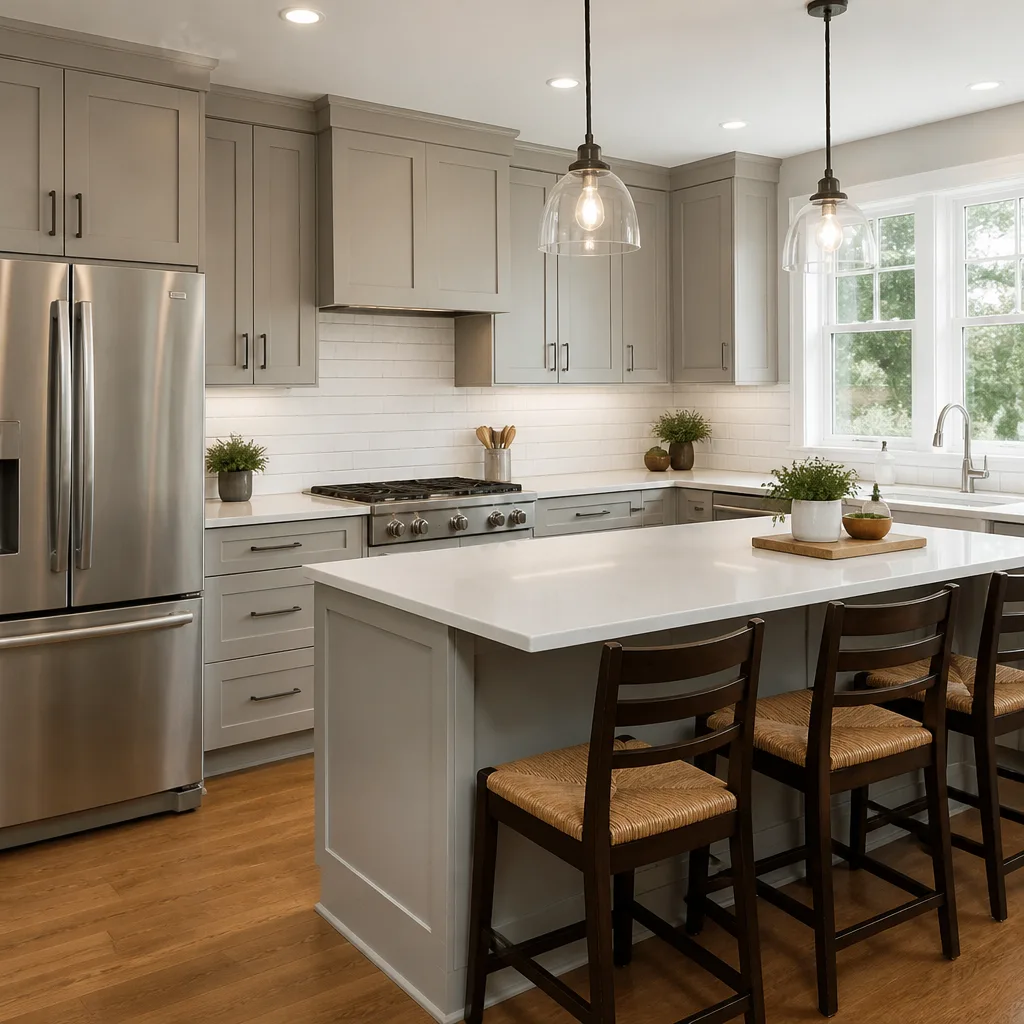 Shaker
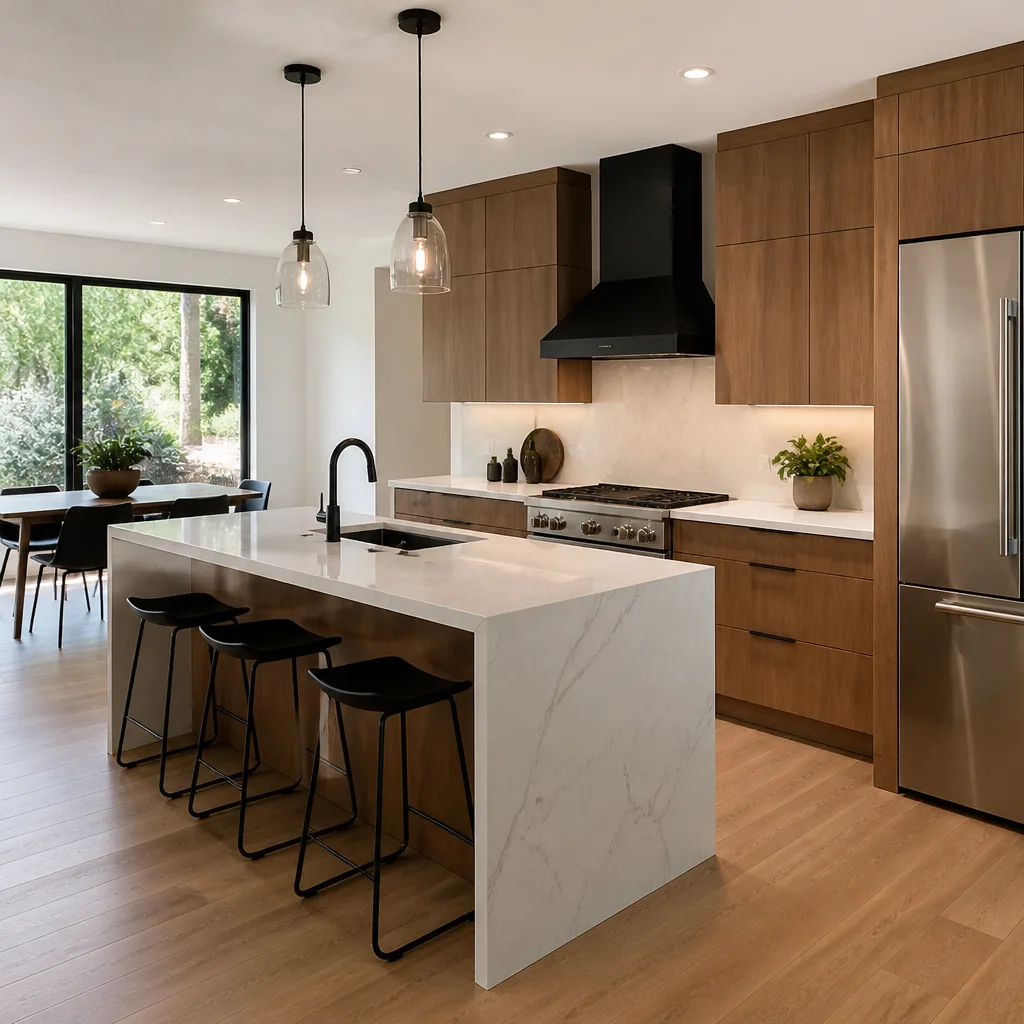 Modern flat-panel
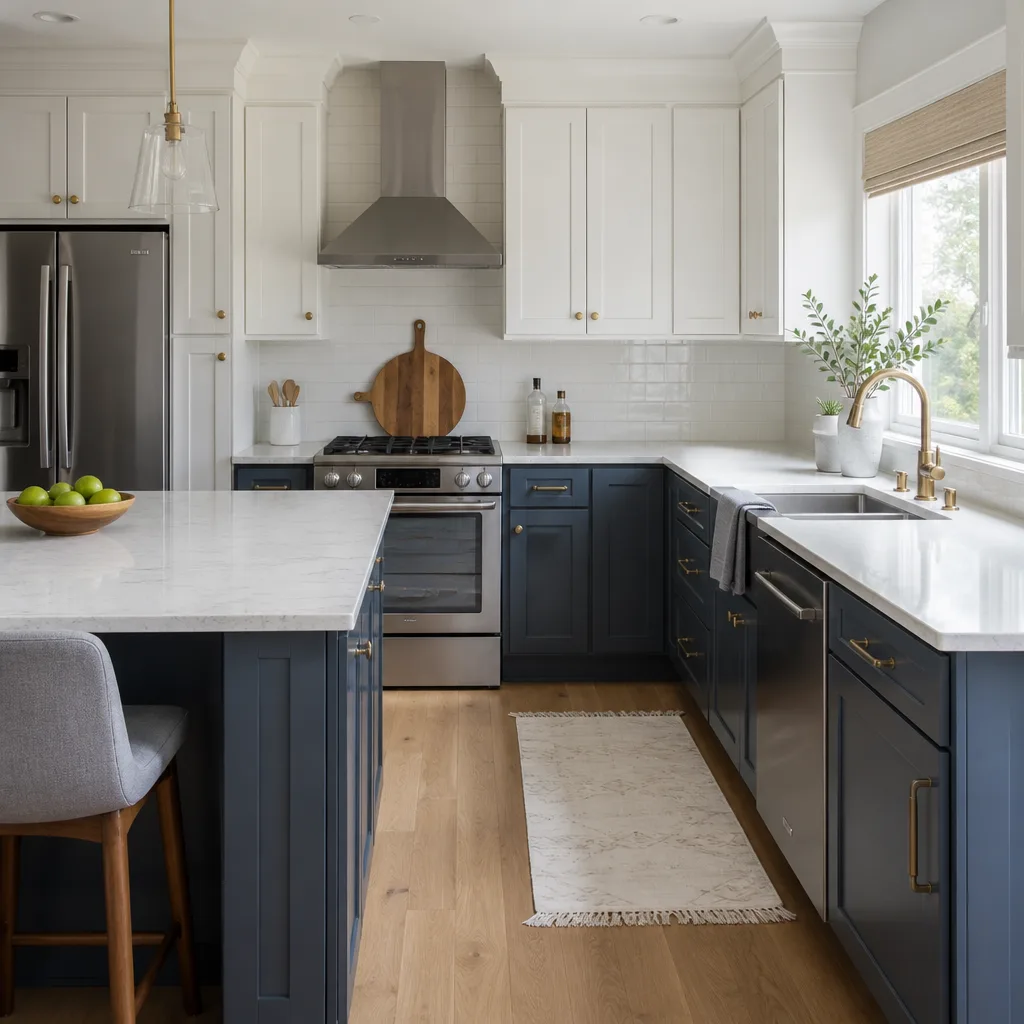 Two-tone cabinets
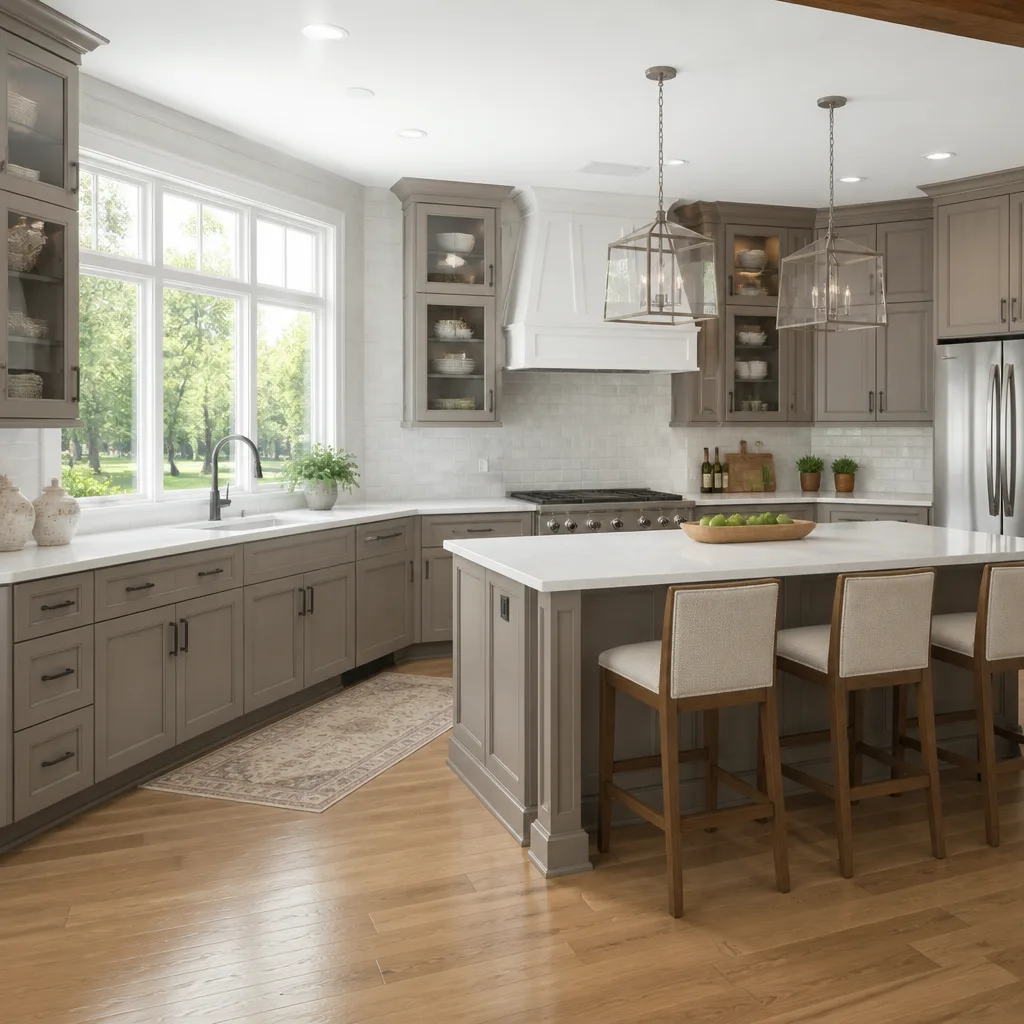 KraftMaid
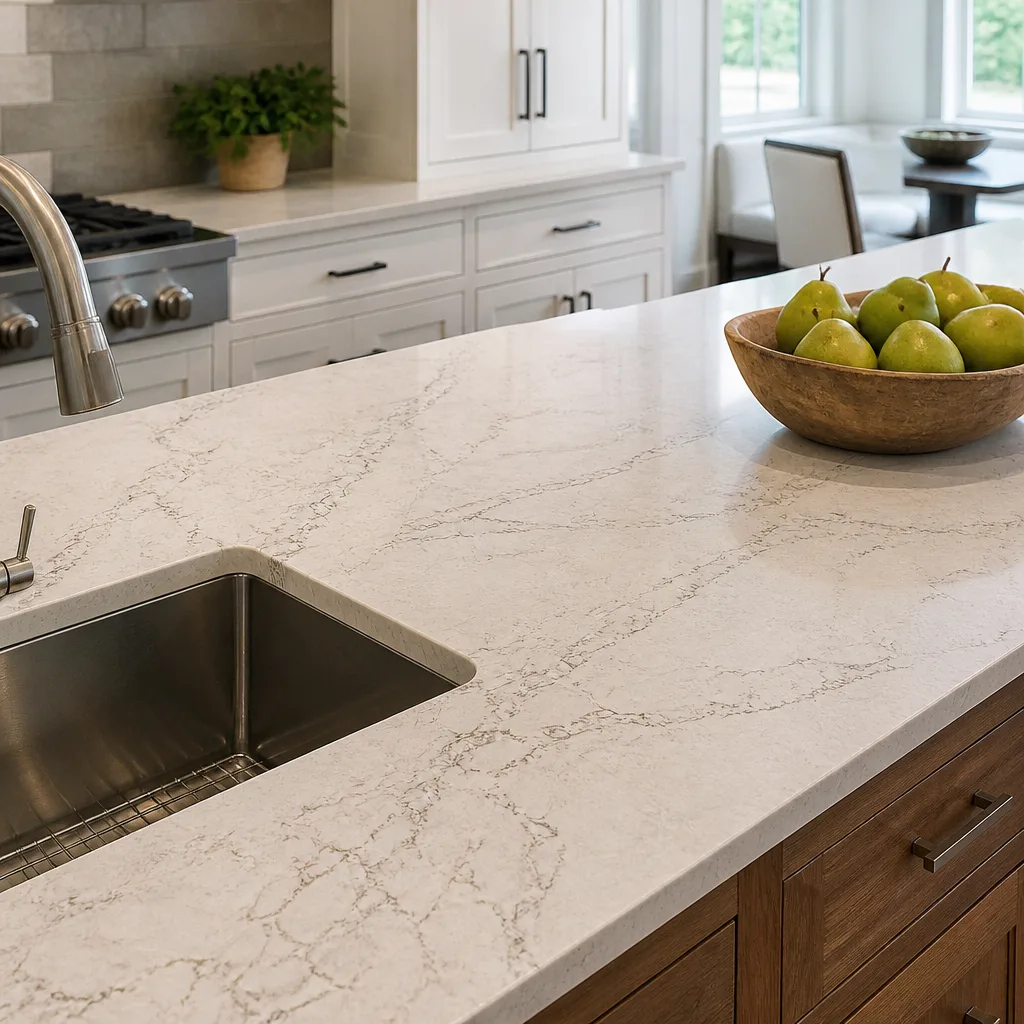 Cambria quartz
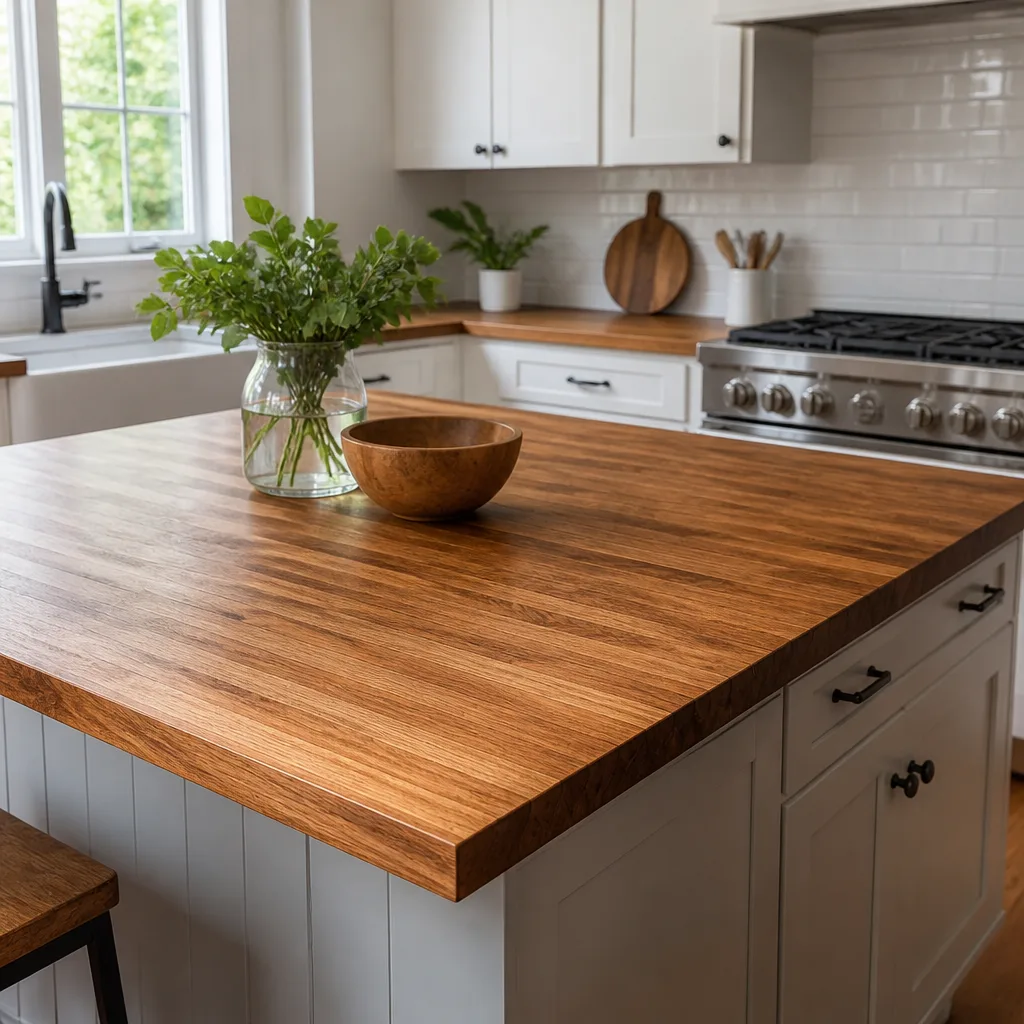 Butcher block
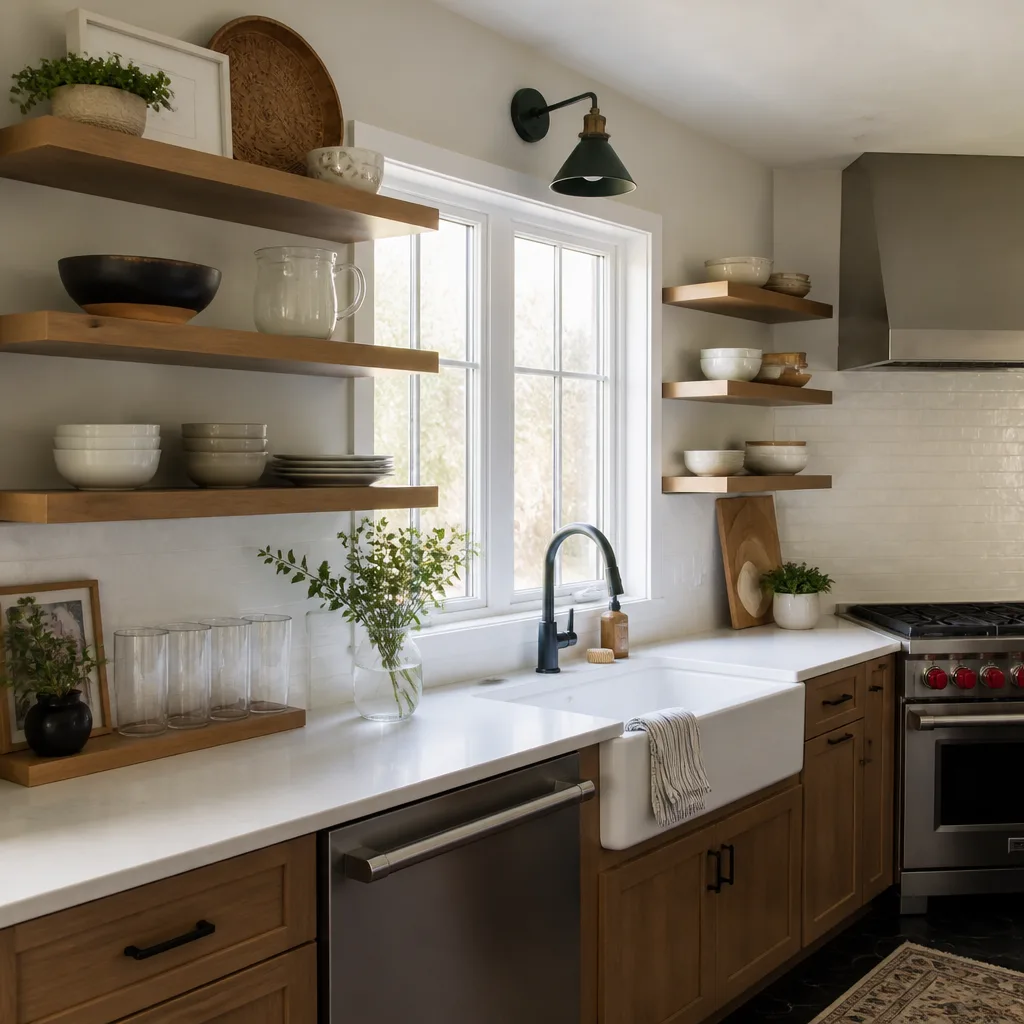 Open shelving
Free design consultation - KraftMaid and Wellborn cabinet lines, Cambria and Silestone surfaces, and every tier from refacing to full custom laid out side by side
How to Hire a Kitchen Remodeling Contractor in Enterprise: A Step-by-Step Guide
Any licensed contractor in Nevada can legally install your kitchen. That’s the part almost nobody tells you when they start collecting bids. The question that actually predicts how your project turns out isn’t whether a contractor is licensed – it’s whether they carry a direct account with the cabinet manufacturer, or whether they’re buying your cabinets through a middleman who never sees your kitchen. That distinction changes lead times, warranty coverage, and who picks up the phone when a door arrives with a scratch in the finish. This guide walks through the verification steps, the questions worth asking, and the red flags that separate a genuine kitchen specialist from a generalist who’ll hand your project off to whoever’s free that month. Everything here is written for Enterprise homeowners evaluating a real investment.
Quick Answer
To hire a kitchen remodeling contractor in Enterprise, verify the contractor’s license through the Nevada State Contractors Board database, confirm they hold a classification that covers cabinetry and countertop work, and ask directly whether they buy cabinets on a direct dealer account or through a distributor. Then demand a scope of work that itemizes cabinet interior specs, countertop edge profiles, appliance rough-in dimensions, and permit fees as separate line items – and structure payments around verified milestones rather than calendar dates. A contractor who can’t answer the sourcing question clearly is usually a generalist subcontracting your cabinetry.
Styles & brands we work with
- Shaker
- Modern flat-panel
- Two-tone cabinets
- KraftMaid
- Cambria quartz
- Butcher block
- Open shelving
Table of Contents
- How do you verify a Nevada contractor license in Enterprise?
- What do Nevada license classifications mean for kitchen work?
- Why cabinet sourcing is the question most homeowners never ask
- What a real scope of work includes that boilerplate contracts leave out
- Red flags in contractor bids: allowances, permits, and vague language
- How to structure a payment schedule around milestones
- What Enterprise’s climate means for cabinet and countertop choices
- What to confirm before you sign
How do you verify a Nevada contractor license in Enterprise?
You verify a Nevada contractor license by searching the contractor’s license number directly in the Nevada State Contractors Board (NSCB) public database before signing anything. The search returns the license status, the classifications held, the expiration date, and whether any complaints or disciplinary actions are on record. It takes about five minutes and it is the single highest-value five minutes in this entire process.
Do not accept a photocopy of a license card or a screenshot. Those can be old, and a license can be suspended while the card still sits in a wallet. Search the number yourself in the live database and read what comes back. If the license shows as expired, inactive, or suspended, stop there regardless of how good the bid looked.
Three things to actually check once the record loads:
- Status. Active is the only acceptable answer. “Pending renewal” is not active.
- Classification. The classification letters tell you what scope of work the contractor is legally allowed to perform. More on this in the next section.
- Disciplinary history. Complaints and actions are listed with dates. One old resolved item is different from a pattern of recent citations.
Ask for the license number on the written bid itself, not just verbally. A contractor who hesitates to put the number on paper is telling you something. In our experience working Kitchen Remodeling Enterprise projects across the valley, the contractors who answer this question quickly and without fuss tend to be the same ones who answer the harder material questions well. That correlation isn’t an accident.
One more Nevada-specific point: the NSCB maintains a separate database for licensed contractors and applicants, and general handyman work that crosses into cabinetry installation usually crosses a compensation threshold that requires a license. When a “kitchen guy” tells you the job is too small to need a license, ask him to show you the NSCB rule that makes that true. He won’t have one.
What do Nevada license classifications mean for kitchen work?
Nevada license classifications indicate which categories of construction work a contractor may legally contract for and perform. A kitchen remodel touches multiple classifications at once, which is why the classification list on the license record matters more than the contractor’s marketing materials. A contractor qualified in one category is not automatically qualified in another, and unqualified work can void both warranty and insurance coverage.
Here’s how the classification question actually plays out in a kitchen:
- Cabinetry and millwork. Confirm the contractor’s license covers finish carpentry and cabinet installation. This is the core of your project.
- Countertop fabrication and installation. Natural and engineered stone work is often a separate classification or a specialty subcontractor. Ask who is actually doing the stone, and ask for that person’s license too if they’re a subcontractor.
- Plumbing and electrical changes. Moving a sink, rerouting a drain, or adding outlets under cabinets requires licensed trades. A kitchen contractor who carries a general license may still need to bring in licensed subs for this work – that’s normal. What’s not normal is a contractor who says no permits or licenses are needed for those changes.
- General building. If your remodel involves moving walls, the general classification needs to be in play, along with a permit.
Ask the contractor to walk you through the classification letters on their record and explain exactly which classifications cover which parts of your scope. A specialist will answer in under two minutes because they’ve thought about this. A generalist will get vague, because they’re depending on someone else’s license somewhere down the chain.
This is also where a company focused exclusively on kitchens has an advantage over a handyman operation that does kitchens between other jobs. The kitchen-focused contractor knows which classifications matter for cabinetry, stone, and rough-in work because that’s the whole job, every job. When you’re evaluating kitchen remodeling options in the area, make the classification conversation part of the first phone call.
Why cabinet sourcing is the question most homeowners never ask
Cabinet sourcing is the question that reveals whether a contractor is a genuine specialist or a middleman. Here’s why it matters so much: cabinet manufacturers sell through authorized dealer channels, and contractors with direct accounts buy at dealer pricing, have direct access to the manufacturer’s spec and warranty support, and can resolve problems like a warped door or a finish defect through the manufacturer rather than through a distributor’s return window. A contractor buying through a middleman gets none of those advantages, and you pay for the extra layer.
Ask this exact question: “Do you have a direct dealer account with the cabinet manufacturer, or do you order through a distributor?” Then ask which manufacturers they hold accounts with, and listen for specific names. At Kitchen Remodeling Enterprise we install KraftMaid and Wellborn, and we can talk through the specifics of each line – KraftMaid’s dovetail drawer box construction, Wellborn’s finish options and warranty terms – because we work with these products on every project. That fluency is the signal you’re listening for.
Here’s what the difference looks like at each stage:
- Ordering. A direct-account contractor places your order with the manufacturer, controls the model numbers and finish codes, and can confirm lead times from the source. A distributor-based contractor relays your order and gets back a lead time that may already be padded.
- Delivery and inspection. Direct-account installers receive shipments, check for freight damage against the manufacturer’s process, and manage replacements through the manufacturer’s warranty channel. Through a distributor, you’re often the one stuck mediating.
- Warranty claims. This matters in year four, not year one. Cabinet warranties protect the product’s construction and finish, and the claim goes through the entity that sold the cabinets. Direct accounts mean warranty support is direct; distributors mean you’re routing through an extra party.
- Replacement parts. Hinges, drawer slides, and specific cabinet doors age out of general circulation. A direct account gives the contractor a durable path to source matching replacements years later.
The same sourcing question applies to countertops. Ask whether the fabricator has a direct relationship with the slab manufacturer or is buying slab material on the open market. At Kitchen Remodeling Enterprise our countertop installations cover Cambria, Silestone, and Caesarstone – three brands across different price points and aesthetics, each with its own warranty structure – so we can match the material to the kitchen rather than selling the one slab the distributor has in stock. The surface you choose should fit your life and your kitchen, and having real options is part of that.
What a real scope of work includes that boilerplate contracts leave out
A real kitchen scope of work itemizes cabinet interior specifications, countertop edge profiles, appliance rough-in dimensions, and site protection as separate, named line items. Most contracts you’ll be handed are three pages of general language with a single “installation included” line. That’s not a scope of work. That’s a wish. A scope that actually protects you reads like a specification document, not a proposal letter.
Here’s what a usable scope of work should contain:
- Cabinet specifications in full. Manufacturer, door style, finish name and code, box construction, drawer box type, hinge type, interior finish (do the interiors match the door finish, or are they a standard interior color?), and any specialty internals like rollout trays, dividers, or a lazy Susan. If it’s not named, it isn’t included.
- Countertop details. Slab brand and color name, thickness, edge profile name (a plain square edge and a bullnose read very differently on the finished kitchen), how the seams fall, whether the edge is laminated or solid, backsplash height and material, and whether sink cutouts are template-cut by the fabricator.
- Appliance rough-in dimensions. Every appliance the kitchen will hold, with the manufacturer’s dimensional cut sheet referenced. A refrigerator that arrives four inches deeper than the cabinet run planned for is a very expensive problem, and it’s preventable with dimensions on paper before the order is placed.
- Fixture models. Kohler, Moen, and Blanco all have model numbers and finish names. “A sink and faucet included” is not a spec. The model number is a spec, and it protects you from a substitution that looks similar but costs less.
- Permit fees as a line item. If the permit fee is missing, either the contractor isn’t pulling permits (bad) or is burying the cost in another line and will ding you at signing (also bad).
- Site protection and disposal. Floor protection, cabinet protection after installation, and debris haul-away should be explicit. So should the schedule for delivery windows.
Ask for the scope in writing and read it line by line. Any category above that’s missing or vague is a question you take back to the contractor before you sign. When we write scopes for Kitchen Remodeling Enterprise projects, cabinet frames through countertop edges are one continuous document, because there’s no other honest way to quote a kitchen.
Red flags in contractor bids: allowances, permits, and vague language
Red flags in a kitchen bid cluster around three things: countertop allowances that are suspiciously low, no line item for permit fees, and vague “installation included” language. Each of these is a mechanism for a bid that looks competitive and becomes expensive later. You’re not looking for the cheapest number. You’re looking for the number that turns out to be true.
Go through your bids for these specifically:
- Unusually low countertop allowances. An allowance is a placeholder budget for a material the contractor doesn’t want to price exactly. A low countertop allowance looks good on the bottom line and means either a cheaper slab, a smaller square footage, or a surprise bill when the real slab comes in above the allowance. Engineered quartz from a major brand doesn’t have a mystery price, so there’s no need for an allowance. Ask for a firm price on the specific slab.
- No permit fee line item. If your remodel involves plumbing, electrical, or moving any partition, permits are almost certainly part of the job. Most cities require a permit for that scope, so ask your city’s building department directly what applies. A bid without a permit line is either incomplete or pretending the process doesn’t exist.
- “Installation included” with no detail. Included by whom, to what standard, with what protection, and with what provisions for freight damage? Included is a word, not a specification.
- No written change-order procedure. Changes happen in every kitchen project, and the question is how they’re priced and approved. A contractor without a written change-order process sets the price verbally and retroactively.
- Substitution clauses disguised as flexibility. Language like “or equal” or “similar product may be substituted” lets a contractor swap your named KraftMaid cabinet for a cheaper line without a signature. Strike it or clarify it in writing.
- Pressure to sign quickly. A bid that expires in 24 hours is a sales tactic, not a pricing reality. Cabinet and stone prices don’t move that fast.
One more you’ll only catch by asking: whether the contractor has direct product knowledge at the estimator level, not just the sales level. Can the person quoting your kitchen tell you the difference between Silestone’s mineral-enhanced quartz and a standard engineered quartz, or Cambria’s lifetime warranty terms? The people who can answer those questions at the estimate stage are usually the same people who catch the rough-in problem before the order goes in.
How to structure a payment schedule around milestones
A payment schedule should be tied to verified project milestones, not to calendar dates. The difference is protection. A calendar-based schedule pays a contractor on March 15 whether or not the cabinets are actually delivered and set. A milestone-based schedule pays when the work is done and you’ve seen it. Nevada contractors work under specific payment expectations, but the milestone structure you negotiate is up to you and belongs in the written contract.
Here’s a milestone structure that keeps both sides honest on a kitchen project:
- Deposit at contract signing. A deposit is normal because materials have to be ordered. It should be a reasonable fraction of the project cost, and it should unlock the cabinet and slab order, not appear as cash that vanishes.
- Demolition and rough-in complete. Payment released when the old kitchen is out, any plumbing or electrical rough-in is done, and inspection is passed if inspection applies.
- Cabinets delivered and installed. Payment when the cabinet installation is complete and you’ve walked the kitchen, checked doors and drawers, and confirmed the finish and setup match the scope.
- Countertop template and installation. Template happens after cabinets are set. Payment for the stone portion when the surface is installed and the seams and edge profile match the spec.
- Final fixtures, punch list, and sign-off. The last payment when the punch list is actually closed, not when most of it is done. No punch list item is “just cosmetic” in a kitchen you’ve paid for.
Insist on a written sign-off at each milestone – a short written confirmation that the milestone is accepted – and hold the final payment until the list is closed. Deposit caps and specific payment timelines vary, so read the contract carefully and ask what the contractor’s standard schedule looks like. If a contractor wants most of the money before cabinets are even delivered, that’s not a milestone schedule. That’s financing their project with your cash.
What Enterprise’s climate means for cabinet and countertop choices
Enterprise’s desert climate affects what holds up in a kitchen, and a contractor who doesn’t adjust material choices for the local environment is probably quoting the same standard package they quote everywhere. Southern Nevada kitchens run through long dry stretches with wide temperature swings between an air-conditioned interior and a sun-baked exterior. Those conditions have practical consequences for cabinets and stone that a homeowner should understand before choosing.
What we account for when specifying for Enterprise kitchens:
- Humidity swings move wood. Cabinet doors and frames are affected by ambient moisture content. When a kitchen sits in a very dry climate, wood expands and contracts seasonally, and materials that handle those cycles well – factory-finished cabinet lines with controlled construction tolerances like the KraftMaid and Wellborn products we install – hold their door alignment and finish more predictably than site-built or unfinished cabinetry.
- Sun exposure fades finishes. In a sunny desert kitchen, a window-adjacent cabinet run takes real UV exposure. Factory-finished cabinets with quality topcoats handle it better than painted site-built boxes. If the kitchen has a south- or west-facing window wall, ask specifically about finish durability in high sun.
- Stone behaves predictably in dry indoor air. Engineered quartz – Cambria, Silestone, or Caesarstone – is a good match for a climate-controlled Enterprise kitchen because it’s stable and non-porous, and it doesn’t require sealing. That’s part of what makes these surfaces a sensible default here rather than a luxury choice.
- Dust control matters. In a dry climate, demolition dust travels further and settles faster. Site protection and negative-pressure dust control aren’t “nice to have” items in your scope – they’re the difference between a kitchen remodel and a house remodel.
- Indoor-outdoor transitions soften. If the kitchen opens to a patio, desert sun and cool evening swings make door and drawer alignment a maintenance point. Factory cabinet construction holds better, and the warranty support from a direct-account manufacturer covers the parts if something shifts.
Ask any contractor you’re evaluating whether they adjust cabinet specification or countertop recommendation for desert conditions, and listen to whether the answer sounds like a person who’s thought about it. Our technicians have up to 10 years of experience installing in this environment, and the questions they ask about sun exposure and seasonal movement come from working in it, not from a training module. The full scope of what we handle – cabinets, counters, and the complete renovation – is laid out in our Kitchen Remodeling Enterprise overview, and this kind of material detail is where the useful decisions actually live.
What to confirm before you sign
Before you sign a kitchen remodel contract in Enterprise, confirm the license, the classification coverage, the cabinet sourcing, the full scope itemization, and a milestone-based payment schedule. Confirm it all in writing. The conversation is not the contract. Get a copy of the signed scope and payment schedule before any deposit changes hands, and read it once more the morning of signing.
The checklist, in order:
- Live NSCB verification. Active status, correct classifications, no concerning discipline history. Done by you, not by the contractor.
- Cabinet and countertop sourcing. Direct manufacturer account confirmed, brand names on the written bid, no “or equal” substitutions without your signature.
- Scope itemization. Cabinet specs, countertop edge and thickness, appliance dimensions, fixture model numbers, permit fees, and site protection all as separate line items.
- Payment schedule. Milestone-based, written sign-offs, final payment held until the punch list is closed.
- Change-order procedure. Written, priced, and approved before work changes. No verbal change orders.
- Contact structure. One point of contact for the whole project, one phone number that reaches a person who knows your kitchen.
The Winchester and Enterprise area has more than enough contractors to choose from, which makes the decision harder, not easier. The structure above is how you narrow it down. If you’d rather have a team that works exclusively on kitchens and can speak to cabinet installation at the manufacturer-spec level, we’re glad to quote your project and answer the sourcing question in the first five minutes.
Common Mistakes to Avoid
- Choosing the contractor with the fastest callback. Callback speed is a scheduling signal, not a quality signal. A contractor who calls back in two hours but can’t explain their cabinet sourcing is quicker at the wrong thing.
- Comparing bids by bottom-line number. A bid missing permit fees and countertop detail is lower for a reason. Compare scopes line by line before you compare totals.
- Not checking the license database yourself. A printed license card isn’t current. Search the NSCB record directly, because statuses change and old cards circulate.
- Accepting “installation included” without a spec. In a dry desert climate like Enterprise’s, protection and finish details are the difference between a finished kitchen that holds up and a rough-edged one that doesn’t. Make the spec detail part of the contract.
- Paying ahead of milestones. Large upfront payments shift risk to you. Tie cash to completed, inspected work.
- Leaving appliance dimensions to the contractor’s guess. Get the manufacturer’s cut sheets into the scope. A refrigerator that doesn’t fit the cabinet run is a schedule killer in any climate.
- Ignoring the “or equal” substitution clause. It reads like boilerplate and acts like a price change. Strike it or name the substitute approval process.
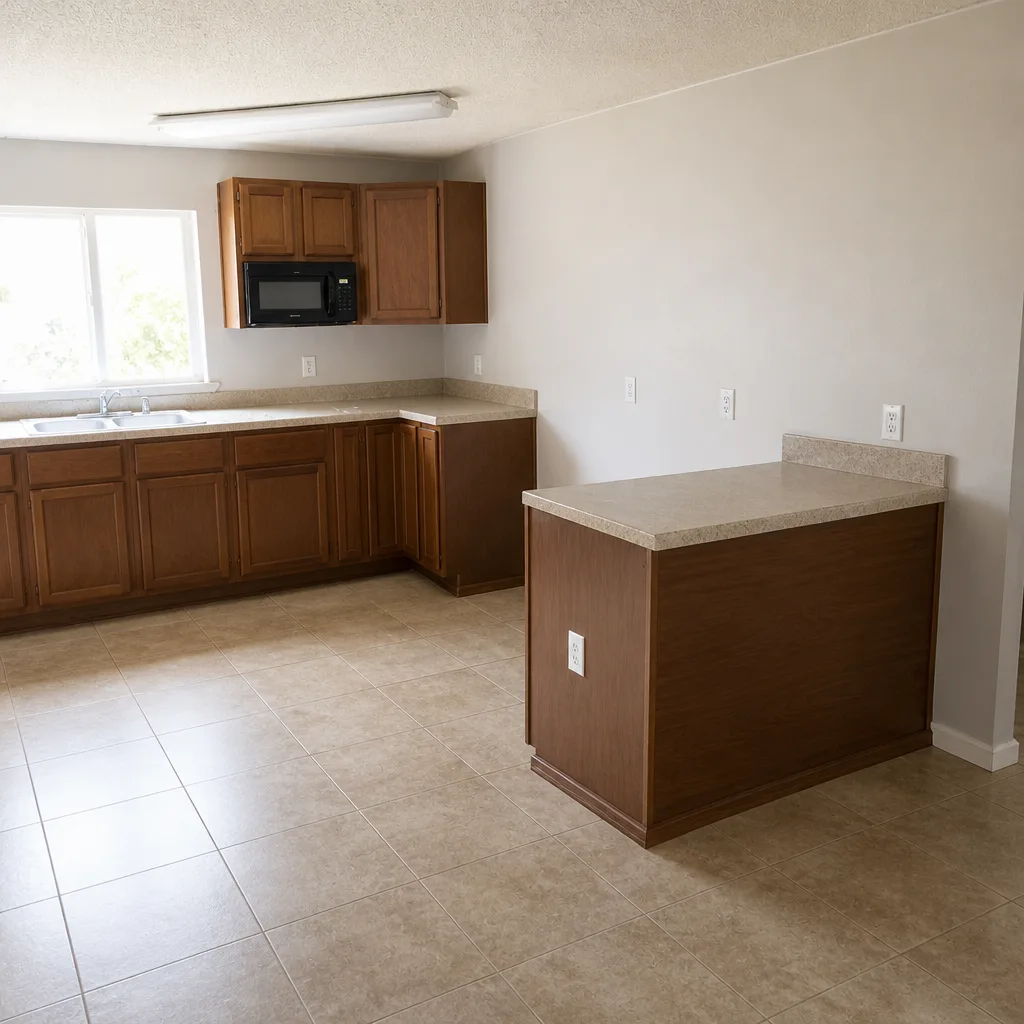
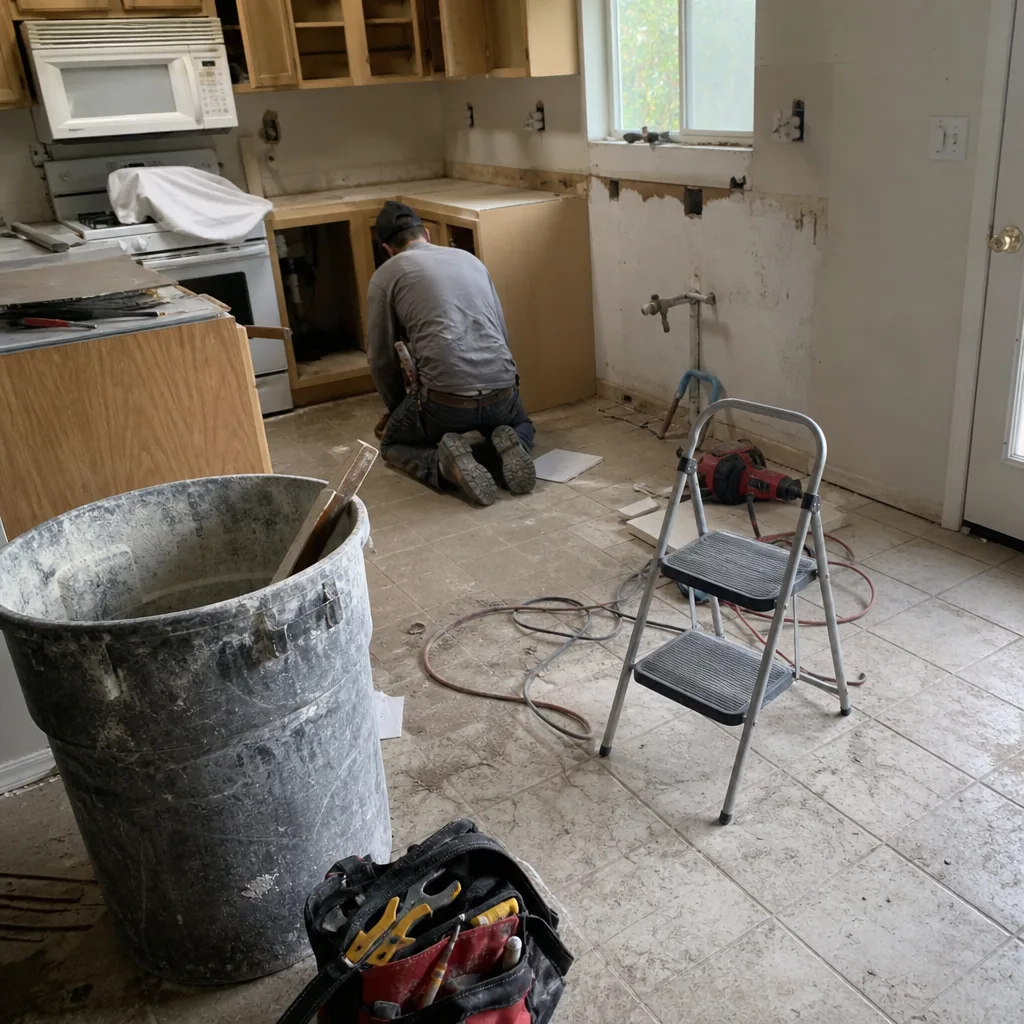
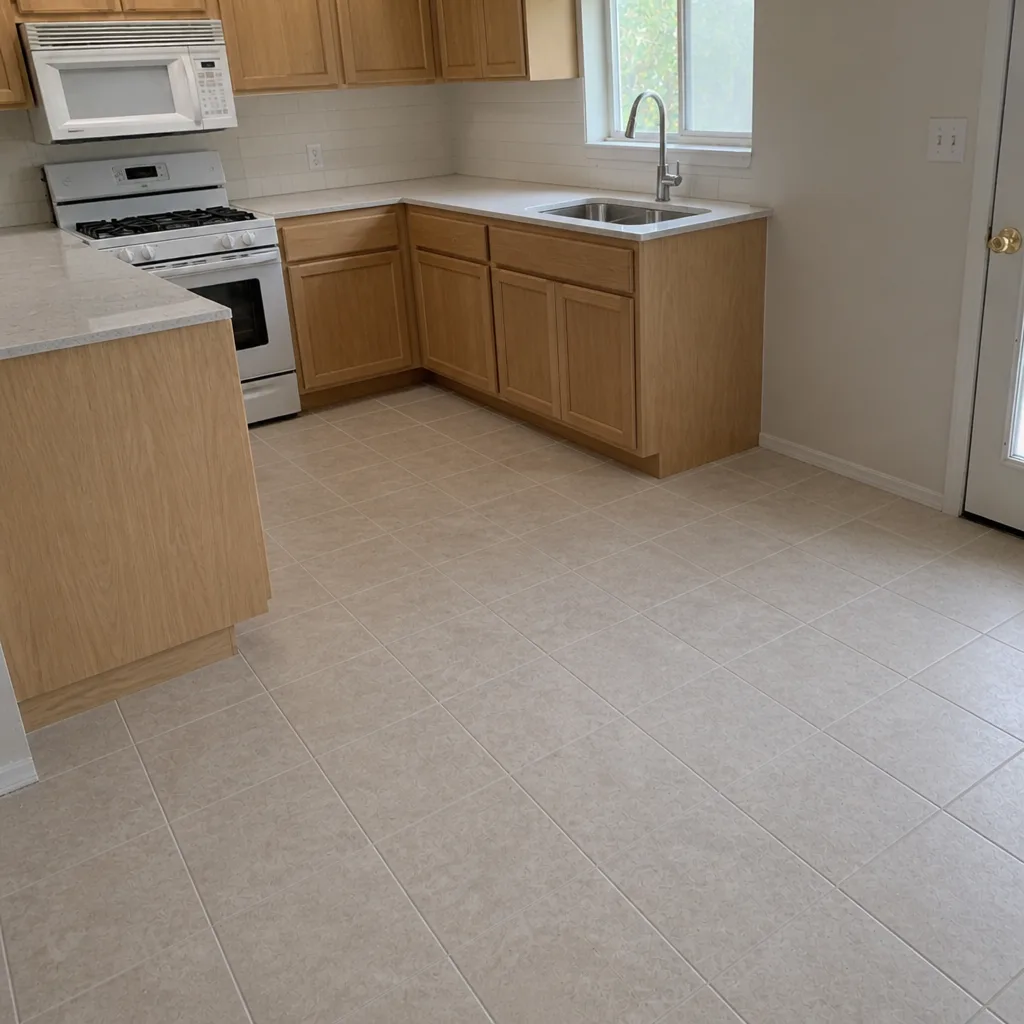
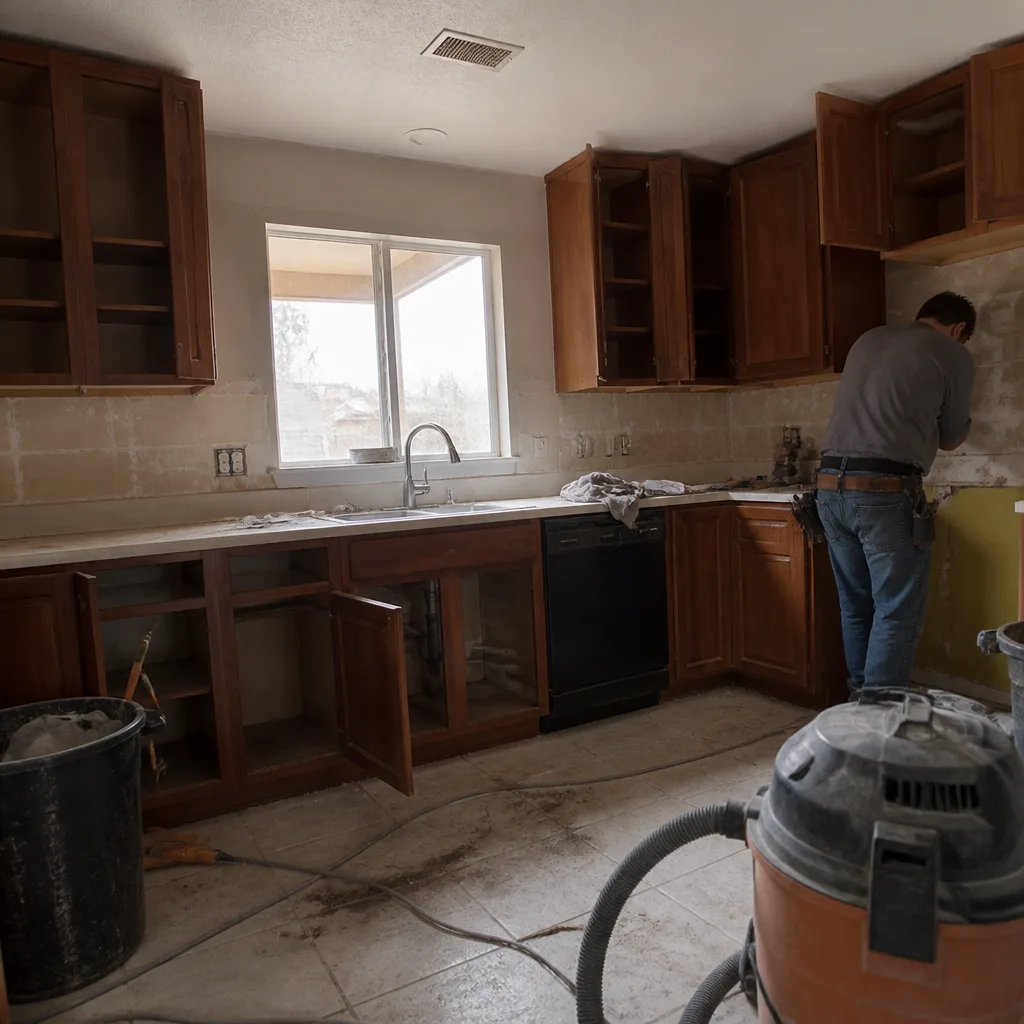
See the difference
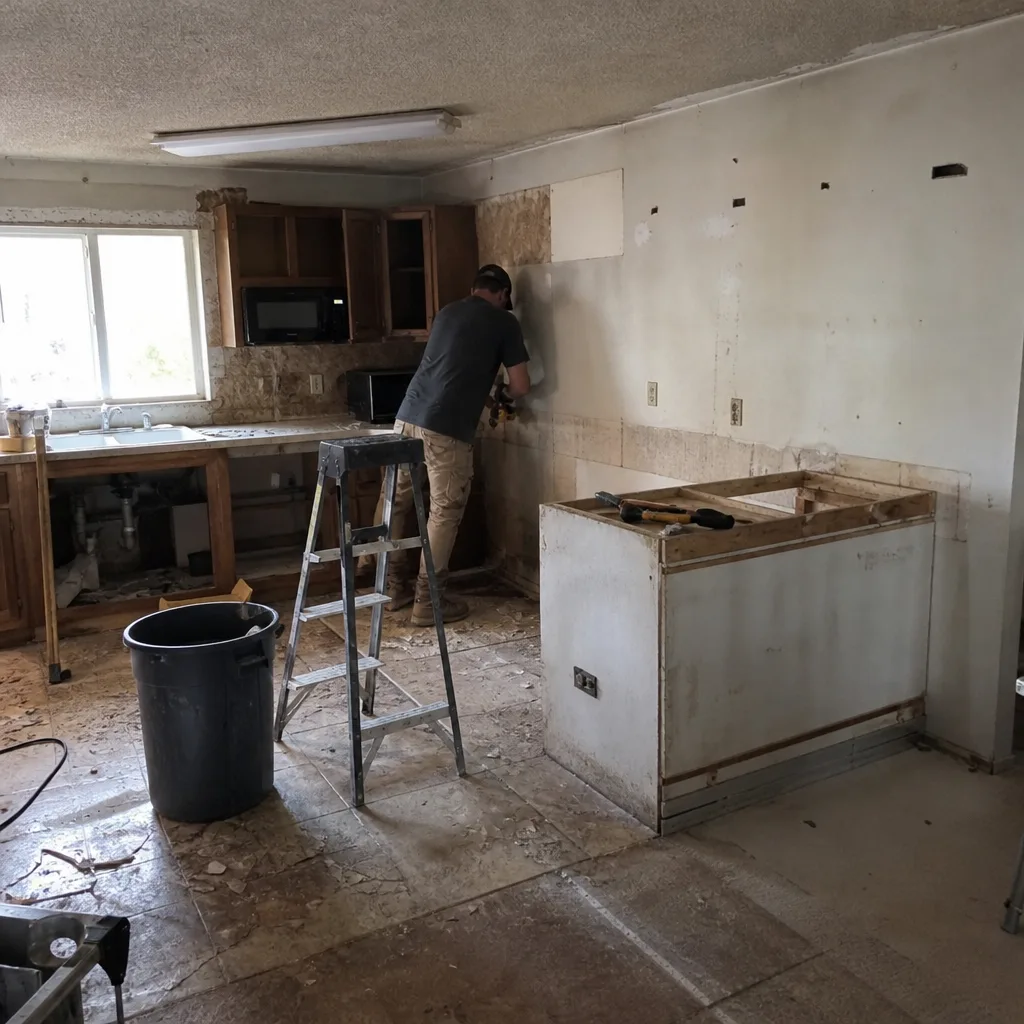 Before
 After
 Before
 After
 Before
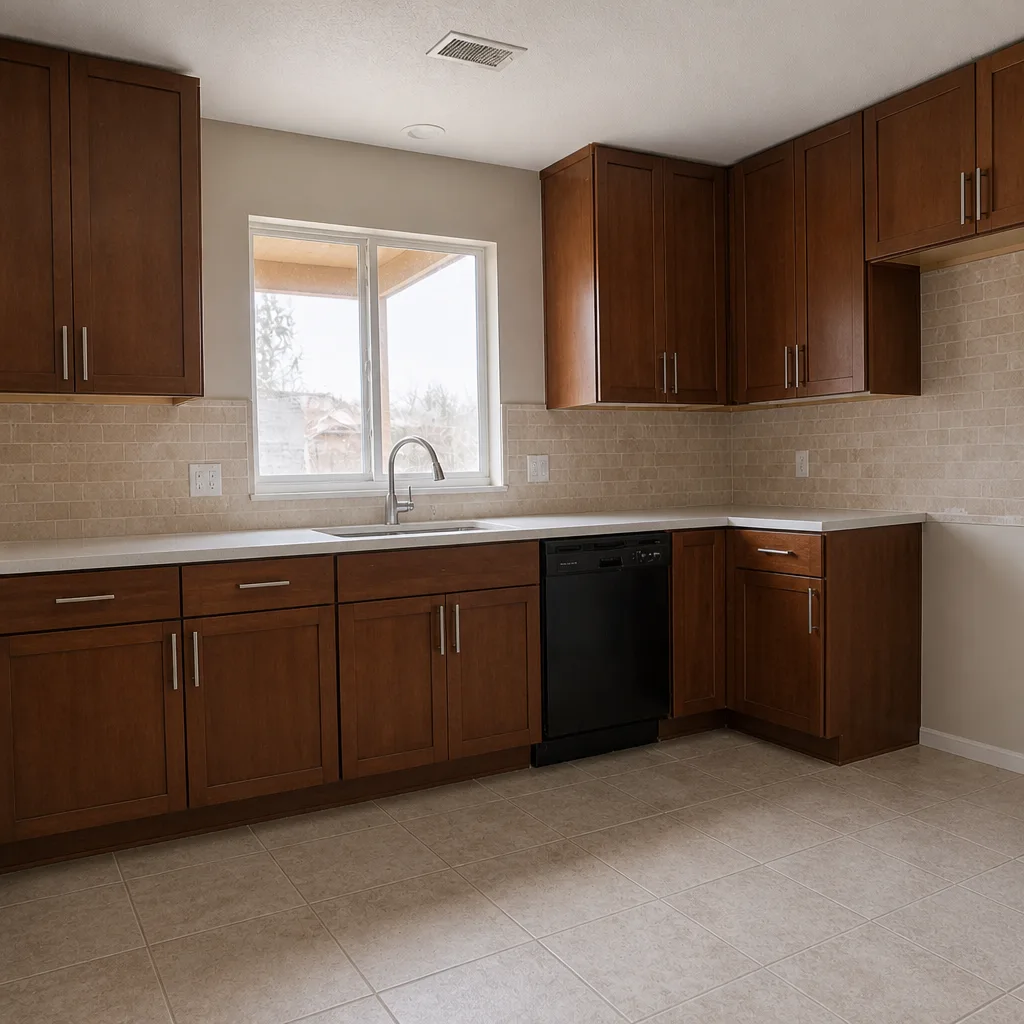 After
When to Call a Professional
Call a professional kitchen remodeling contractor when your project involves new cabinetry, countertop installation, any plumbing or electrical change, or any wall movement. Cabinet installation involves tolerance-critical alignment and warranty-relevant handling, and getting it wrong the first time is more expensive than getting it right once. Countertop fabrication and installation requires templating and handling equipment that homeowners don’t own, and stone is unforgiving of poor templating. If your current kitchen isn’t damaged, the real trigger is usually simpler: the kitchen no longer works for how you live, and you’re ready to invest in one that does. That’s a planning conversation, not an emergency. Kitchen Remodeling Enterprise handles full kitchen remodels, cabinet installation, and countertop installation for Enterprise homeowners, and estimates are free. Call (833) 522-7502. We answer 24/7. Fast dispatch from 7am to 7pm, Sunday through Friday.
Frequently Asked Questions
Search the contractor’s license number directly in the Nevada State Contractors Board public database, and read the status, classifications, and discipline record that comes back. Don’t rely on a card or a screenshot – status changes and old cards stay in circulation. A contractor who resists giving you the number in writing is telling you something, so call (833) 522-7502 if you want a straight answer on licensing before you sign anything.
Kitchen remodel costs in Enterprise depend almost entirely on the cabinet line, the size of the cabinet run, and the countertop material you choose – so there’s no honest single number without a written scope. The written estimate is what sets your price, and every quote we produce itemizes cabinets, countertops, and installation separately. Call (833) 522-7502 for a free estimate specific to your kitchen.
Your price changes only if you approve a written change order, and that’s the standard a fair contract sets. The main ways prices jump without a change order are vague “or equal” substitution clauses and countertop allowances that come in above the allowance number – both of which you can eliminate with a firm spec and a firm slab price before signing. Call (833) 522-7502 and we’ll walk through what your quote fixes and what it leaves open.
Yes, the contractor should pull permits whenever the scope requires them, and most cities require a permit for any plumbing, electrical, or wall change. Permit fees belong on the bid as their own line item – if they’re missing, ask where they went. Call (833) 522-7502 and we’ll tell you exactly what permits your scope needs and how they’ll be handled in the contract.
Cabinet lead times drive most of the kitchen remodel timeline, and factory-built cabinet lines are ordered to your specific configuration rather than picked off a shelf. Once cabinets and slab are on site, installation itself goes quickly and demolition is usually short. The real timeline question is the order date, not the install date – call (833) 522-7502 and we’ll walk through the sequence for your kitchen.
A contractor with a direct dealer account orders your cabinets through the manufacturer, controls the specs, resolves freight and warranty issues through the manufacturer, and can source matching replacement parts years later. A contractor buying through a distributor pays an extra layer, loses direct warranty support, and often can’t tell you the interior finish or drawer box construction without calling someone. At Kitchen Remodeling Enterprise we install KraftMaid and Wellborn and can talk through the specifics – call (833) 522-7502 to ask us anything about the product before you commit.
The Bottom Line
Hiring a kitchen contractor in Enterprise is a verification exercise more than a search. Check the NSCB license record yourself, confirm the classifications cover cabinetry and stone, and ask the sourcing question in your first conversation with any contractor you’re considering. Then demand an itemized scope with cabinet interiors, countertop edges, appliance dimensions, and permit fees, and tie payments to verified milestones rather than dates. If you’d rather skip the filtering phase, Kitchen Remodeling Enterprise is focused only on kitchens and installs famous-name materials with direct manufacturer relationships so you know exactly what’s going into your home. Call (833) 522-7502 to schedule your free estimate. We answer 24/7. Fast dispatch from 7am to 7pm, Sunday through Friday.
Written by the team at Kitchen Remodeling Enterprise.