
Last updated November 17, 2026
 Shaker
 Modern flat-panel
 Two-tone cabinets
 KraftMaid
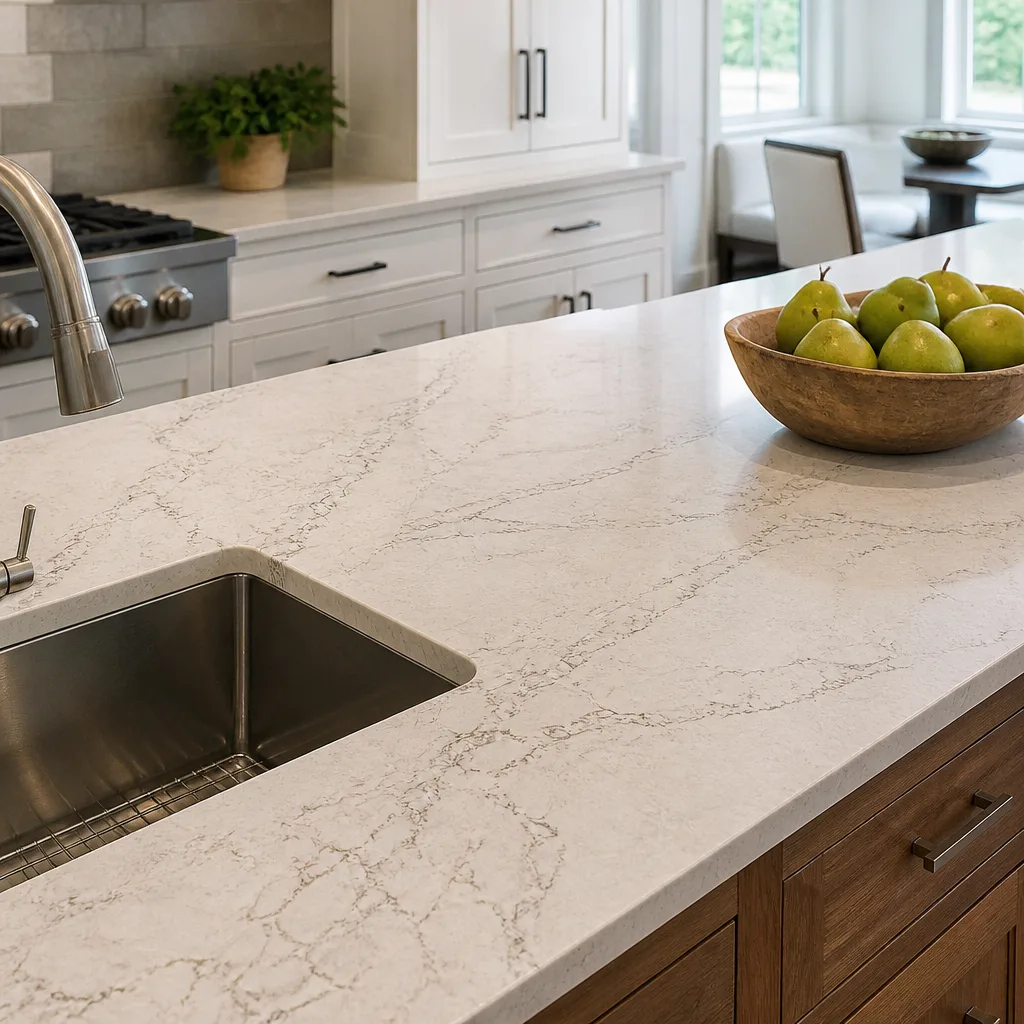 Cambria quartz
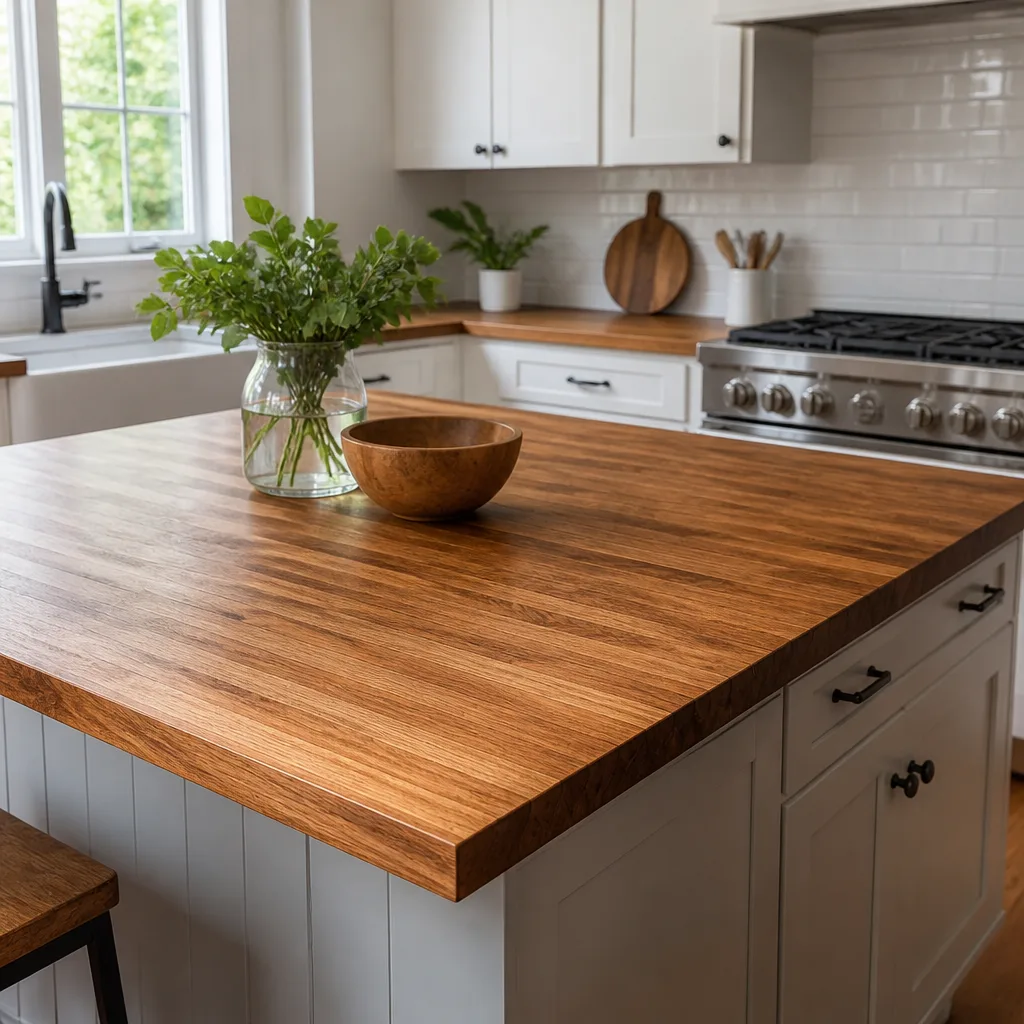 Butcher block
 Open shelving
Free design consultation - KraftMaid and Wellborn cabinet lines, Cambria and Silestone surfaces, and every tier from refacing to full custom laid out side by side
Kitchen Remodeling Maintenance Schedule: What to Do and When
Wiping engineered quartz countertops with a daily all-purpose cleaner that contains bleach won’t ruin them overnight. It degrades the resin binders slowly, over roughly 18 to 24 months, dulling the surface in a way that can’t be polished back to its original finish. That’s the trap with kitchen maintenance: the wrong routine looks harmless right up until the damage is permanent. Materials in a quality kitchen have different maintenance clocks. Painted cabinet faces, soft-close hardware, quartz countertops, and grout lines each need their own schedule and their own products. This guide organizes kitchen care by material rather than by season, and it’s the same thinking we bring to every kitchen we build in Enterprise.
Quick Answer
A proper kitchen maintenance schedule is organized by material, not by calendar season. Engineered quartz and solid-surface counters need routine cleaning with a pH-neutral cleaner and only periodic sealing depending on the brand, painted and thermofoil cabinet faces need pH-neutral damp wiping with no abrasives, soft-close hinges and drawer slides need inspection and occasional lubrication keyed to their mechanism type, and grout sealing intervals depend on whether the grout is sanded, unsanded, or epoxy. Inspect hardware and seals quarterly, clean weekly, and review finishes annually against each manufacturer’s care documentation.
Styles & brands we work with
- Shaker
- Modern flat-panel
- Two-tone cabinets
- KraftMaid
- Cambria quartz
- Butcher block
- Open shelving
Table of Contents
- Daily and Monthly Care for Engineered Quartz Countertops
- Cabinet Hardware Maintenance by Mechanism Type
- Painted, Thermofoil, and Wood Veneer Cabinet Face Care
- Grout Sealing Schedules Tied to Grout Type
- Fixtures and Sinks: Kohler, Moen, and Blanco Care
- The Annual Kitchen Inspection Checklist by Material
- How Desert Climate Affects Cabinets and Surfaces
Daily and Monthly Care for Engineered Quartz Countertops
Engineered quartz countertops from Cambria, Silestone, and Caesarstone all share a common ingredient: ground quartz mixed with polymer resin. That resin is what gives the surface its density and its uniform appearance, and it’s also the part daily cleaning can degrade. Understanding what touches that resin is the whole game.
What actually degrades quartz over time is not dirt, but chemistry. The specifics differ slightly by brand, but the general principle holds: harsh solvents, bleach-based sprays, and high-pH or high-acid cleaners attack the resin binder. The visible effect is a dull, chalky sheen that no amount of buffing restores. Cambria publishes care instructions that specify avoiding products with bleach or harsh chemicals; Silestone’s documentation points to pH-neutral cleaners; Caesarstone’s care guidance asks the same. Read the documentation that ships with your specific surface and match your cleaner to it, because the brands differ in the fine print even though the chemistry principle is consistent.
In practice, the daily and monthly routine looks like this:
- Daily: Wipe with a damp microfiber cloth and a pH-neutral dish soap solution. Rinse and dry.
- Weekly: Address sticky residue with a quartz-safe cleaner, not a general bathroom or degreaser spray.
- Monthly: Check the caulk line where the countertop meets the backsplash. Quartz doesn’t need sealing, but the caulk does.
- Spot touch-ups: Use a quartz-specific polish, not a wax or a furniture polish.
One thing to know up front: quartz is not the same as natural stone. Cambria, Silestone, and Caesarstone all engineer their quartz non-porous, which is why sealing is generally unnecessary for quartz under most care documentation, though it is required for porous natural stone. Confirm with the manufacturer’s care sheet before applying any sealer. If you’re weighing which quartz to install, our Kitchen Remodeling Enterprise team can walk you through the warranty differences that affect ongoing care.
Cabinet Hardware Maintenance by Mechanism Type
Two pieces of hardware fail in most kitchens: the soft-close hinge and the undermount drawer slide. They fail for different reasons, and they need different care. Treating them as the same mechanism is behind most of the “the doors stopped closing right” complaints we see in Enterprise kitchens.
Soft-Close Hinges
Soft-close hinges contain a small hydraulic or spring-loaded damper. The mechanism isn’t a wear item in the way a hinge pin is, but the adjustment is. Over time, cabinet doors sag on their hinges, and a sagging door that hits a damper at an angle puts stress on the piston inside. The fix is not lubrication; it’s adjustment. A properly adjusted hinge closes evenly and quietly. If a door stops closing softly, first check that the door is square in the opening, then check the hinge adjustment screws before assuming the damper is shot.
Lubrication for hinges is minimal. Most quality soft-close hinge mechanisms are designed to run dry. A light lubrication on the moving hinge arm pivot is acceptable; soaking the damper in silicone spray or oil will foul the mechanism. Follow the manufacturer’s guidance and don’t over-lubricate. KraftMaid documents its hinge and slide maintenance in its warranty and care materials; matching your routine to it keeps the warranty in good standing.
Undermount Drawer Slides
Undermount slides carry more mechanical load than hinges. Kitchen drawer loads are heavy and drawers get opened thousands of times a year. The most common undermount slide issues are:
- Drawer box binding in the opening because the slide is out of alignment
- Loss of the soft-close feature due to a damper spring or hydraulic fault
- Weight overload, which accelerates wear on the rollers and the slide carriage
Inspection frequency for both mechanisms: check all doors and drawers quarterly. Open each door at the hinge and look for play. Pull each drawer fully and check that it closes softly without a bump. For drawers, keep to the manufacturer’s weight rating. KraftMaid publishes weight ratings for its slides, and exceeding them is the fastest way to short the life of the slide.
Painted, Thermofoil, and Wood Veneer Cabinet Face Care
The most expensive mistakes in kitchen care happen at the cabinet face, not the countertop. Painted wood, thermofoil, and wood veneer look like finishes that can all be wiped with the same cloth. They can’t. The same routine that keeps a painted face looking clean can lift the edges of a thermofoil wrap or soak into a veneer seam.
Painted Cabinet Faces
Painted faces, including painted MDF and painted maple, are durable but the paint film is the wear layer. Abrasive cleaners, scrubbing pads, and solvents take the sheen off the paint, and once the sheen is gone, the face looks flat next to its neighbors. Routine care means a damp microfiber cloth and a mild soap solution, dried immediately. Avoid soaking the face at seams and edges, because moisture that seeps under a paint edge is what starts peeling.
Thermofoil Cabinet Faces
Thermofoil is a flexible vinyl film heat-bonded to a substrate, typically MDF. It looks very similar to painted MDF but behaves very differently. The failure mode for thermofoil is delamination at the edges and corners, often triggered by heat or moisture. A cabinet face mounted right above a range or dishwasher is the highest-risk spot. Clean thermofoil with mild soap and a soft cloth and avoid abrasive pads; avoid citrus-based or solvent cleaners entirely around edges. The same care routine that keeps a painted face clean can bubble a thermofoil edge, especially near heat sources.
Wood Veneer Cabinet Faces
Wood veneer is a thin layer of real wood over a substrate. It’s beautiful and it needs to be treated like furniture, not like a tile backsplash. Never leave standing water at the seams. Wipe in the direction of the grain. Wipe dry. A quality wood conditioner, applied sparingly, helps maintain the finish over years. Painted, thermofoil, and veneer all need the same general discipline: pH-neutral cleaners, no abrasives, no soaking. The difference is in the edges and the heat-sensitive areas.
When we install cabinet faces in a kitchen in Enterprise, we match the client’s expectations to the finish. If they want the look of painted MDF but not its care demands, we can talk through the trade-offs of thermofoil or a factory-finished wood. Our cabinet installation work includes walking homeowners through the specific care documentation for the finish they choose.
Grout Sealing Schedules Tied to Grout Type
A generic “seal your grout once a year” recommendation is wrong about half the time. Grout sealing intervals depend on grout chemistry. Sanded, unsanded, and epoxy grout have different porosity and different sealing schedules, and applying sealer to the wrong grout does nothing useful and can leave a surface haze.
Sanded Grout
Sanded grout has fine silica sand added for strength, and it’s used for joints 1/8″ and wider. The sand gives it a porous surface, and that’s what needs sealing. Sanded grout typically benefits from sealing every 12 to 24 months in a kitchen backsplash, but real-world frequency depends on the grout manufacturer’s specification and how the surface is used. Check the manufacturer’s recommendation for your specific grout.
Unsanded Grout
Unsanded grout is smoother and denser, used for tight joints under 1/8″. Unsanded grout is less porous than sanded but still accepts sealer, and manufacturers typically recommend a schedule closer to 12 to 24 months for kitchen use. Read the manufacturer’s care sheet for the specific product you installed.
Epoxy Grout
Epoxy grout is a two-part resin-based grout. It’s essentially non-porous, and most epoxy grout manufacturers do not require sealing. Applying sealer to epoxy grout is usually unnecessary and can make the grout look cloudy. Follow the manufacturer’s documentation, because epoxy grout maintenance is a different routine than sanded or unsanded.
Testing Your Grout Before Sealing
A simple test tells you whether your grout needs sealer now. Drip a few drops of water onto a grout line in an out-of-sight corner. If the water beads up and sits on the surface, the grout is still sealed. If the water absorbs in a few seconds, it’s time to reseal, provided your grout type accepts sealer at all. This is a check our kitchen remodeling team shares with homeowners at the end of every project.
Fixtures and Sinks: Kohler, Moen, and Blanco Care
Fixtures in a quality kitchen are built to last, but each product line has its own care guidance. Follow the manufacturer’s documentation rather than a generic polish-and-go routine.
Kohler Fixtures and Sinks
Kohler offers finishes across a range of materials, and the care for a cast iron sink differs from a vitreous china sink and differs again from a stainless steel sink. For most Kohler finishes, mild soap and a soft cloth are the baseline; abrasive cleansers scratch the finish on many Kohler products. For Kohler faucets, the manufacturer’s documentation is the source of truth. Bleach-based cleaners should be avoided on most finishes.
Moen Faucets
Moen faucets are designed with a replaceable cartridge assembly, which is the part that most often needs service over years of use. Routine care is simple: wipe the finish with a soft cloth and mild soap, dry it, and address drips by replacing the cartridge per manufacturer guidance rather than over-tightening the handle. Avoid abrasive cleaners on any faucet finish; the manufacturer’s care documentation is the reference.
Blanco Sinks
Blanco offers sinks in stainless steel, fireclay, and composite materials, and each material has its own care routine. For Blanco composite sinks, avoid abrasive pads and follow the manufacturer’s cleaning recommendations. For fireclay, avoid thermal shock and follow the care documentation. For stainless, mild soap and a soft cloth, dry after use.
Matching your fixture care routine to the specific product documentation means the fixtures keep their finish for years. Our technicians have up to 10 years of experience coordinating cabinets, countertops, and fixtures as a single kitchen, and we walk each homeowner through the care documentation for the exact products we install.
The Annual Kitchen Inspection Checklist by Material
An annual walkthrough is the time to look at the whole kitchen and catch wear before it turns into a replacement. This is the sequence we suggest, organized by material so you don’t skip a category.
- Countertops: Re-read the manufacturer’s care sheet for Cambria, Silestone, or Caesarstone. Confirm your cleaners are pH-neutral and bleach-free. Inspect the caulk line where the counter meets the backsplash and re-caulk if the edge is failing.
- Cabinet hardware: Open every door and look for hinge sag. Adjust the hinges as needed. Open every drawer and verify the soft-close still works. Check for weight overloads per the manufacturer’s rating.
- Cabinet faces: Inspect the edges of thermofoil for lifting or bubbling, especially around the range and dishwasher. Check painted faces for chips and touch up per the manufacturer’s guidance. Check veneer for lifted edges or water marks.
- Grout: Check the kitchen backsplash grout for cracking and for the water-bead test. If it’s a sanded or unsanded grout and the water absorbs, seal per the manufacturer’s schedule. Skip sealing if it’s epoxy grout.
- Fixtures and sinks: Check the Kohler and Moen fixtures for drips and finish wear. Check the Blanco sink for any chipping or finish disturbance. Follow the manufacturer’s documentation if any issue appears.
- Caulk and seals: Check all caulk lines, including the counter-to-backsplash caulk and the sink-to-counter caulk. Re-caulk any line that has separated.
- Cabinet door and drawer gaps: Check that the gaps between faces are even. Uneven gaps usually mean a hinge or slide needs adjustment, not replacement.
How Desert Climate Affects Cabinets and Surfaces
Kitchen maintenance in Enterprise follows the same material logic as anywhere else, but the climate around the high desert changes the timing. Low indoor humidity for much of the year is the dominant factor.
Wood cabinet boxes and frames respond to humidity swings. In dry air, solid wood can shrink slightly, and that shows up as widened joints or a hairline gap between a cabinet box and its face. Painted finishes and factory finishes handle the seasonal swing better than expected because most cabinet brands, including Wellborn, engineer the substrate and finish to account for climate variation. The maintenance implication is that if you’re adding humidity from a kitchen, say by boiling stock daily without a range hood, the cycling stresses the finish. Run the hood, and inspect the seams of the faces rarely but regularly.
The upside in Enterprise is low rust risk on stainless sinks and hardware. The combination of dry air and low seasonal humidity makes stainless finishes in the Kohler, Moen, and Blanco lines more forgiving than they would be in other climates. The trade-off is that dust accumulates faster, so keep to the weekly clean.
Homeowners in Enterprise who are planning a remodel this year should factor climate into their material choice. If you’re weighing finishes and want to talk specifics in person, our team serves homes in Winchester and nearby communities and we’re happy to walk through care needs by brand and finish.
Common Mistakes to Avoid
- Using bleach-based sprays on engineered quartz. The resin in Cambria, Silestone, and Caesarstone doesn’t shrug off bleach. It dulls over months, and that’s not a fixable finish.
- Soaking thermofoil edges near the range. A cabinet face above the range is the first place thermofoil bubbles, and citrus or solvent cleaners at the edges are a leading cause. Same care routine, different behavior.
- Applying sealer to epoxy grout. Epoxy grout isn’t porous; sealing it is wasted effort and leaves a haze. Check the grout type before you buy a sealer.
- Lubricating soft-close hinge dampers. Most dampers run dry by design. Oil or silicone spray on the piston can foul the mechanism. Adjust the hinge; don’t oil the damper.
- Overloading undermount drawer slides. Every undermount slide has a weight rating in the manufacturer’s documentation. The quickest way to lose soft-close is a drawer full of heavy pans above the limit.
- Ignoring caulk failures. A separated caulk line at the back of a sink is a hidden water path. In a dry Enterprise kitchen, the caulk can dry and crack faster than you’d expect. Check every few months.
- Waxing quartz to add shine. Quartz doesn’t need wax. It builds a film and dulls the surface over time. Use a quartz-specific polish if needed, and check the manufacturer’s guidance.
See the difference
 Before
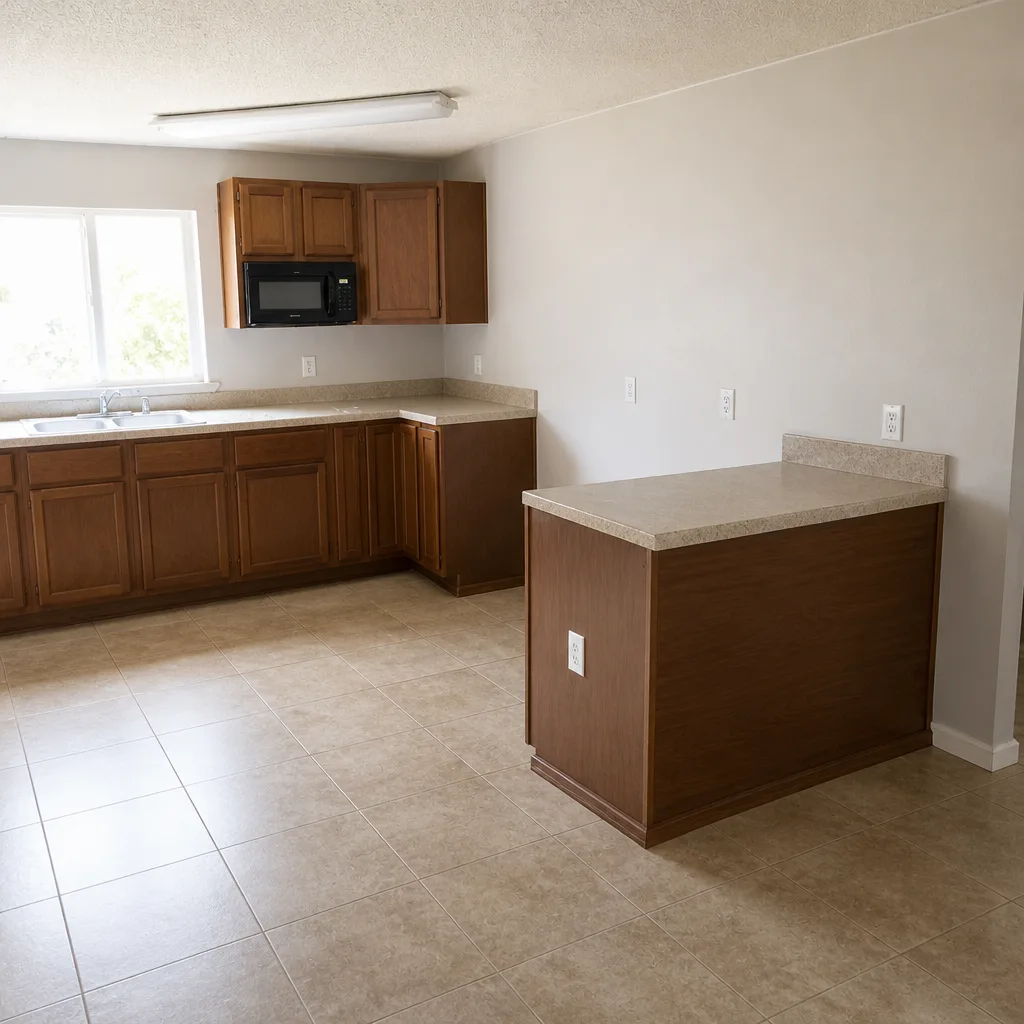 After
 Before
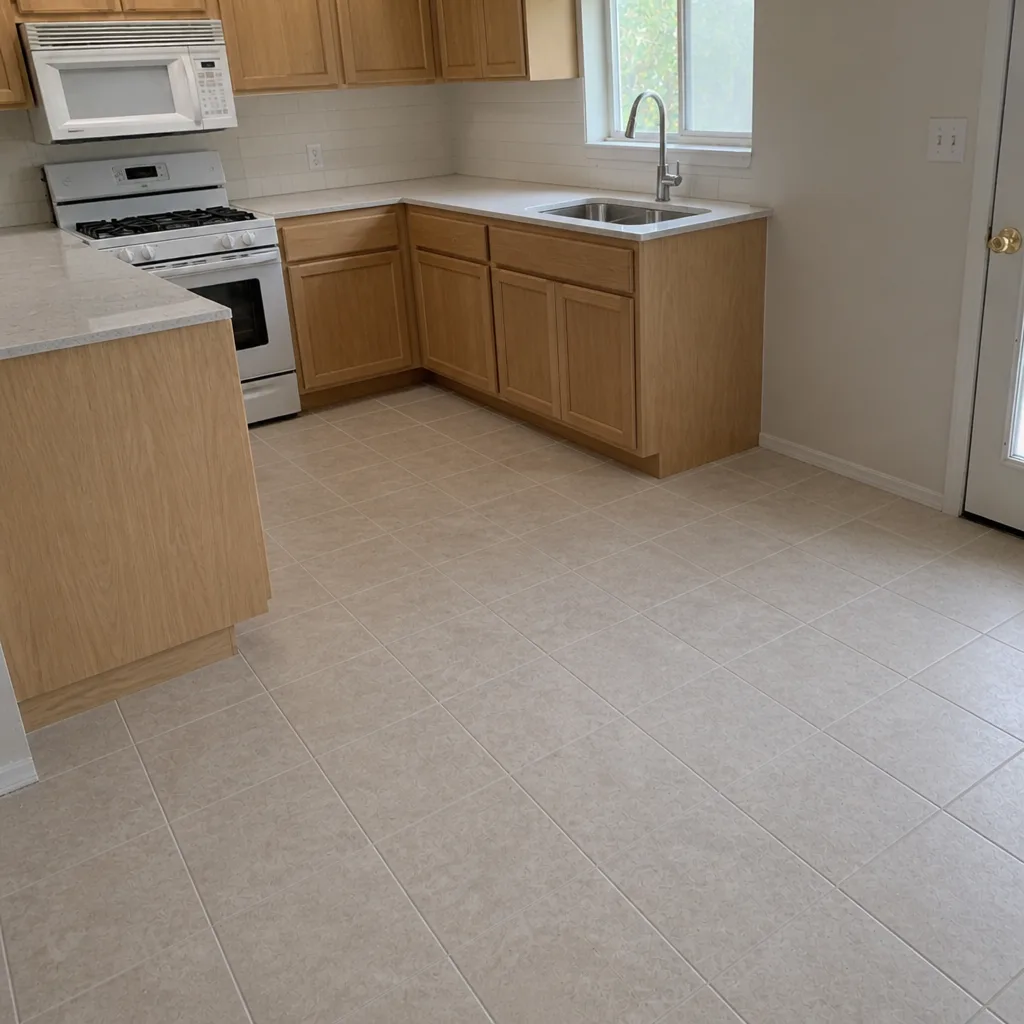 After
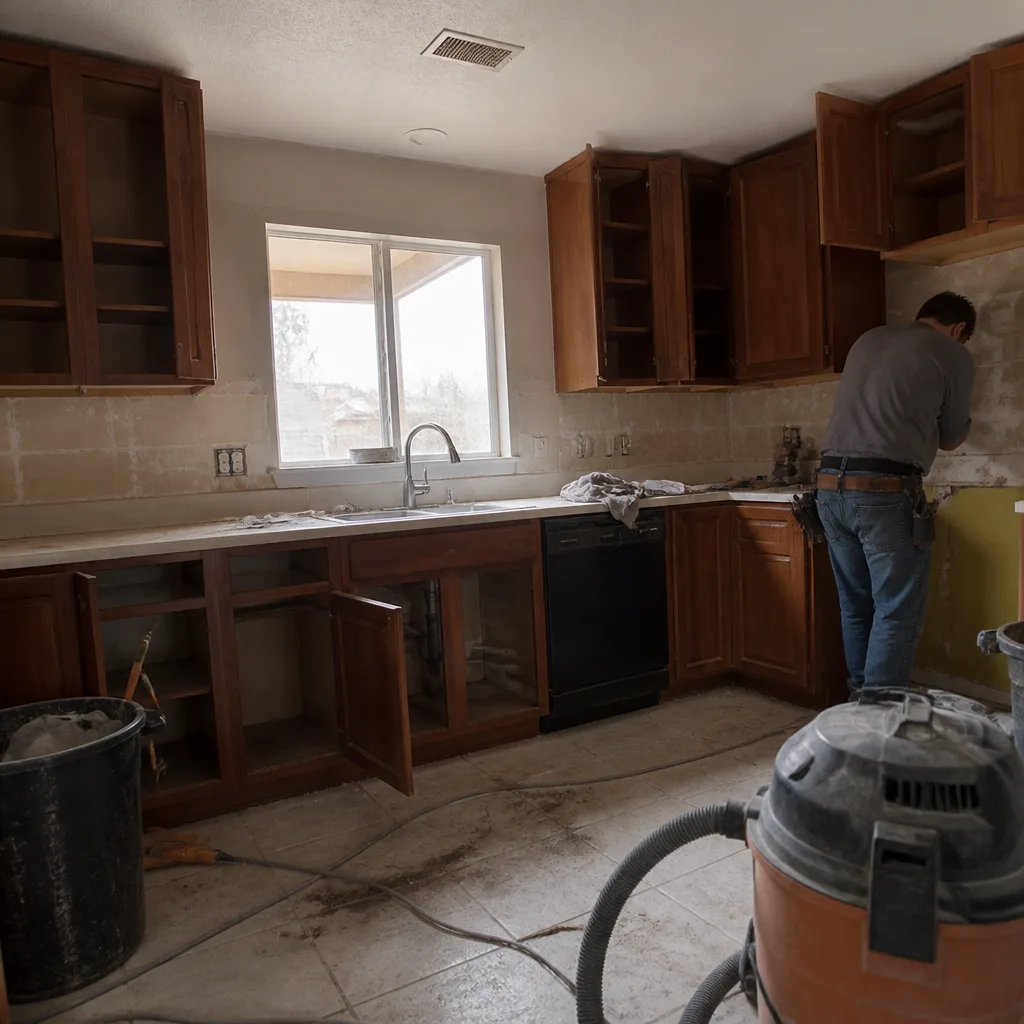 Before
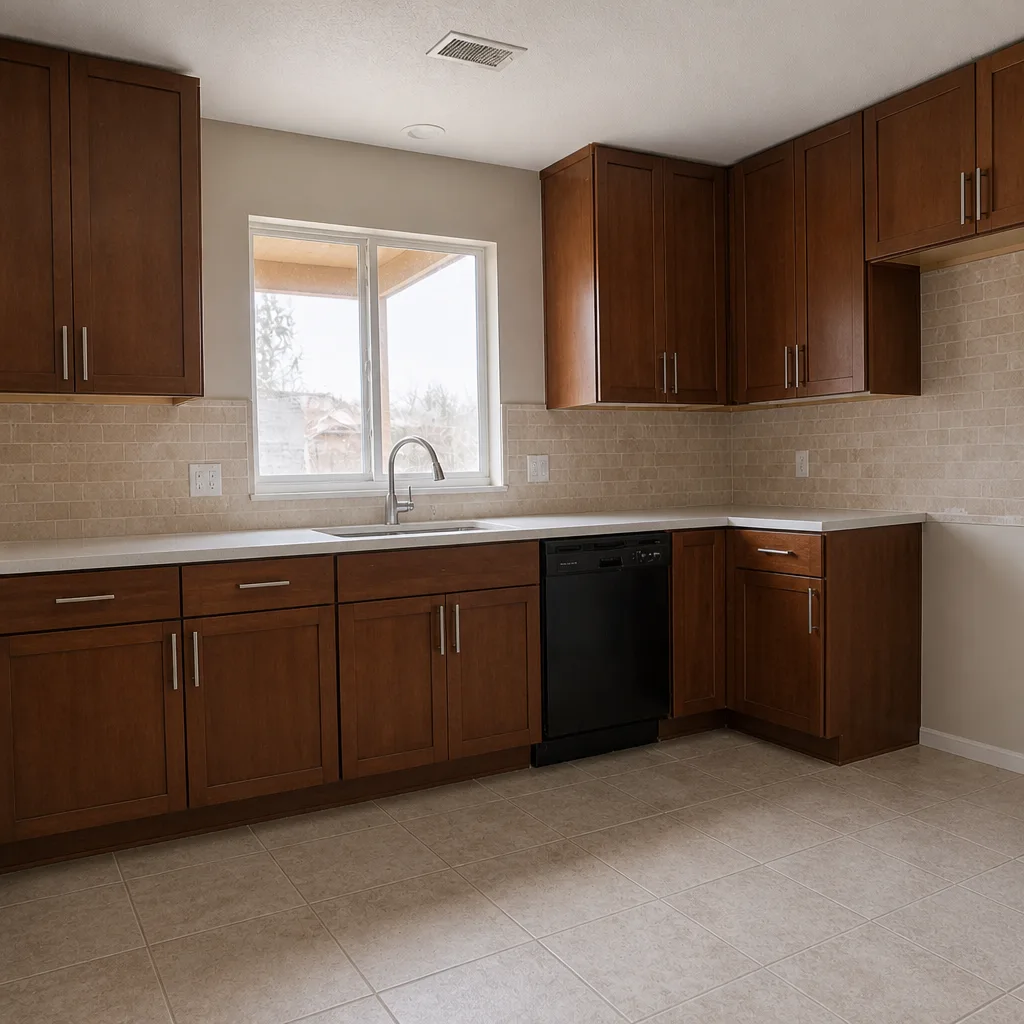 After
When to Call a Professional
Most of this schedule is homeowner work: wiping, inspecting, re-caulking, checking grout. A professional is warranted when the problem is structural or warranty-sensitive. Examples: doors that won’t stay aligned after adjustment, drawers with slides that bind or won’t soft-close even after two adjustments, countertop seams that don’t close evenly, a finish that’s failed at a seam, or a cabinet face where the thermofoil has delaminated beyond the edge. If a problem touches cabinetry warranty terms, the work should involve someone who knows the specific manufacturer’s requirements, including KraftMaid and Wellborn. Kitchen Remodeling Enterprise offers free estimates in Enterprise. Call (833) 522-7502. We answer 24/7. Fast dispatch from 7am to 7pm, Sunday through Friday.
Frequently Asked Questions
Daily, with a damp microfiber cloth and a pH-neutral soap solution, and dry the surface. Weekly, address sticky spots with a quartz-safe cleaner. Avoid bleach, harsh solvents, and high-pH sprays on Cambria, Silestone, and Caesarstone surfaces, because the impact shows up over 18 to 24 months rather than overnight. Call (833) 522-7502 for guidance on material selection if you’re planning a new countertop.
No, engineered quartz from Cambria, Silestone, and Caesarstone is non-porous and generally doesn’t need sealing under most care documentation. If you’re working with natural stone, consult the manufacturer’s care sheet. For quartz, focus your annual attention on the caulk at the seam, not on sealer. Call (833) 522-7502 for a free estimate if your current countertop needs replacement.
Use the water-drop test: a few drops of water on an out-of-sight grout line. If water beads up, the sealer is holding. If it absorbs quickly, the grout is ready for resealing, provided it’s sanded or unsanded. Epoxy grout doesn’t need sealing at all. Confirm your grout type before buying sealer. Call (833) 522-7502 if you’re not sure which grout you have or if the grout is failing.
Usually it’s hinge alignment rather than a failed damper. A sagging door puts stress on the damper, so the fix is adjustment, not lubrication. If the door is aligned and the soft-close still fails, the hinge or damper is the next check. Keep to the manufacturer’s documentation for KraftMaid and Wellborn cabinets, and call (833) 522-7502 for an exact quote on a professional adjustment.
Mild soap and a soft cloth are the baseline for Blanco composite, fireclay, and stainless products, and each material has its own care documentation. Avoid abrasive pads on composite and follow the manufacturer’s instructions for any stubborn stain. Drying after use preserves the finish. Call (833) 522-7502 for a free estimate on a sink replacement or a fixture upgrade.
It depends on where the failure is. A chipped edge on a painted face can often be touched up. Failed thermofoil at a seam, or a face that has bubbled near the range, is rarely a clean repair and is often a replacement. We review the manufacturer’s documentation and the door structure before recommending either. Call (833) 522-7502 for a free estimate and an honest read on repair versus replacement.
The Bottom Line
Kitchen maintenance works best when it follows material, not seasons. Engineered quartz counters from Cambria, Silestone, and Caesarstone need pH-neutral cleaners and no bleach. Painted, thermofoil, and veneer cabinets each have their own rules at their edges. Soft-close hinges need adjustment, not oil. Undermount slides follow weight ratings. Grout sealing follows grout type. Fixtures from Kohler, Moen, and Blanco have specific fin-and-care documentation. Check hardware and caulk quarterly, clean weekly, and revisit finishes annually. If the schedule raises questions about your own kitchen, our Kitchen Remodeling Enterprise team can help. Call (833) 522-7502. We answer 24/7. Fast dispatch from 7am to 7pm, Sunday through Friday. Estimates are free, and the written estimate sets the price.
Written by the team at Kitchen Remodeling Enterprise.