
Last updated November 17, 2026
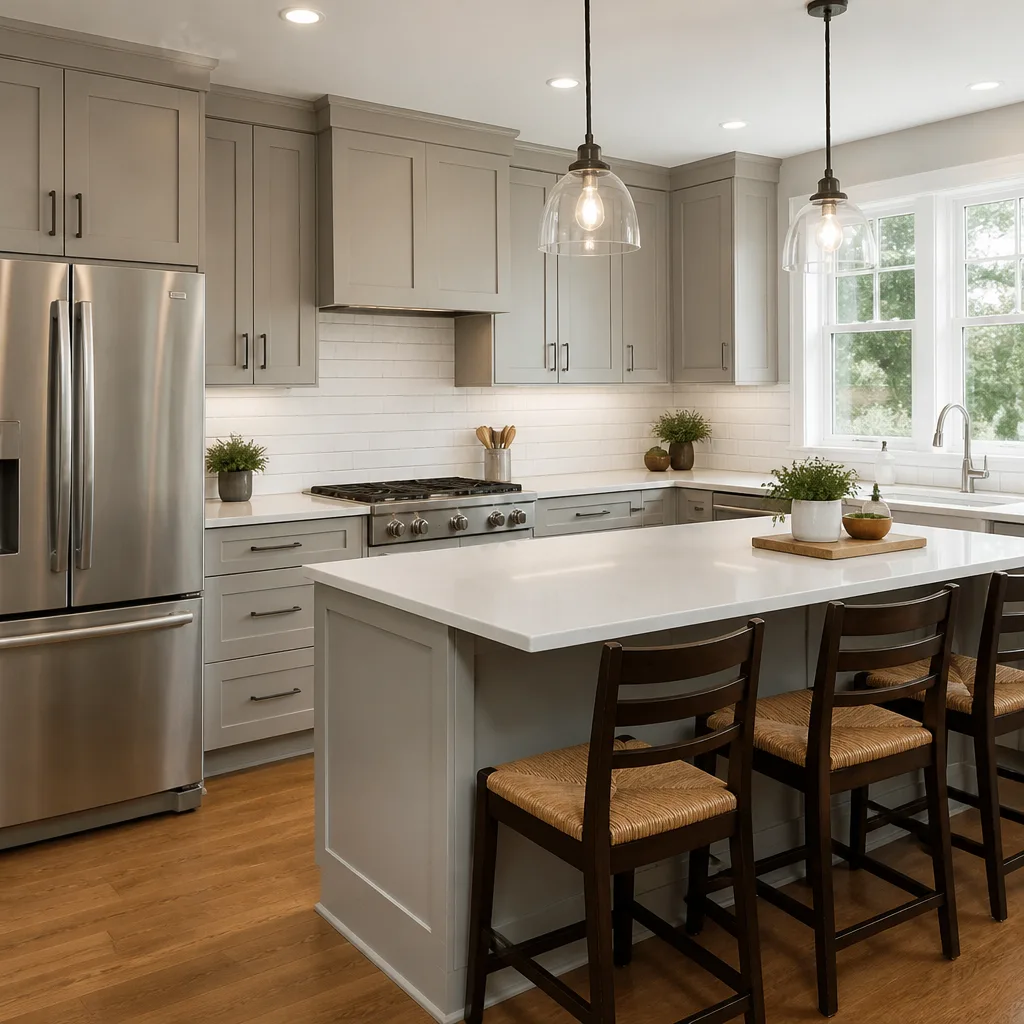 Shaker
 Modern flat-panel
 Two-tone cabinets
 KraftMaid
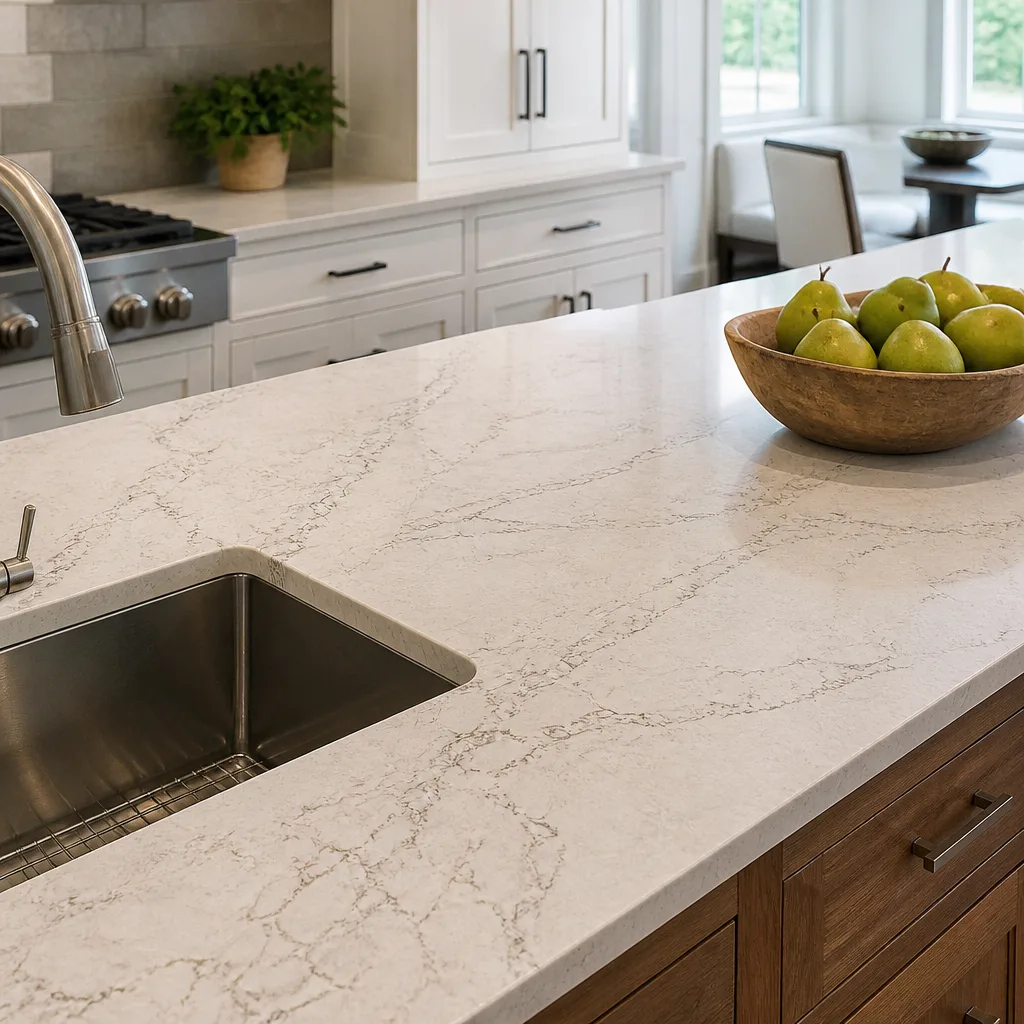 Cambria quartz
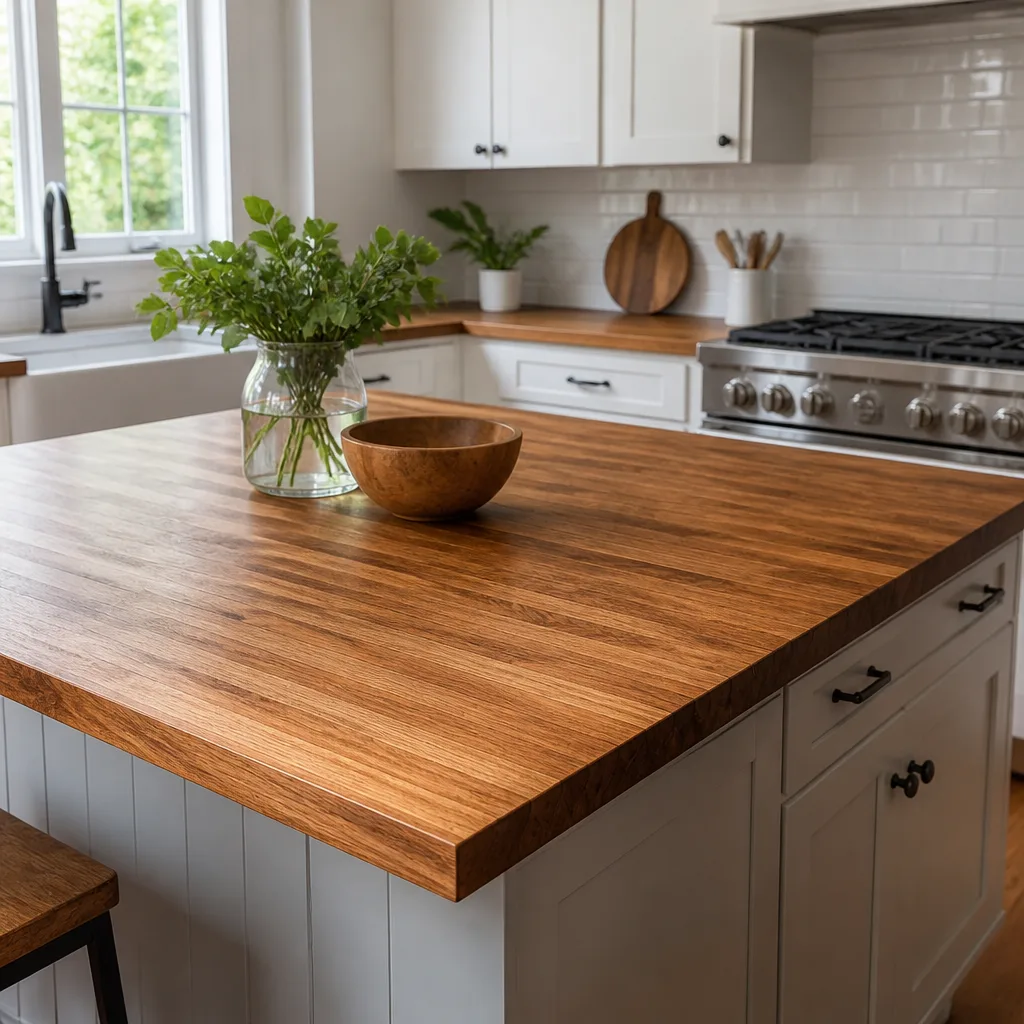 Butcher block
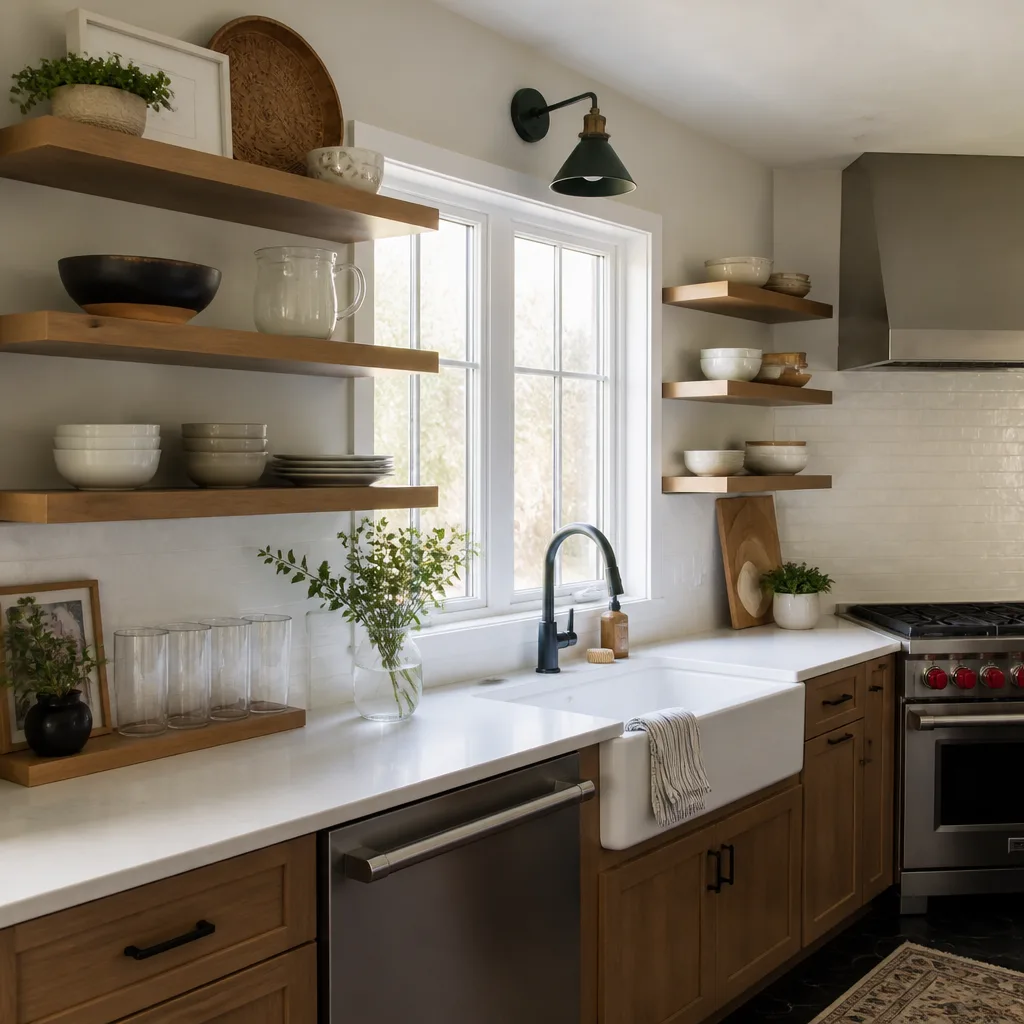 Open shelving
Free design consultation - KraftMaid and Wellborn cabinet lines, Cambria and Silestone surfaces, and every tier from refacing to full custom laid out side by side
DIY vs Professional Kitchen Remodeling: The Enterprise Homeowner’s Decision Guide
Painting your kitchen cabinets yourself is a legitimate weekend project. Shimming and hanging those same cabinets, even if you’re handy, is where a small error compounds through every task that follows and ends up costing more to fix than to hire out. The DIY versus professional question in kitchen remodeling isn’t really about how confident you feel with a drill. It’s about understanding which phases carry downstream consequences and which genuinely don’t. This guide maps the real risk profile of each phase of a kitchen project in Enterprise, so you can make task-level decisions instead of an all-or-nothing choice.
Quick Answer
Most enterprise homeowners should DIY demolition, cabinet painting, hardware swaps, and backsplash prep, and should hire licensed professionals for cabinet installation, countertop templating and fabrication, and any electrical or gas work. The dividing line is not difficulty. It’s whether a mistake in that phase transfers into every phase after it. In Enterprise, cabinet installation is the single highest-consequence task, because out-of-level boxes throw off countertop fit, door alignment, and appliance clearances all at once.
Styles & brands we work with
- Shaker
- Modern flat-panel
- Two-tone cabinets
- KraftMaid
- Cambria quartz
- Butcher block
- Open shelving
Table of Contents
- The Task-by-Task Risk Matrix
- What Nevada Law Allows You to Do Yourself
- Why Cabinet Installation Is the Compounding Step
- Countertop Templating and the Cost of a Bad Measurement
- How Partial DIY Actually Saves Money
- Warranty Implications of DIY Installation
- The Real Cost of DIY Mistakes in Premium Materials
- Enterprise Building Conditions That Affect the Work
The Task-by-Task Risk Matrix
Think of every kitchen task on two axes: how hard it is to do well, and how much a mistake costs to undo. Those two things don’t move together. Some hard-looking tasks are forgiving. Some easy-looking tasks are not. Here’s how the phases break down for a typical Enterprise kitchen.
Low risk, genuinely DIY-friendly:
- Demolition of old cabinets, counters, and backsplash. Messy, but mistakes are cheap to correct.
- Painting or refinishing existing cabinet boxes and doors, provided you prep properly.
- Swapping cabinet hardware, hinges, and drawer pulls.
- Installing a new sink faucet, if you’re comfortable with basic supply-line work and the shutoffs are in good shape. A Moen or Kohler faucet comes with clear installation literature.
- Patching and priming drywall after demo.
- Final touch-up painting.
Medium risk, depends on your experience:
- Hanging a tile backsplash. Forgiving on the wall, unforgiving on layout and grout lines.
- Installing open shelving or a floating shelf system.
- Trimming out the room with baseboard and shoe molding.
High risk, hire out:
- Cabinet installation, including leveling, shimming, and securing boxes to the wall.
- Countertop templating and fabrication, especially in quartz.
- Any new electrical circuit, outlet relocation, or dedicated appliance line.
- Gas line work for a range or cooktop.
- Dishwasher and garbage disposal connections where new plumbing is required.
The pattern to notice: the low-risk tasks are largely cosmetic or destructive. The high-risk tasks are all about establishing a reference point that everything else builds on. Cabinet boxes set the plane. Countertops follow the cabinets. Backsplash follows the counters. Get the first one wrong and the error multiplies. That’s the core of why we treat cabinet installation as a professional task even for skilled do-it-yourselfers.
What Nevada Law Allows You to Do Yourself
Nevada allows homeowners to perform work on their own primary residence in many cases, but the rules get specific fast when the work touches electrical, plumbing, or gas. The short version: cosmetic work on your own home is generally yours to do, and licensed trades are required for anything that connects to the systems that keep the house safe.
Here’s the practical breakdown enterprise homeowners ask us about most:
- Painting, tiling, and finish carpentry. Generally permitted for a homeowner on their own residence, subject to local building department rules and any HOA requirements.
- Electrical work beyond a like-for-like fixture swap. New circuits, moving outlets, adding a dedicated range line, or converting a hardwired appliance all fall under licensed electrical work. A homeowner doing this without a license can create a real problem at resale and, more importantly, a real fire risk.
- Plumbing beyond a fixture swap. Moving a supply line or drain, adding a dishwasher circuit, or relocating a sink falls under licensed plumbing work.
- Gas line work. Licensed plumbers only. Full stop. There is no version of gas work that is a safe homeowner project, and no version we will walk anyone through.
- Structural changes. Removing a wall, even a partial one, requires knowing what’s inside it. In a kitchen, that wall may be carrying a header beam or hiding a duct chase.
Permits are a separate question from licensing, and both matter. Most cities require a permit for cabinet replacement in a kitchen, for countertop replacement that touches plumbing, and for any electrical or gas work. Ask your city’s building department before you start, not after. Unpermitted work becomes a disclosure problem when you sell, and inspectors can require it be opened up for review.
If you’re planning a full project and want a single point of contact for the licensed trades, that’s the model we work with. Our Kitchen Remodeling Enterprise team coordinates cabinets, countertops, and the licensed trades a kitchen project requires, so you’re not stitching permits and inspections together across five separate contractors.
Why Cabinet Installation Is the Compounding Step
A wall can look perfectly flat and be out of plumb by a half inch over eight feet. It happens in almost every home. Cabinet installers know this and account for it before the first box goes up. A homeowner hanging cabinets for the first time usually discovers it after the second box, when the doors no longer line up.
Here’s how a small installation error compounds through every remaining phase:
- The first cabinet goes in slightly out of level because the wall is out of plumb.
- Every subsequent cabinet inherits a fraction of that error, and the last one in the run is visibly off.
- Door reveals become uneven, and drawer fronts no longer align cleanly across the run.
- The countertop template is taken off an unlevel base, so the finished quartz or natural surface is fabricated to the wrong plane.
- The countertop installer has to shim the slab to make it look right, which leaves a hairline gap at the backsplash line.
- The backsplash installer now has to work around that gap and the counter’s edge profile, and the tile layout has to absorb the difference.
None of those problems is catastrophic on its own. Together, they turn a straightforward kitchen into a series of corrections. We’ve seen the total cost of fixing out-of-level cabinet runs exceed the cost of the original installation, especially when the correction involves re-templating a countertop that was already fabricated.
The other cabinet installation issue enterprise homeowners run into is fastener placement. Cabinets need to be fastened into studs, or into blocking installed for the purpose. Hitting a stud in the wrong spot, or missing it entirely, means the cabinet doesn’t have a secure anchor for the load a fully stocked kitchen puts on it. That’s not a visual problem. It’s a safety problem over time.
That’s the case for professional cabinet installation. It’s not that a homeowner can’t hang a cabinet. It’s that a professionally installed run gives every other phase a clean, level foundation to build on, and it’s the single most leveraged step in the entire project.
Countertop Templating and the Cost of a Bad Measurement
Countertops are the least forgiving material in a kitchen project. Unlike drywall or tile, a mis-measured quartz slab can’t be cut down and re-used. It’s fabricated once. If the measurement is wrong, the slab is scrap, and a new one has to be ordered, templated, cut, and installed.
Templating is the step where the countertop measurements are taken off the actual installed cabinets in the actual room. This is not something you can do off a rough sketch or off the cabinet dimensions listed on a spec sheet. Walls move. Cabinets have an installed depth that differs fractionally from the plan. An undermount sink cutout needs to align with the cabinet opening within a small tolerance. The dishwasher and range clearances are measured off the finished edge, not the plan.
Here’s why that matters for a premium quartz surface specifically:
- The slab is fabricated to a specific size and edge profile. It cannot be re-cut smaller and re-used in the same kitchen if it’s short.
- The sink and faucet cutouts are drilled and polished to spec. A wrong cutout means the slab is scrap.
- Brands like Caesarstone and Cambria hold their value and back their material with warranty language that assumes professional installation. A misinstalled slab can void that coverage.
- Natural surface pricing varies by the slab, so replacing a mis-measured one is not a fixed dollar amount. It’s another slab purchase.
The pattern we see with homeowner-fabricated or homeowner-measured quartz is not usually a mistake of a half inch. It’s a mistake that reveals itself at final installation, when the slab is already cut. At that point the corrections are limited to shimming, which compromises the look, or ordering a new slab, which is the whole project cost again for that surface.
That’s why we template off the installed cabinets, not the plan. Our kitchen remodeling team installs the counters after the cabinet run is complete and verified, and we work with Cambria, Silestone, and Caesarstone so a homeowner can pick the surface that fits the kitchen and the budget rather than taking whatever one brand is available. Each of those brands has different tolerances and different warranty terms, and knowing those details is part of the job.
How Partial DIY Actually Saves Money
The choice isn’t binary. Partial DIY is a legitimate middle path, and it’s the one we recommend to enterprise homeowners who want to control cost without taking on compounding risk. You do the tasks that are cosmetic or destructive. A professional does the tasks that establish the geometry of the kitchen and connect to the trades.
The realistic split looks like this:
- Homeowner does: demo, drywall patching, cabinet painting or refinishing, hardware swap, backsplash tile, trim, final paint, and cleanup.
- Professional does: cabinet installation, countertop templating and fabrication, electrical, plumbing, gas, and appliance connections.
The savings are real. Demo and finish work are labor-heavy, and that labor is exactly the part a homeowner can carry without compromising the finished kitchen. The reduction in project cost is genuine, and the risk profile of the finished kitchen doesn’t change.
What partial DIY requires is sequencing discipline. The cabinet installation can’t happen until the demo and any rough electrical and plumbing are complete. The countertop template can’t happen until the cabinets are installed and settled. The backsplash can’t happen until the counters are in. If the homeowner is doing painting, that step has to fit around the cabinet install or the counters will be installed over half-finished work.
- Plan the sequence before anyone touches a tool.
- Complete demo and rough trades first, with permits pulled where required.
- Schedule cabinet installation as the first build-up step.
- Template the countertops off the installed cabinets.
- Install the countertops and sink.
- Install the backsplash and finish carpentry.
- Reinstall appliances, doors, and hardware last.
If you’re the one painting the cabinets, prime first, then paint the boxes, then paint the doors separately if they’re removable. Priming is where homeowner painting usually fails. Skipping it on a greasy kitchen cabinet leaves paint that chips at the edges within a year. In our experience, the paint job is the part enterprise homeowners most often wish they’d taken more time with.
Warranty Implications of DIY Installation
This is the most underappreciated reason to hire out cabinet and countertop installation. Manufacturer warranties on semi-custom and custom cabinetry often assume professional installation. If the cabinet wasn’t installed to the manufacturer’s spec, a warranty claim on a defect can be challenged on the grounds that the installation caused it, not the product.
That matters most on the cabinet lines that carry real warranty weight. KraftMaid and Wellborn are the two we work with most, and both are built to standards that justify a serious warranty. A dovetail drawer box or a specific hinge system has a warranty that was written with professional installation in mind. When installed to the manufacturer’s standard, the warranty behind those products stays intact.
Countertop brands work the same way. Cambria, Silestone, and Caesarstone all publish installation requirements that assume a trained fabricator and installer. A slab that fails after a homeowner-fabricated install is a different conversation than one that fails after a professional install, even if the failure looks identical.
Fixture and sink brands are somewhat more forgiving. Kohler and Moen back their products with multi-year consumer warranties that apply to the product, not the labor. If a faucet fails, the warranty covers the faucet. But if the failure traces back to incorrect installation, the answer is different. A Blanco sink installed without proper support under the rim can flex and fail in ways the warranty won’t cover. A faucet installed without the supply lines seated correctly can fail in ways that aren’t a product defect.
The point isn’t that DIY voids every warranty. It’s that the warranty conversation gets more complicated, and the homeowner carries the burden of proof, when the installation wasn’t done professionally. On a premium cabinet line or a quartz surface, that’s a significant thing to give up to save installation labor.
The Real Cost of DIY Mistakes in Premium Materials
Material cost is where DIY decisions get expensive. On builder-grade cabinets and laminate counters, a mistake is minor in dollars. On a premium cabinet line or a fabricated quartz surface, the correction cost is not just the material. It’s the material plus the time plus the schedule impact.
The most common scenarios we see:
- Re-fabricating a quartz countertop after an incorrect measurement. A slab that was cut to the wrong dimension can’t be salvaged. A new slab has to be ordered, templated, cut, and installed, and the project timeline extends by weeks.
- Re-finishing a cabinet run after improper prep. If paint or finish fails on a semi-custom cabinet run because the surface wasn’t prepped, the fix is stripping and refinishing, which is more work than the original paint job and can compromise the cabinet’s factory finish.
- Cabinet boxes installed out of level. The correction involves removing the boxes, correcting the wall, and reinstalling. If the counters were already templated, they have to be re-templated.
- Cabinet doors installed out of alignment because the boxes are out of level. The doors aren’t the problem. The boxes are. Realigning doors on out-of-level boxes only goes so far.
- Hardware installed before the cabinet finish is complete. Subsequent painting has to work around hardware, and pulling hardware to paint means filling and re-drilling holes in the cabinet doors.
Kitchens are too permanent to guess on materials. A fifteen-year kitchen with a mis-measured countertop is a fifteen-year kitchen with a mis-measured countertop. The material doesn’t heal. The correction cost is the material cost plus the labor to take the wrong version out and put the right one in. On premium surfaces and semi-custom cabinetry, that’s a serious number.
We install these products by name because we install them every day, and we know what a redone slab or a re-finished cabinet run actually costs. That visibility is the reason we recommend professional installation on the phases where a mistake carries real downstream cost, and it’s the reason we’re comfortable recommending DIY on the phases where it doesn’t.
Enterprise Building Conditions That Affect the Work
Enterprise sits in a part of Nevada where the soil moves, and where the seasonal temperature swings are wide enough to move a house. Neither condition shows up in a cabinet spec sheet, but both affect how cabinets and counters are installed here.
What that means for a kitchen project in Enterprise:
- Cabinets need to be shimmed to compensate for wall movement, not just wall bumpiness. A wall that looks fine at install time can move seasonally, and the cabinet run has to have room to accommodate that.
- Solid surface and quartz countertops need proper overhang support on any span longer than a standard cabinet width. A slab without support at overhang will crack, and the failure is a slab replacement.
- Cabinet anchors need to hit studs or blocking. Settlement can work a poorly anchored cabinet loose over time, and the correction involves pulling the cabinet and repairing the wall.
- Humidity in the home matters less here than in coastal areas, but the temperature swings mean cabinet boxes and doors expand and contract seasonally. That’s why cabinet alignment matters more in Enterprise than in a climate with stable humidity.
None of these are things a homeowner would know to check without having installed cabinets and counters in this part of Nevada. That’s the argument for professional installation in Enterprise specifically. It’s not that the work is impossible to do yourself. It’s that the local conditions require details that a first-time installer won’t know to plan for.
If you’re planning a kitchen project in Enterprise and want a sense of what the local installation details look like, our team can walk through your specific kitchen. We serve homeowners in Winchester and the surrounding Enterprise area, and the installation details are shaped by the same local conditions across the valley.
Common Mistakes to Avoid
- Hanging cabinets before confirming the wall is plumb. A wall that looks flat almost never is. Every cabinet in the run inherits the error, and it surfaces when the doors won’t align.
- Templating countertops off the drawing instead of the installed cabinets. The plan and the installed kitchen are never quite the same. A fabricated quartz slab can’t be cut down after the fact.
- Skipping the permit to save time. Unpermitted work in a kitchen becomes a disclosure problem at resale, and inspectors can require the walls to be opened up for review. Pull the permit.
- Doing electrical or gas work on your own in Nevada. These are licensed trades, and the risk is both a code problem and a real safety problem. There is no homeowner version of gas line work.
- Painting cabinets without proper prep. Greasy surfaces and unprimed cabinets produce a finish that fails at the edges within a year. Prep is most of the job.
- Assuming a manufacturer warranty survives a DIY install. Semi-custom cabinet lines and premium quartz surfaces typically require professional installation for the warranty to remain in force.
- Installing the sink without checking that the cabinet can carry the load. A heavy fireclay or cast iron sink needs support under the rim, especially in a cabinet run that’s designed around a lighter sink.
See the difference
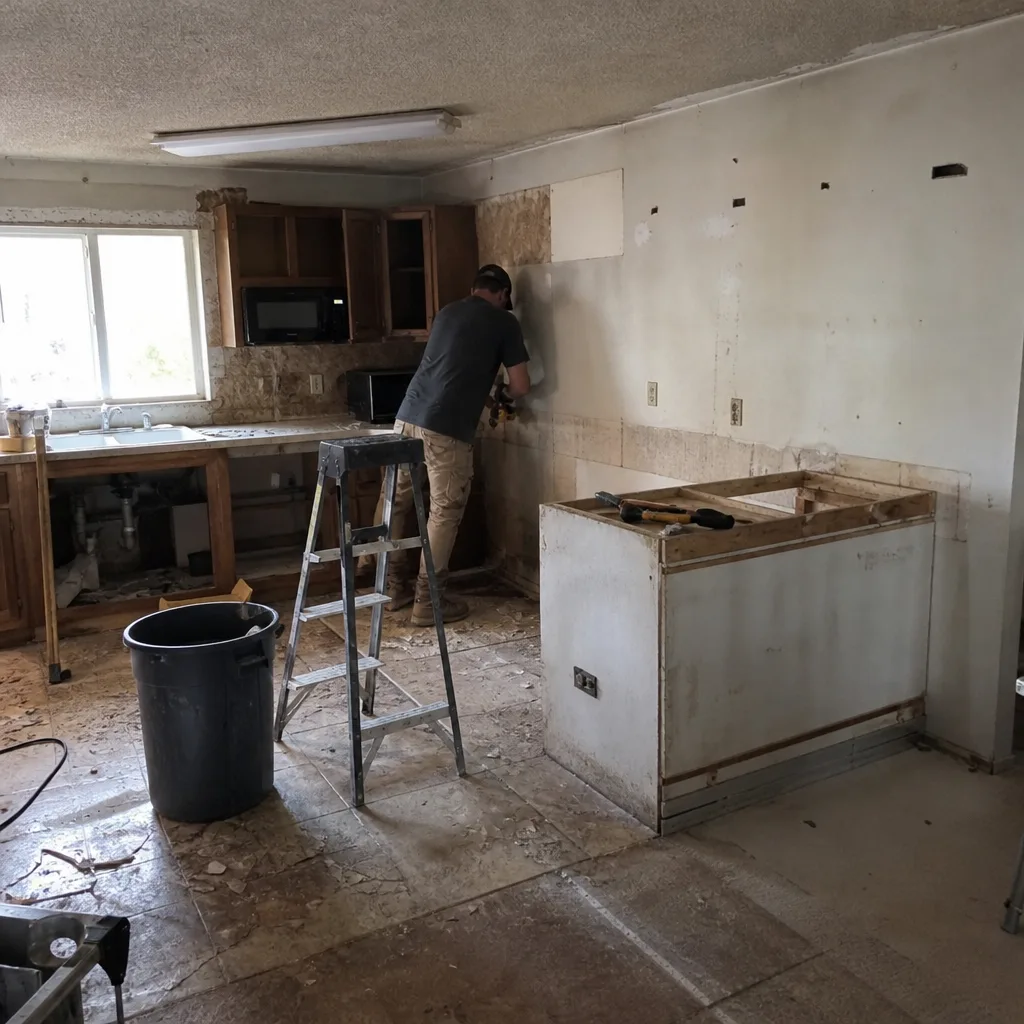 Before
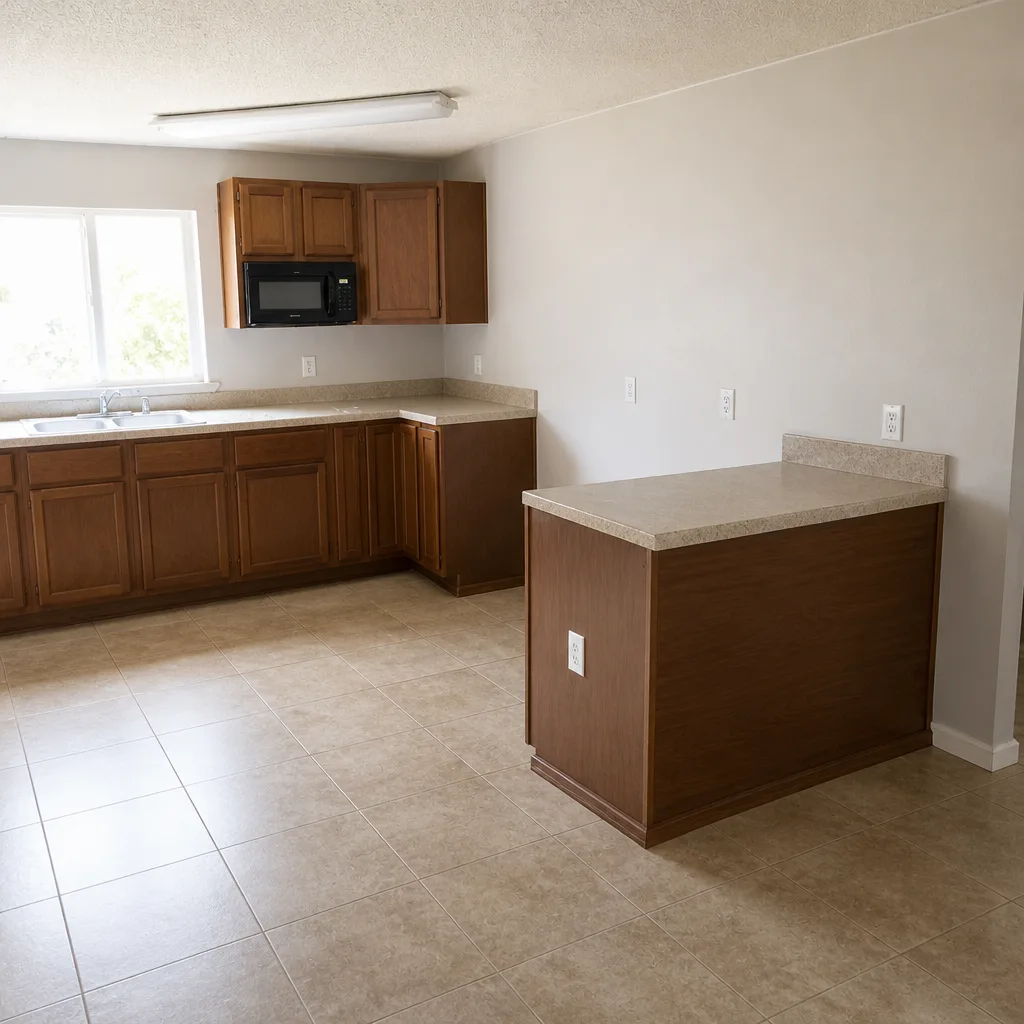 After
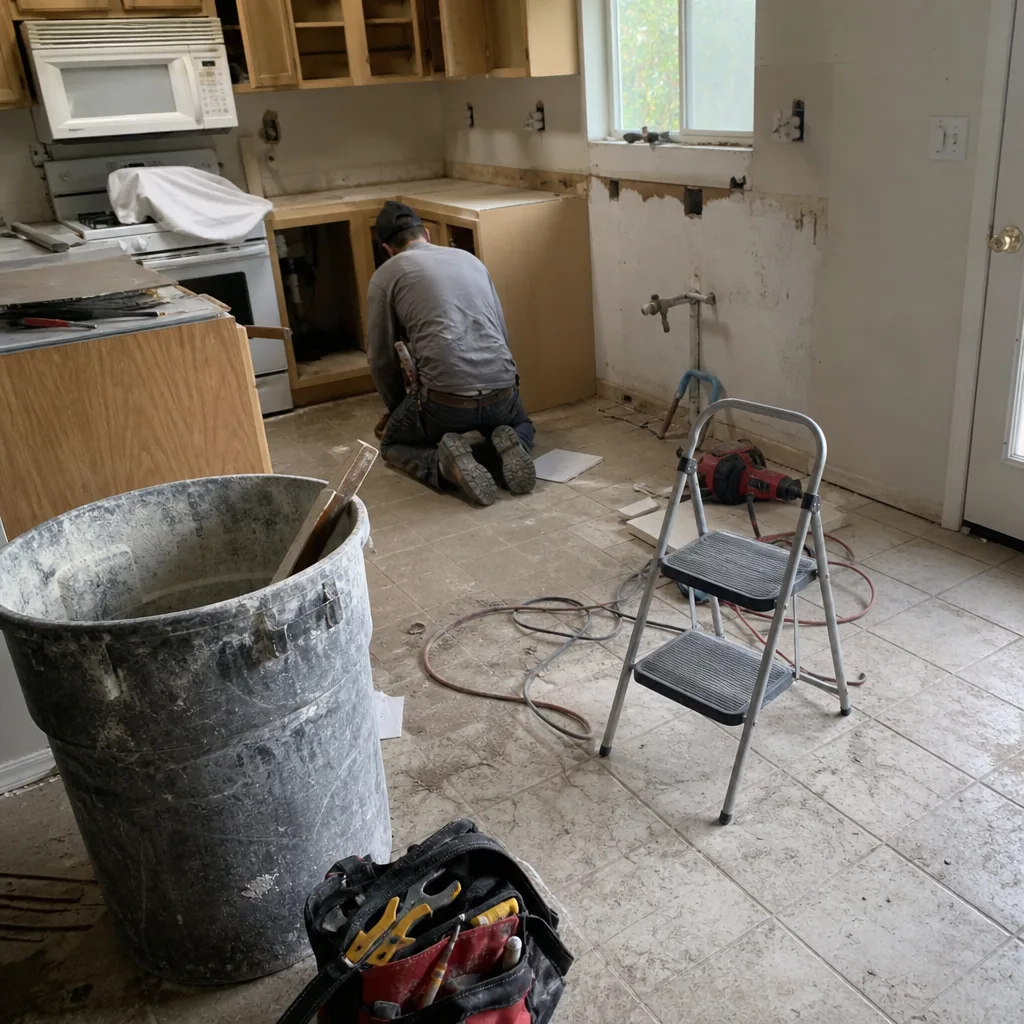 Before
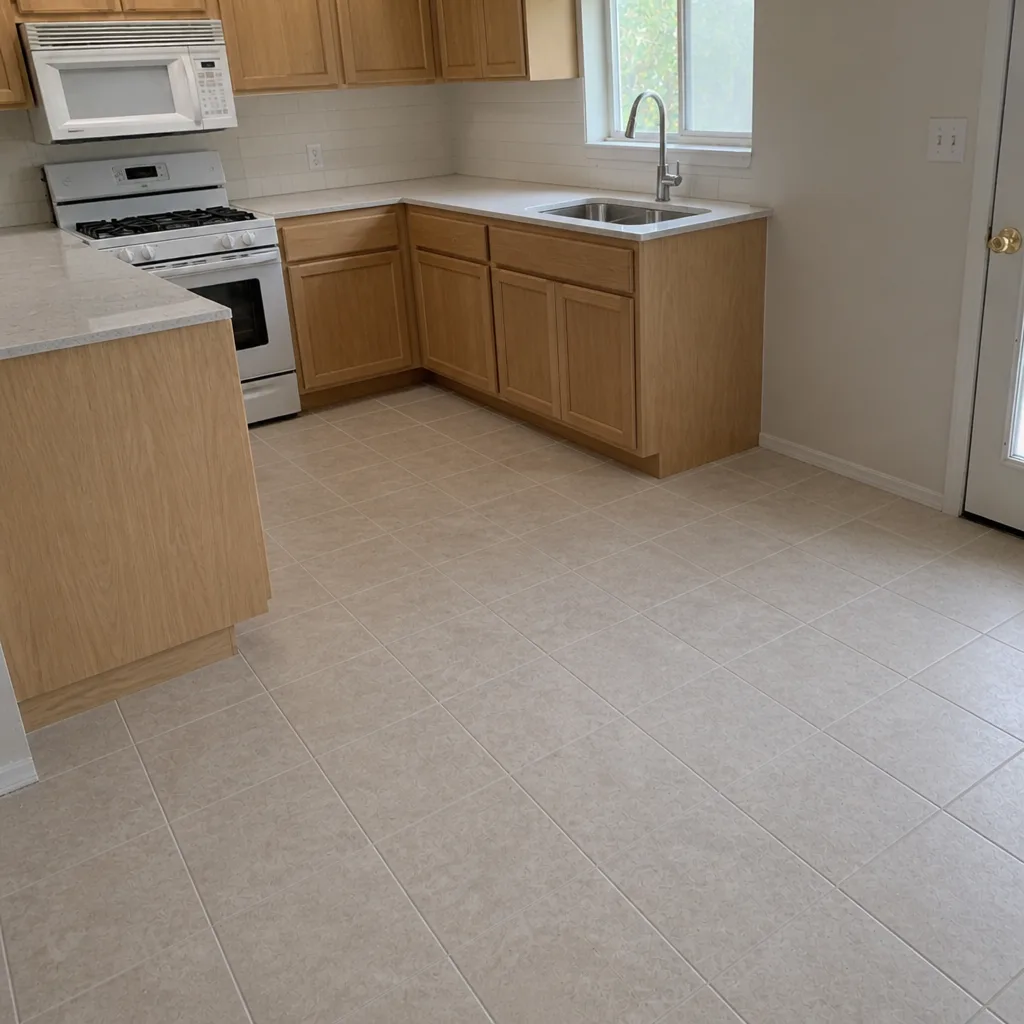 After
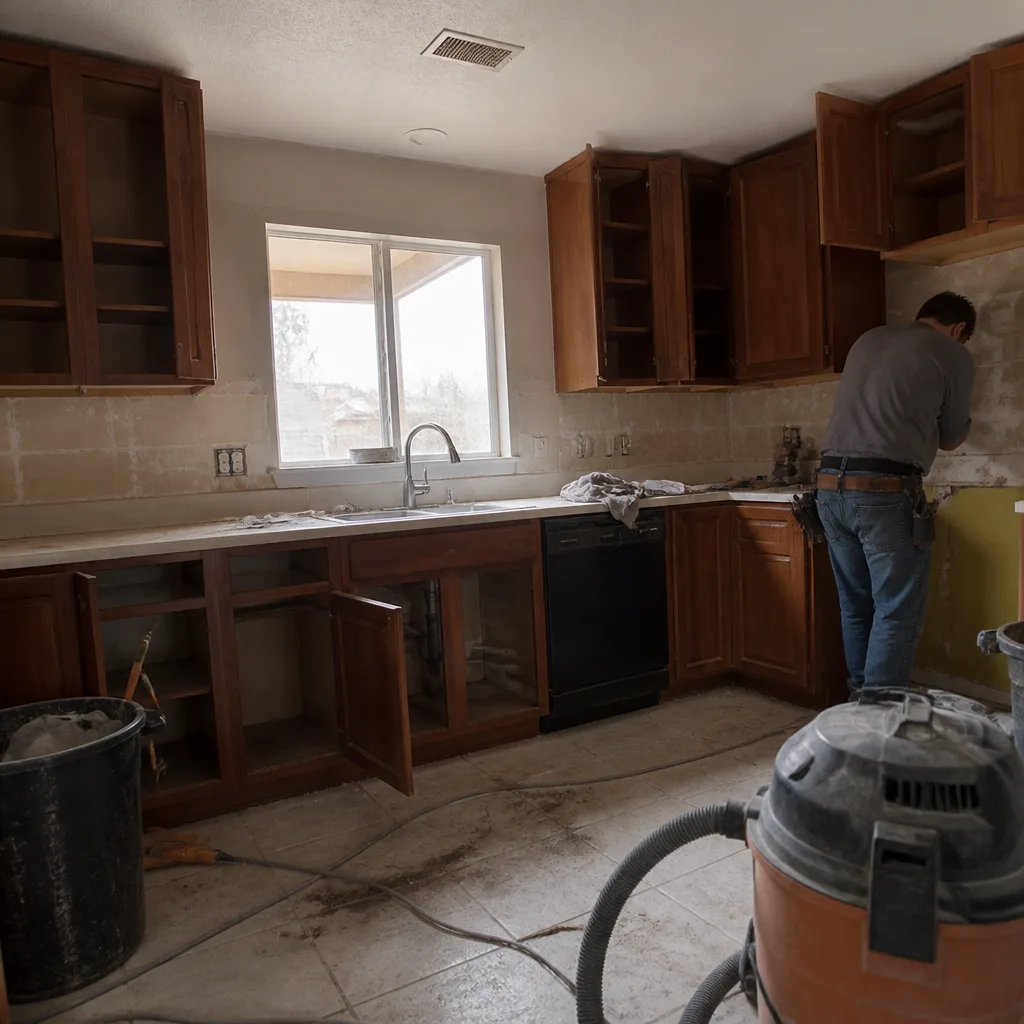 Before
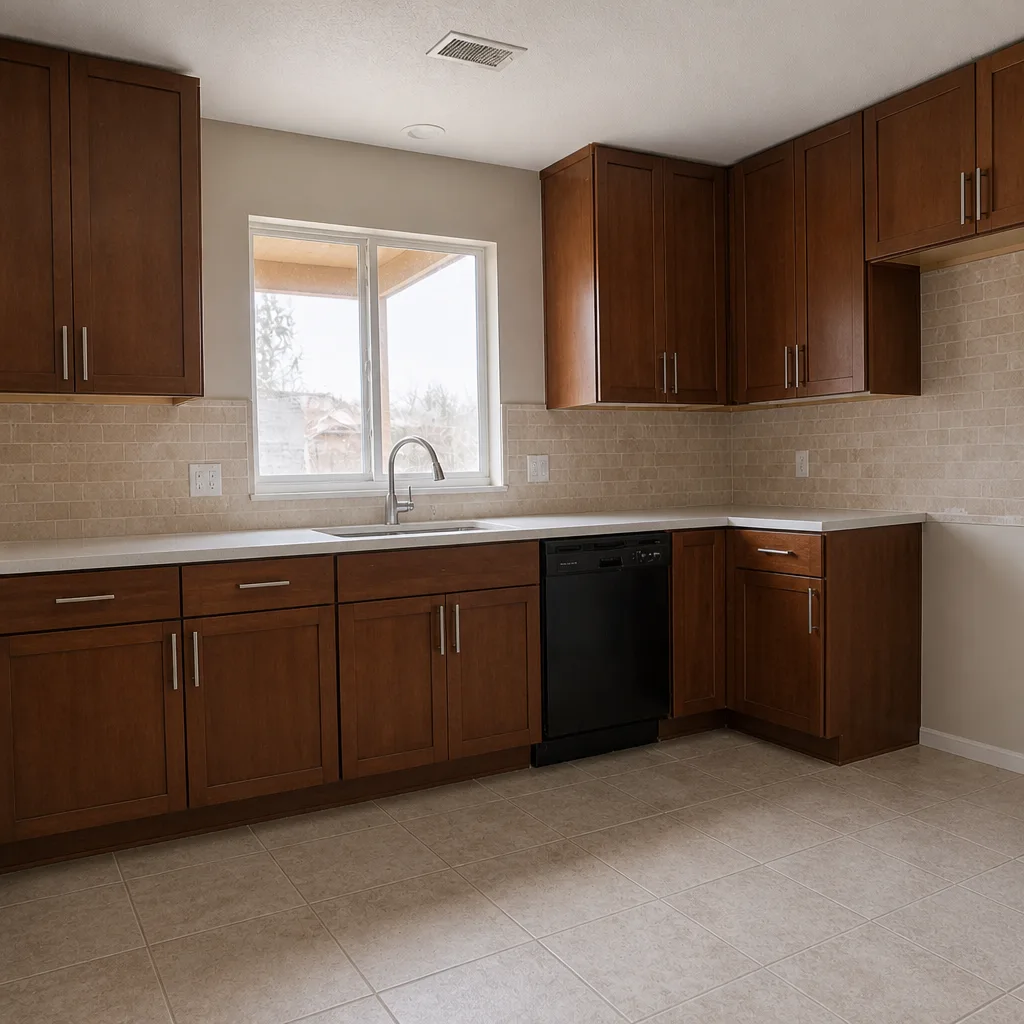 After
When to Call a Professional
Call a professional when the task in front of you is one of these: cabinet installation, countertop templating and fabrication, any electrical work beyond a like-for-like fixture swap, any gas work, any plumbing work beyond a fixture swap, or any structural change. Call also when the sequencing of a partial DIY project is more than you want to manage, even if the individual tasks are ones you could do. Coordinating cabinet install, countertop templating, and back splash around a homeowner’s painting schedule is more work than it sounds.
Kitchen Remodeling Enterprise offers free estimates in Enterprise. We work with KraftMaid and Wellborn on cabinetry, Cambria, Silestone, and Caesarstone on countertops, and Kohler, Moen, and Blanco on fixtures and sinks, so the estimate can address the actual products in your kitchen rather than a generic budget. Call (833) 522-7502.
Frequently Asked Questions
You can legally hang cabinets in your own home in Nevada in most cases, but the consequences of an out-of-level install compound through every phase that follows. Cabinet installation sets the plane that the countertop template, backsplash, door alignment, and appliance clearances are all based on. A professional install is the single highest-leverage step in the project to hire out, even for a skilled homeowner. Call (833) 522-7502 for an estimate on cabinet installation in Enterprise, which is free.
Electrical work beyond a like-for-like fixture swap, gas line work, and plumbing work beyond a fixture swap require licensed trades in Nevada. Gas work in particular has no homeowner version that is safe or code-compliant, and we won’t walk anyone through it. Structural changes and any work that requires a permit also need to go through the permitting and inspection process. When in doubt, ask your city’s building department before starting.
Typically, yes, or at least it complicates the warranty claim. Semi-custom and custom cabinet manufacturers generally write their warranty to assume professional installation. If a defect claim comes in on a cabinet that was homeowner-installed, the manufacturer can attribute the failure to the installation rather than the product. Installed to the manufacturer’s standard by a professional, the warranty stays intact. Call (833) 522-7502 to talk through a cabinet project with our team.
The savings are in the labor-heavy phases a homeowner can legitimately carry: demo, cabinet painting or refinishing, backsplash tile, trim, and final paint. Cabinet installation, countertop templating and fabrication, and licensed trades are the phases where the labor cost is worth paying for the downstream risk they carry. Pulling demo and finish work in-house typically reduces the project cost meaningfully without changing the risk profile. Call for a free estimate and we can lay out the split for your specific kitchen.
The slab is scrap and a new one has to be ordered, templated, cut, and installed. On a Cambria, Silestone, or Caesarstone surface, that’s the full cost of the surface again plus the schedule impact of the additional lead time. This is the reason countertop templating is not a homeowner task. It’s measured off the installed cabinets, not the plan, because the two are never quite the same. Call (833) 522-7502 to schedule a free estimate.
One team from cabinet frames to countertop edges is the smoother path on a project where the phases are this interdependent. Cabinet installation determines the countertop template, and the countertop edge profile determines the backsplash layout. When those phases are handled by three separate contractors, the homeowner carries the coordination and the gaps between them. We work with KraftMaid and Wellborn cabinetry alongside Cambria, Silestone, and Caesarstone surfaces so the phases line up. Call (833) 522-7502 for a free estimate.
The Bottom Line
The DIY versus professional decision in kitchen remodeling is a task-by-task decision, not a project-wide one. Demo, painting, hardware, and backsplash are genuinely DIY-friendly. Cabinet installation, countertop templating, and licensed trades are the compounding steps where a small error becomes an expensive correction. Partial DIY is the realistic middle path, and it’s how most enterprise homeowners control cost without taking on risk that stays with the kitchen. If you’re planning a project and want a single point of contact for cabinets, countertops, and the licensed trades, we’re the place to start.
Call (833) 522-7502 for a free estimate. We answer 24/7. Fast dispatch from 7am to 7pm, Sunday through Friday.
Written by the team at Kitchen Remodeling Enterprise.