
Silestone Kitchen Remodeling in Enterprise: A Homeowner’s Guide
Most Enterprise homeowners pick a Silestone color from a sample chip and stop there. That’s the mistake. Color is the easy part. The decisions that actually decide how a countertop holds up over ten years of cooking, cutting, and coffee spills are the finish, the edge profile, the seam layout, and which warranty covers what. This guide covers those, because a sample board won’t. If reading this makes you want a pro’s eyes on your layout, call (833) 522-7502 and we’ll talk it through.
Why Silestone Finishes Matter More Than Color in Enterprise
The finish you choose changes how a Silestone top behaves in a working kitchen far more than the color does. Silestone offers polished, suede, and volcano finishes, and each one trades off differently against daily cooking, desert dust, and the hard water Enterprise sees.
- Polished reflects light and hides subtle color variation well, but it shows every fingerprint and smudge. In a busy kitchen it means wiping more often.
- Suede has a soft, matte look that reads beautifully under warm lighting, and it hides fingerprints. The catch is that it’s less forgiving of oil and grease, which can leave a sheen over time if you don’t stay ahead of it.
- Volcano is the textured option, with a tactile surface that holds up well against scratches and glare. It’s the most forgiving of the three but the hardest to keep truly clean in the seams and texture.
Here’s the honest part most showrooms skip: Silestone’s newer collections use N-Boost, a treatment that gives the surface a finish that reads as matte on a sample board. In a kitchen that sees daily cooking, that same finish can be nearly impossible to keep streak-free. We’ve seen homeowners fall for the matte look in the showroom and then fight it every day. Pick the finish for how you actually cook, not how the sample looks under store lighting. If you’re remodeling a kitchen in Enterprise, ask to see the finish under real daylight before you commit.
HybriQ+ and Heat: What the Claims Actually Mean
Silestone’s HybriQ+ technology is a different composition from standard quartz, using a blend that reduces crystalline silica content. It’s still engineered quartz, and it still has limits. The heat-resistance claims on the box get misunderstood more than almost any other countertop spec.
Quartz, including Silestone, handles hot pans better than laminate but not as well as a true stone like granite. A trivet is not optional. A pot straight off the burner can scorch or crack a quartz surface, and that kind of damage usually isn’t covered by the material warranty because it’s considered misuse. In a climate like Enterprise, where summer heat already pushes your kitchen, the countertop doesn’t get a pass on hot cookware. Treat the surface with the same care you’d give any premium quartz and it will last. The HybriQ+ story is about safer manufacturing and a cleaner material profile. It is not a license to set a hot skillet on the counter. That distinction is one worth getting right before you sign off on a slab.
Edge Profiles and Cabinet Door Style: Getting the Match Right
Edge profile and cabinet door style have to work together, and the wrong pairing creates visual tension you can feel before you can name. Silestone tops are typically fabricated with an edge profile cut to order, so you’re choosing it, whether you realize it or not.
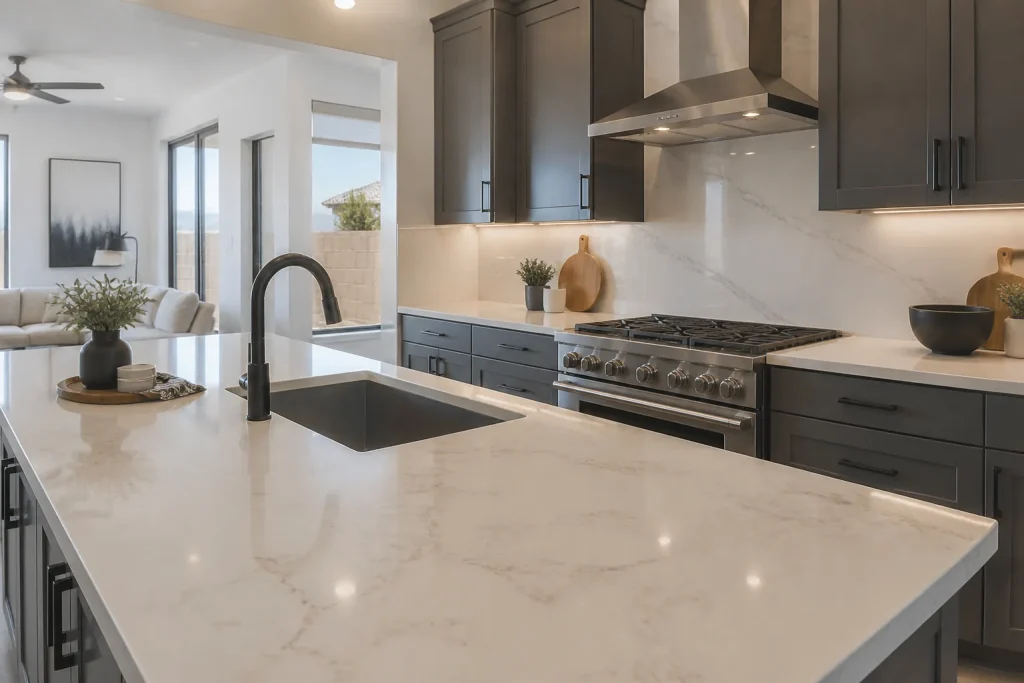
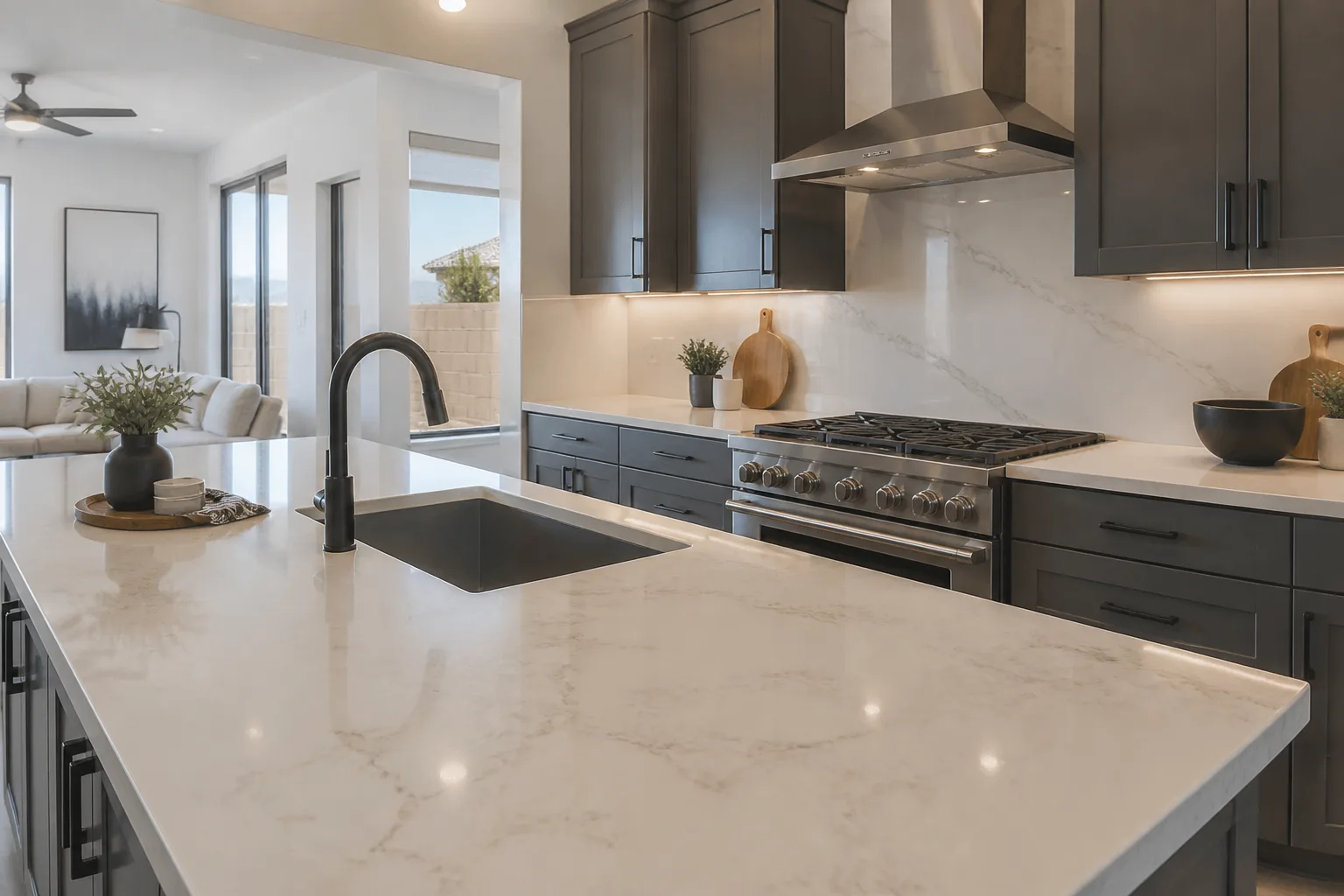
Take a Shaker cabinet, with its recessed center panel and clean frame. A thick mitered edge on top of that can look heavy and fight the door’s lines. A simple eased or squared edge usually sits better, letting the cabinet detail lead. On a flat-slab or modern door, a mitered edge can work because the horizontal emphasis matches the flat plane. Our team installs KraftMaid and Wellborn cabinetry, and we see how a given edge reads against each door line, because we’re coordinating the cabinet frames and the countertop in the same project rather than handing you off between two contractors. The edge isn’t a detail you pick last. Choose it alongside the door style and the whole kitchen settles into place.
Seam Placement: The Conversation Most Homeowners Never Have
Where your Silestone seams land depends on slab dimensions, and the fabricator’s default placement isn’t always the best-looking one. A standard Silestone slab is a fixed size, and an island or a long perimeter run often needs more than one slab. That means seams, and seams are a design decision, not a technical afterthought.
- Map the run first. Know the full length of your island and perimeter before the slab is cut, so you can plan where seams fall.
- Keep seams off the focal point. Put them away from the sink, the range, and the spot your eye lands when you walk in.
- Align seams with the layout. A seam that follows a cabinet line is far less noticeable than one cutting across open counter.
- Ask for the layout drawing. A good fabricator will show you seam placement before cutting. If they won’t, that’s your signal.
In a kitchen in Enterprise, where an island is often the center of the room, seam placement matters even more because everyone sees it. Ask the question before the slab goes to the saw, not after.
What the Silestone Warranty Covers, and What It Doesn’t
The Silestone warranty covers the material itself. It does not cover the installation, and that distinction matters more than homeowners expect. Silestone’s manufacturer warranty generally covers defects in the slab, things like manufacturing flaws in the surface. It does not cover chips from a dropped pan, cracks from a hot pot, or a seam that fails because the fabrication or install was off.
That second category falls to the fabricator and installer warranty. In practice, a countertop is only as good as the install behind it, and the documentation you keep should reflect both. Save the following:
- The Silestone material warranty paperwork for the specific slab and color.
- The fabricator’s written warranty covering seams, edge work, and installation.
- The original template and seam layout drawing.
- Records of the cabinet brand and door model, which affect how the top was fitted.
One team from cabinet frames to countertop edges means the material warranty and the install warranty sit with people who coordinated the whole project in Enterprise, rather than pointing at each other when something needs attention. Keep the paperwork either way. It’s the difference between a covered claim and an argument.
When to Call a Pro
Silestone is a permanent, heavy, and precisely cut material. Measuring, templating, seam planning, edge fabrication, and setting a slab are not weekend projects, and a bad cut can’t be undone. The same goes for the cabinet install underneath it, since the countertop is only as level and true as the boxes it rests on. If you’re weighing countertops and cabinets as one project, our kitchen remodeling and cabinet installation work is built around exactly that coordination, and if you’re still comparing surfaces, our guide to Winchester and the surrounding area is a useful starting point. When the material decisions get real, a trained fabricator and installer is the right call. Silestone is too permanent to guess on.
The Bottom Line
Choosing Silestone is a decision about finish, edge, and where the seams land, not just color. Get the finish right for how you cook, match the edge to your cabinet door, plan seam placement before cutting, and keep both the Silestone and fabricator warranty paperwork. Do those four things and a Silestone kitchen holds up the way you expect. If you’re in Enterprise and need help, Kitchen Remodeling Enterprise offers free estimates. Our technicians have up to 10 years of experience, we work with brands including Silestone, Cambria, KraftMaid, and Wellborn, and we handle cabinets, countertops, and the full remodel with one point of contact. Call (833) 522-7502 for a free estimate.
Frequently Asked Questions
Polished is the most durable and easiest to clean, suede hides fingerprints but needs more upkeep against grease, and volcano is the most forgiving of scratches. For a kitchen that sees daily cooking, polished is usually the safest choice. Call (833) 522-7502 to talk through finishes for your kitchen, and estimates are free.
No. Silestone is engineered quartz, and a hot pan can scorch or crack it. Use a trivet every time. Heat damage from cookware is generally treated as misuse and isn’t covered by the material warranty. Call (833) 522-7502 with questions about how we handle a countertop install.
Seam placement depends on slab size and the length of your island. A good fabricator plans seams off the focal points, along cabinet lines, and shows you a layout before cutting. Ask for it up front. Call (833) 522-7502 for a free estimate.
No. The Silestone warranty covers the material, not the install. Seam failures, edge issues, and fitting problems fall under the fabricator and installer warranty. Keep both sets of paperwork. Call (833) 522-7502 to schedule your free estimate.
Written by the team at Kitchen Remodeling Enterprise.
Need Kitchen Remodeling Help?
Call Kitchen Remodeling Enterprise - licensed & insured, here with fast help in Enterprise.
(833) 522-7502